
Rhodiola Identification Guide
Identify rhodiola (Rhodiola rosea) by its fleshy blue-green toothed leaves, dense yellow flower heads, and thick rose-scented rootstock on arctic and alpine rocks.
Read the full Rhodiola encyclopedia entry →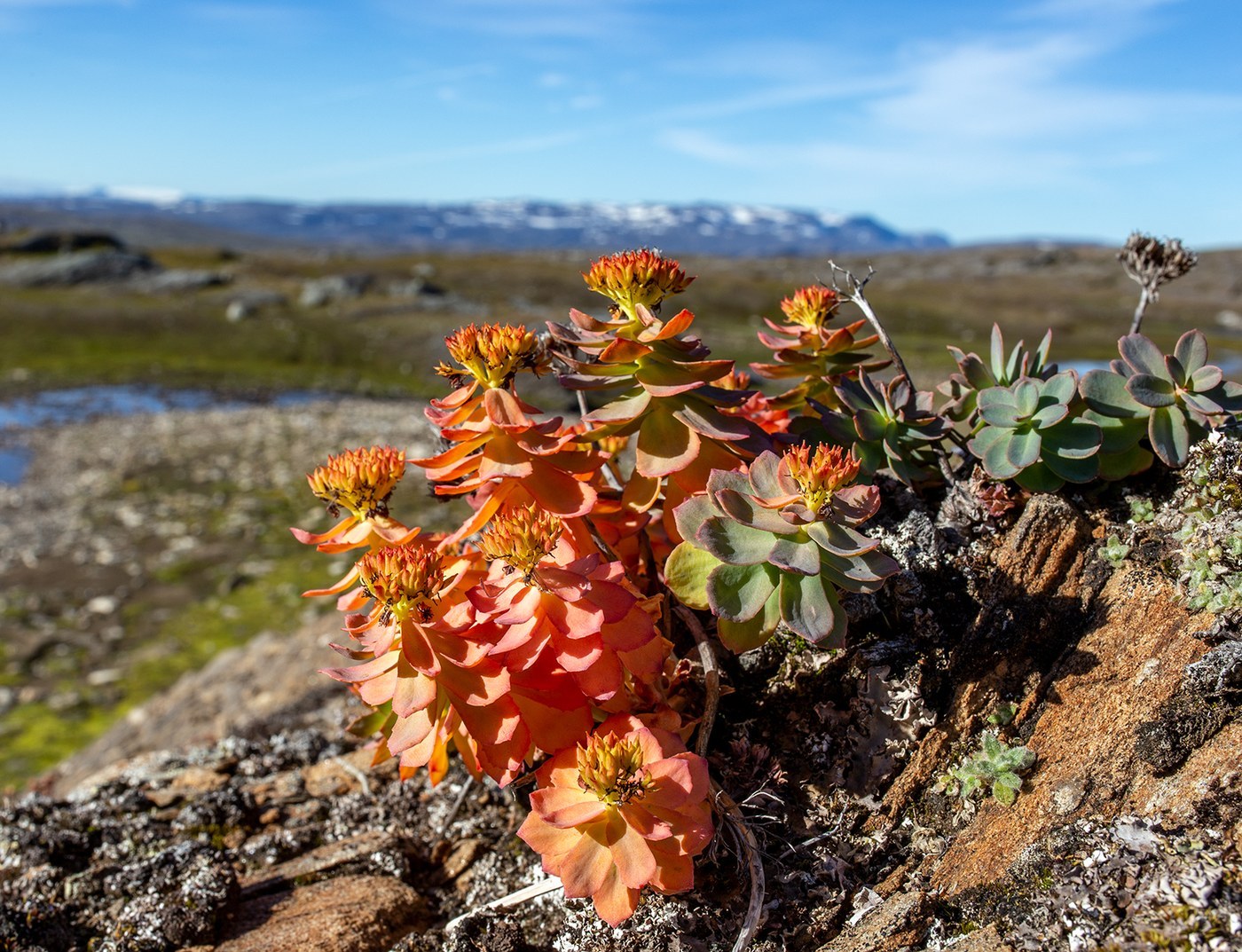
Key Identifying Features
Rhodiola, or roseroot (Rhodiola rosea, formerly Sedum rosea), is a succulent perennial of the stonecrop family (Crassulaceae) growing in cold, rocky places. Its key marks:
- Fleshy, blue-green (glaucous) leaves crowded along upright stems.
- A dense, flat-topped head of small yellow (sometimes greenish-yellow) flowers at each stem tip.
- A thick, woody rootstock that smells of roses when cut — the source of the name roseroot.
The succulent leaves, yellow flower clusters, and rose-scented root together are diagnostic.
Leaves & Stems
Leaves are alternate, succulent, oval to oblong, 1-4 cm long, flat, often toothed toward the tip, and a distinctive pale blue-green with a waxy bloom. They sit closely (almost overlapping) along the stems. Stems are unbranched, 10-35 cm tall, fleshy, and arise in clumps from a stout branched rhizome. Cutting the thick rootstock releases a faint rose fragrance.
Flowers & Fruit
Rhodiola is usually dioecious (separate male and female plants). Flowers form dense, rounded to flat clusters at the stem tips in early summer; each is small with 4 (sometimes 5) yellow petals. Male flowers show prominent stamens; female flowers develop into erect reddish-to-purplish follicles that hold fine seed, often coloring the seedheads attractively in late summer.
How to Tell It Apart from Look-Alikes
- Orpine and other Sedum species are also succulent but typically have pink, white, or yellow star flowers in different arrangements and lack the rose-scented root and blue-green toothed foliage of roseroot.
- Saxifrages of mountain rocks have non-succulent rosette leaves and white or yellow star flowers, easily separated by texture.
- Alpine cinquefoils have toothed but non-fleshy leaves and 5-petalled flowers with green sepals showing between the petals.
The fleshy blue-green toothed leaves on clumped unbranched stems, dense yellow flower heads, and rose-scented thick root confirm rhodiola.
Where You'll Find It
Rhodiola is a plant of cold climates and high ground: arctic tundra, sea cliffs, mountain ledges, rocky slopes, and screes across the Northern Hemisphere, including the Arctic, northern Europe, the British uplands, the Alps, and high North American and Asian mountains. It clings to crevices where few other plants grow.
Quick ID Checklist
- Fleshy, blue-green toothed leaves crowded on stems
- Unbranched clumped stems from a stout rhizome
- Dense yellow (4-petalled) flower heads at stem tips
- Thick root that smells of roses when cut
- Arctic, alpine, or coastal rocky habitat
Frequently asked questions
Why is rhodiola called roseroot?
When the thick, woody rootstock is cut or bruised it gives off a distinct rose-like fragrance. This scent, combined with the succulent blue-green leaves and yellow flowers, is a reliable identifying feature.
How do I tell rhodiola from a garden sedum?
Both are succulents in the stonecrop family, but roseroot has pale blue-green toothed leaves on unbranched clumped stems, dense yellow flower heads, and a rose-scented root, and it grows in cold arctic or alpine rocks rather than warm gardens.
Do all rhodiola plants set seed?
Not individually. Rhodiola usually has separate male and female plants, so only female plants develop the erect reddish-purple seed follicles, while male plants show showy stamens but no fruit.
Where does rhodiola grow?
It favors cold, rocky places such as arctic tundra, sea cliffs, mountain ledges, and screes across the Northern Hemisphere, clinging to crevices where few other plants survive.