Rhododendron Identification Guide
Identify Rhododendron by its large leathery evergreen leaves clustered in rosettes and showy spring trusses of bell- to funnel-shaped flowers.
Read the full Rhododendron encyclopedia entry →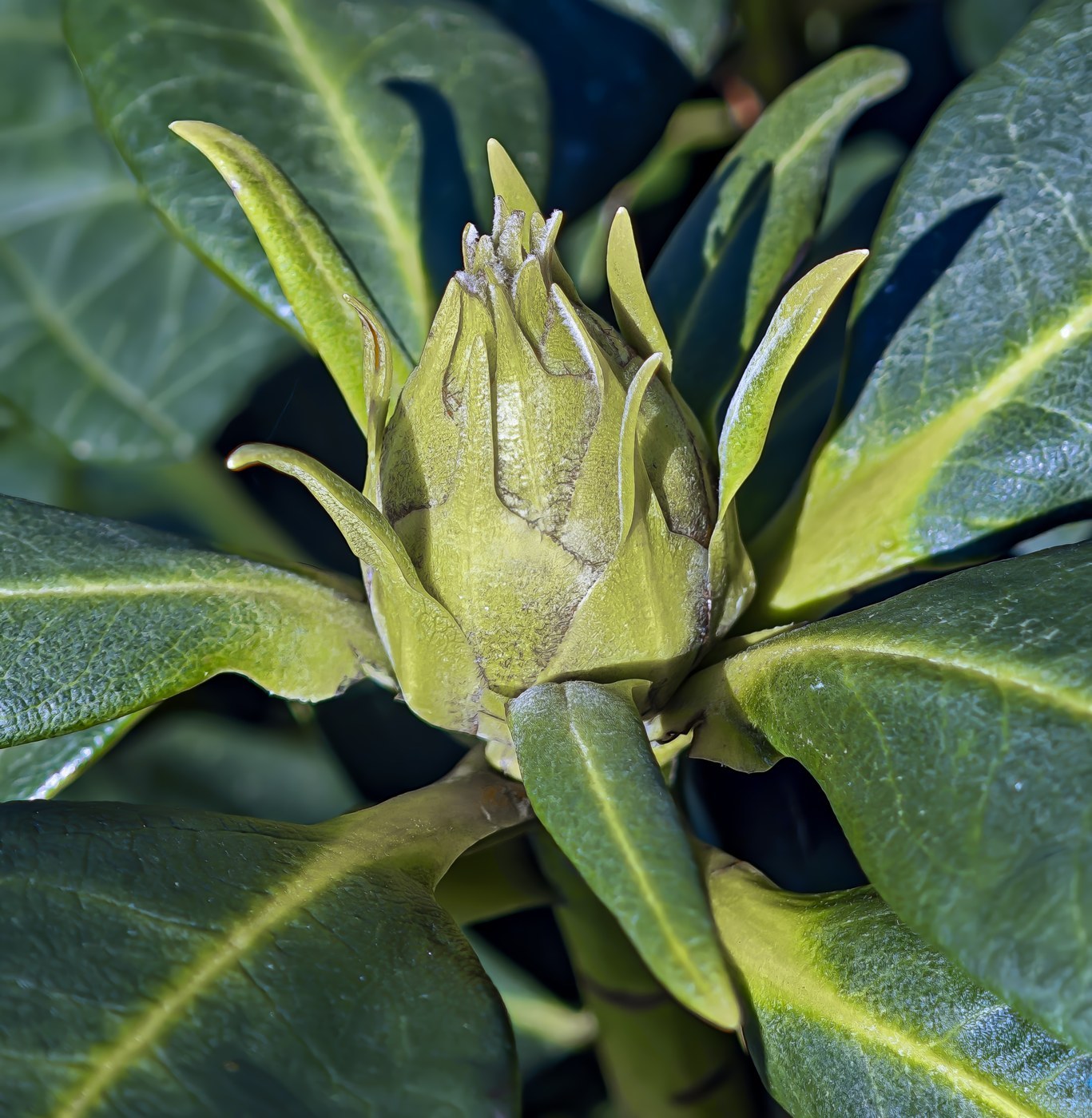
Key Identifying Features
Rhododendron (genus Rhododendron, which also includes azaleas) is a large group of mostly evergreen shrubs prized for dramatic spring flower clusters. Typical garden rhododendrons are recognized by large, leathery, dark evergreen leaves whorled at branch tips and rounded trusses of bell-shaped flowers.
- Large, leathery, oblong evergreen leaves in rosette-like clusters
- Showy domed trusses of 5–20+ flowers at branch ends
- Bell- to funnel-shaped flowers, often with spotted upper petals
- Conspicuous fat, scaly flower buds through winter
Leaves & Stems
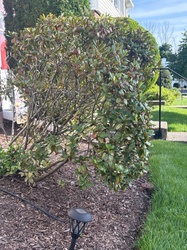
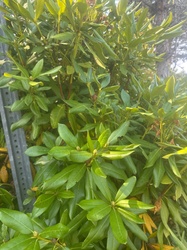
Leaves are alternate but crowded into rosettes at the ends of stout stems, 3–8 inches long, elliptic to oblong, thick and leathery, dark glossy green above and paler (sometimes scaly or felted) beneath, with smooth margins. Many roll their leaves downward in cold weather — a winter clue. Stems are stout with prominent plump terminal buds wrapped in overlapping scales. (Deciduous azaleas, within the same genus, have thinner leaves and lose them in winter.)
Flowers & Fruit
Flowers form rounded clusters called trusses at the branch tips. Each flower is bell-shaped to broadly funnel-shaped, typically with five lobes and prominent stamens (often 10); the upper lobes frequently bear darker freckled spotting to guide pollinators. Colors span white, pink, red, purple, and yellow. Bloom peaks in spring. Fruit is a small dry woody capsule that splits to release fine seeds.
How to Tell It Apart from Look-Alikes
- Mountain Laurel (Kalmia) has similar leathery leaves but cup-shaped flowers with 10 pollen pockets and pleated buds, not bell-shaped blooms.
- Azaleas are rhododendrons too but tend to have smaller, thinner, often deciduous leaves and funnel-shaped flowers usually with 5 stamens.
- Laurel/Cherry-laurel lacks the showy trusses.
- The combination of large leathery evergreen leaves in rosettes + domed trusses of bell flowers with spotted lobes points to Rhododendron.
Where You'll Find It
Rhododendrons are widely grown in cool, moist temperate gardens with acidic, well-drained, humus-rich soil and part shade. Many species are native to mountainous regions of Asia, the Himalayas, North America, and Europe, where they form thickets in woodland understory and along streams.
Quick ID Checklist
- Large leathery evergreen leaves in rosettes
- Domed flower trusses at branch tips
- Bell/funnel flowers, often spotted upper lobes
- Fat scaly buds in winter; leaves may curl in cold
- Acidic soil, part shade, cool moist sites
Frequently asked questions
What is the difference between a rhododendron and an azalea?
Azaleas are a subset of the genus Rhododendron; they generally have smaller, thinner, often deciduous leaves and funnel flowers with about five stamens, while typical rhododendrons have large leathery evergreen leaves and bell flowers with around ten stamens.
Why do my rhododendron leaves curl and droop in winter?
Cold-hardy rhododendrons roll and droop their leaves in freezing weather to reduce water loss; the leaves unfurl again when temperatures rise, so it is normal.
How do I tell rhododendron from mountain laurel?
Mountain laurel has cup-shaped flowers with ten little pollen pockets and crimped buds, whereas rhododendron has bell- to funnel-shaped flowers in rounded trusses.
What is a truss?
A truss is the rounded, domed cluster of many flowers at the tip of a rhododendron branch — a key feature for recognizing the plant in bloom.
Rhododendron identified by the community
Recent Rhododendron specimens identified with Plant Identifier.