
How to Care for Rockrose
Rockrose (Cistus ladanifer) is a sun-loving, drought-tolerant Mediterranean shrub with papery white blooms and aromatic evergreen foliage.
Read the full Rockrose encyclopedia entry →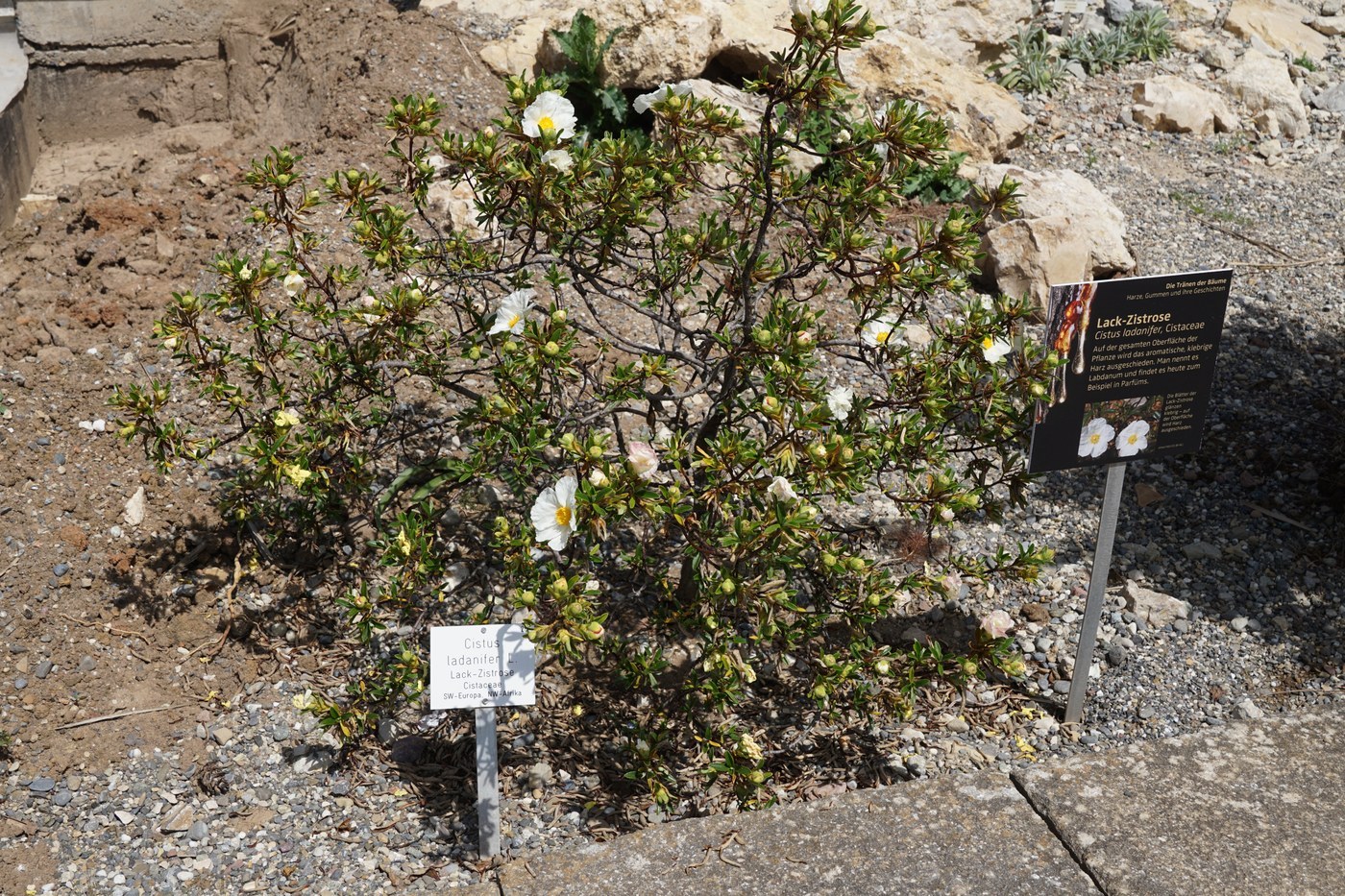
Rockrose (Cistus ladanifer) is a rugged Mediterranean evergreen shrub grown for its large, crepe-papery white flowers, often marked with maroon blotches, and its resinous, aromatic foliage. Once established it is remarkably tough, thriving on neglect in hot, dry sites.
Light
Rockrose demands full sun. It flowers most freely and keeps a dense, compact habit in strong, unobstructed light. Too much shade leads to leggy growth and sparse blooming, so give it the sunniest spot available.
Water
This is a drought-tolerant shrub once established. Water young plants during their first season to settle the roots, then reduce watering sharply; mature plants rarely need supplemental water except in prolonged drought. It strongly dislikes soggy soil, so let it dry between any waterings.
Soil & Potting
Rockrose thrives in poor, gritty, sharply draining soil and tolerates rocky, sandy, and alkaline conditions. It resents heavy, wet clay. In containers use a very free-draining, gritty mix and a pot with generous drainage holes to keep the roots on the dry side.
Humidity & Temperature
Adapted to hot, dry Mediterranean summers, rockrose prefers low humidity and warmth. It handles heat and coastal wind well and is moderately cold hardy, but wet winters are more damaging than cold; good drainage is the key to overwintering it.
Feeding
Rockrose needs little to no feeding and actually performs best in lean soil. Heavy fertilizing produces soft, floppy growth at the expense of flowers. At most, an occasional light feed in spring is plenty.
Propagation
Propagate from semi-hardwood cuttings taken in summer, rooted in a gritty, well-drained medium. Seed is also viable and germinates readily, sometimes even self-sowing in favorable sites. Cuttings preserve the flower color and form of a chosen parent.
Repotting / Pruning
Rockrose resents hard pruning into old wood, which it rarely regrows from. Instead, lightly tip-prune young plants to encourage bushiness and trim gently after flowering to maintain shape. Repot container specimens infrequently, keeping them slightly potbound in gritty mix.
Common Problems & Pests
Rockrose is largely trouble-free and seldom bothered by pests. The main risk is root rot from wet, poorly drained soil, so overwatering is the chief danger. Short-lived by nature, plants may decline after several years and are easily replaced from cuttings.
Seasonal Care Tips
Plant in spring so roots establish before summer heat. Enjoy the flush of blooms in late spring to early summer, then trim lightly to tidy the shrub. Keep it dry through winter and avoid rich mulch or feeding that would encourage weak growth.
Frequently asked questions
How often should I water an established rockrose?
Rarely. Once established it is highly drought tolerant and usually needs no supplemental water except in extended drought. Overwatering is the biggest threat to its health.
Can I prune rockrose hard to reshape it?
No. It does not reliably regrow from old, bare wood. Tip-prune young plants and trim lightly after flowering; avoid cutting back into leafless stems.
Why is my rockrose leggy and not flowering?
It is almost certainly not getting enough sun. Rockrose needs full sun to stay compact and bloom well; too much shade produces sparse, straggly growth.
What soil does rockrose need?
Poor, gritty, sharply draining soil suits it best. It thrives in sandy, rocky, or alkaline ground and dislikes heavy, wet clay.