
Rockrose Identification Guide
How to recognize rockrose (Cistus) by its crinkled tissue-paper flowers, resinous aromatic foliage, and low Mediterranean shrub habit.
Read the full Rockrose encyclopedia entry →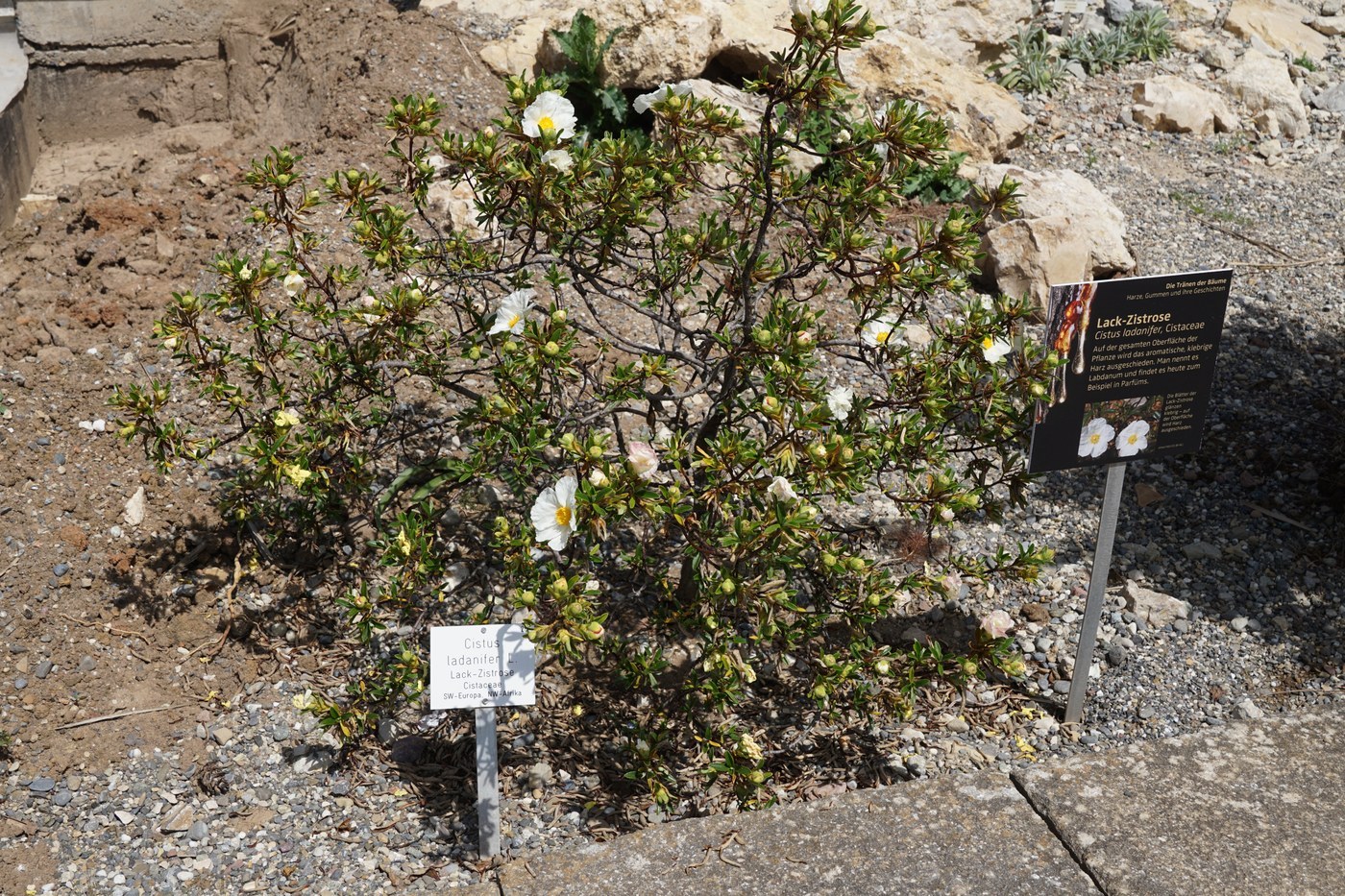
Key Identifying Features
Rockrose (genus Cistus) is a low-to-medium evergreen shrub from the Mediterranean, instantly recognizable by its fragile, papery flowers that look crumpled like crepe paper and last only a single day. Each flower drops its petals by afternoon, but the plant produces a fresh flush every morning through late spring and early summer.
- Rounded, mounding shrub, typically 2–5 ft tall and wide
- Flowers 2–3 in across with 5 silky petals, often with a contrasting basal blotch
- Petal colors range from white and pink to magenta, with a boss of yellow stamens
- Foliage is aromatic and sticky-resinous, especially in heat
Leaves & Stems
Leaves are opposite, simple, and lance-shaped to oval, usually 1–3 in long. Many species have gray-green, wrinkled or wavy-margined leaves that feel slightly rough or leathery. Crush a leaf and you'll often smell a balsamic, labdanum-like resin — Cistus ladanifer is the source of the perfume ingredient labdanum, and its leaves can feel genuinely sticky. Stems are woody at the base and become twiggy and brittle with age.
Flowers & Fruit
The single-day flowers are the strongest clue. Look for:
- Five broad, overlapping petals that look creased or tissue-thin
- A dense central tuft of yellow stamens
- In many species, a dark maroon, red, or yellow spot at the base of each petal
Fruit is a small, dry, 5- or 10-valved woody capsule that splits to release fine seeds. Spent flowers and capsules persist briefly before dropping.
How to Tell It Apart from Look-Alikes
- Rock purslane (Calandrinia/Cistanthe) has succulent paddle leaves — rockrose leaves are dry and resinous, not fleshy.
- Single roses or wild roses have thorny stems and pinnately compound leaves; rockrose has no thorns and simple opposite leaves.
- Sunrose (Helianthemum) is a closely related but much smaller, ground-hugging plant with tiny leaves and flowers under 1 in.
- Flannel bush (Fremontodendron) has felted star-shaped flowers but lobed, fuzzy leaves and yellow blooms only.
The combination of day-lasting crinkled petals + aromatic sticky foliage + mounding evergreen habit is diagnostic.
Where You'll Find It
Rockrose thrives in hot, dry, sunny sites with poor, fast-draining soil — classic xeriscape, coastal, and Mediterranean-climate gardens. It tolerates salt spray, drought, and rocky banks, and is widely planted on slopes for erosion control in California, the Mediterranean basin, and Australia. It dislikes rich soil, shade, and wet feet.
Quick ID Checklist
- Mounding evergreen shrub, 2–5 ft
- Papery, crumpled 5-petaled flowers lasting one day
- White/pink/magenta petals, often with a basal blotch
- Yellow stamen boss in center
- Opposite, lance-shaped, often gray-green leaves
- Resinous, balsamic, sometimes sticky foliage scent
- Dry sunny site, fast-draining soil
If you find a knee-to-waist-high shrub covered in short-lived tissue-paper blooms and the leaves smell of warm resin when crushed, you've found a rockrose.
Frequently asked questions
Why do the flowers fall apart so quickly?
Rockrose flowers are naturally ephemeral, opening at dawn and shedding their petals by afternoon. The plant compensates by producing a fresh flush of blooms nearly every day through its season, so a healthy shrub looks continuously covered in flowers even though individual blooms last only hours.
Is the sticky feel on the leaves normal?
Yes. Several species, especially Cistus ladanifer, exude a fragrant resin called labdanum that coats the leaves and stems, making them feel sticky and smell balsamic in hot weather. It's a reliable identification cue, not a sign of pests or disease.
How do I distinguish rockrose from sunrose?
They're related but differ in scale. Rockrose (Cistus) is a substantial shrub 2–5 ft tall with flowers 2–3 in across, while sunrose (Helianthemum) is a low ground-cover only a few inches high with tiny leaves and flowers under an inch.
Does rockrose have thorns?
No. Despite the name, rockrose is unrelated to true roses and is completely thornless, with simple opposite leaves rather than the compound, prickly stems of a rose.