
How to Care for Rowan
Grow Sorbus aucuparia, a hardy, easy deciduous tree with feathery foliage, spring flower clusters, and vivid autumn berries for compact gardens.
Read the full Rowan encyclopedia entry →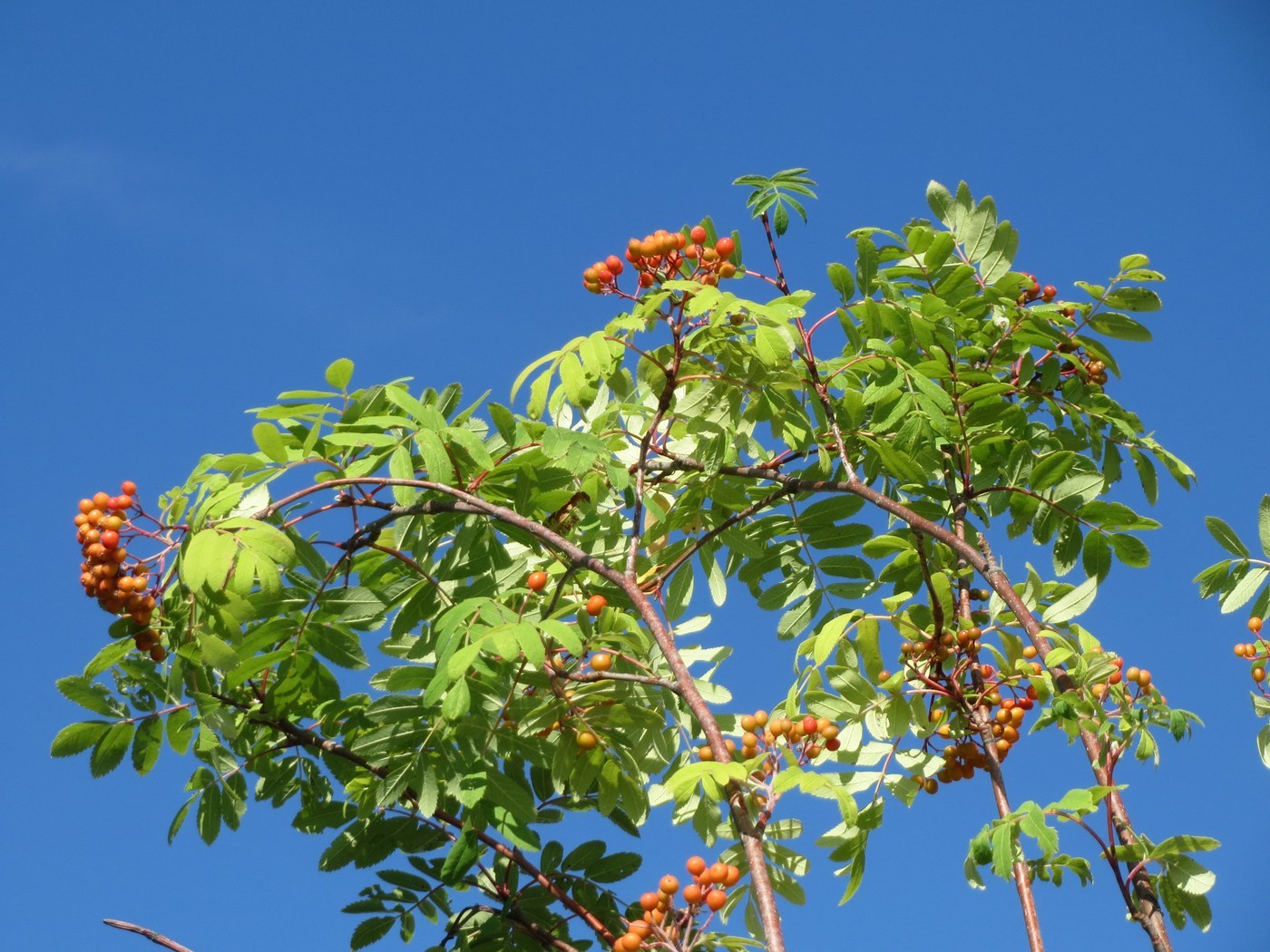
Rowan (Sorbus aucuparia), also called mountain ash, is a graceful small-to-medium deciduous tree valued for its feathery pinnate leaves, flat clusters of creamy spring flowers, brilliant orange-red autumn berries, and fiery fall foliage. Hardy and undemanding, it suits smaller gardens and cooler climates.
Light
Grows well in full sun to partial shade. Full sun produces the densest crown, heaviest flowering, and best berry display and autumn color, while it still performs acceptably in light or dappled shade. Give it an open position with room for the canopy to develop.
Water
Has moderate water needs. Keep young trees well watered through their first two or three seasons while the roots establish, watering deeply during dry spells. Once established, rowan is fairly drought-resilient and usually relies on natural rainfall in temperate climates, though a deep soak in prolonged summer drought supports berry set. Avoid permanently waterlogged sites.
Soil & Potting
Adaptable to a wide range of soils and tolerant of poor, rocky, or thin ground, reflecting its mountainous origins. It prefers a moisture-retentive but well-drained loam and does best in neutral to acidic conditions, tending to struggle on very shallow chalk. Improve heavy soils with organic matter and mulch young trees to conserve moisture.
Humidity & Temperature
A very cold-hardy tree suited to cool temperate climates, roughly USDA zones 3 to 6. It thrives where summers are not excessively hot and can suffer stress in prolonged heat and drought. No special humidity needs; it is fully at home in exposed, windy, and upland sites.
Feeding
Generally low-maintenance and rarely needs feeding once established. On poor soils, an application of balanced general fertilizer or a spring mulch of compost supports young trees. Avoid heavy nitrogen feeding, which encourages soft, disease-prone growth. An annual organic mulch is usually all that is required.
Propagation
The species is easily grown from seed, which needs a period of cold stratification over winter to break dormancy before spring sowing. Named ornamental cultivars are usually propagated by grafting or budding onto rowan rootstock to keep them true, as they do not come reliably true from seed.
Repotting / Pruning
Needs little pruning. Remove dead, damaged, diseased, or crossing branches and any suckers to maintain a strong, well-shaped framework. Prune when dormant in late fall or winter, or in midsummer for members of this group to reduce disease entry. Keep container-grown young trees in generous pots and pot on in dormancy until ready to plant out.
Common Problems & Pests
Rowan can be affected by fireblight, a bacterial disease causing blackened, wilted shoots; prune out affected wood well below the damage and disinfect tools. It may also encounter aphids, sawfly larvae, and occasional canker or leaf spots. Birds strip the berries quickly in autumn, which is part of the tree's ecological charm. Choose disease-resistant cultivars and keep trees healthy to minimize issues.
Seasonal Care Tips
Spring: enjoy the flower clusters, mulch, and water young trees. Summer: water deeply in drought and prune if needed. Autumn: the highlight season of berries and leaf color; plant new trees now while the soil is warm. Winter: carry out structural pruning while dormant and check stakes and ties on young trees.
Frequently asked questions
How big does a rowan tree grow?
Rowan is a small-to-medium tree, typically reaching around 8 to 15 metres over time with a fairly narrow, open crown, which makes it well suited to smaller gardens compared with larger shade trees.
Does rowan need pruning?
Very little. Just remove dead, damaged, diseased, or crossing branches and any suckers to keep a strong shape. Prune while dormant in winter or in midsummer to reduce the risk of disease entering cuts.
Why are the berries disappearing from my rowan?
Birds are strongly attracted to the bright autumn berries and often strip them quickly. This is normal and is part of what makes rowan a valued wildlife tree.
Can I grow rowan from seed?
Yes, the species grows readily from seed, but the seed needs a period of cold stratification over winter before spring sowing. Named cultivars are grafted instead, as they do not come true from seed.