Rubber Tree Identification Guide
Identify the rubber tree or rubber plant (Ficus elastica) by its large, glossy, leathery oval leaves, red leaf sheaths, and milky sap, and tell it apart from other Ficus.
Read the full Rubber Tree encyclopedia entry →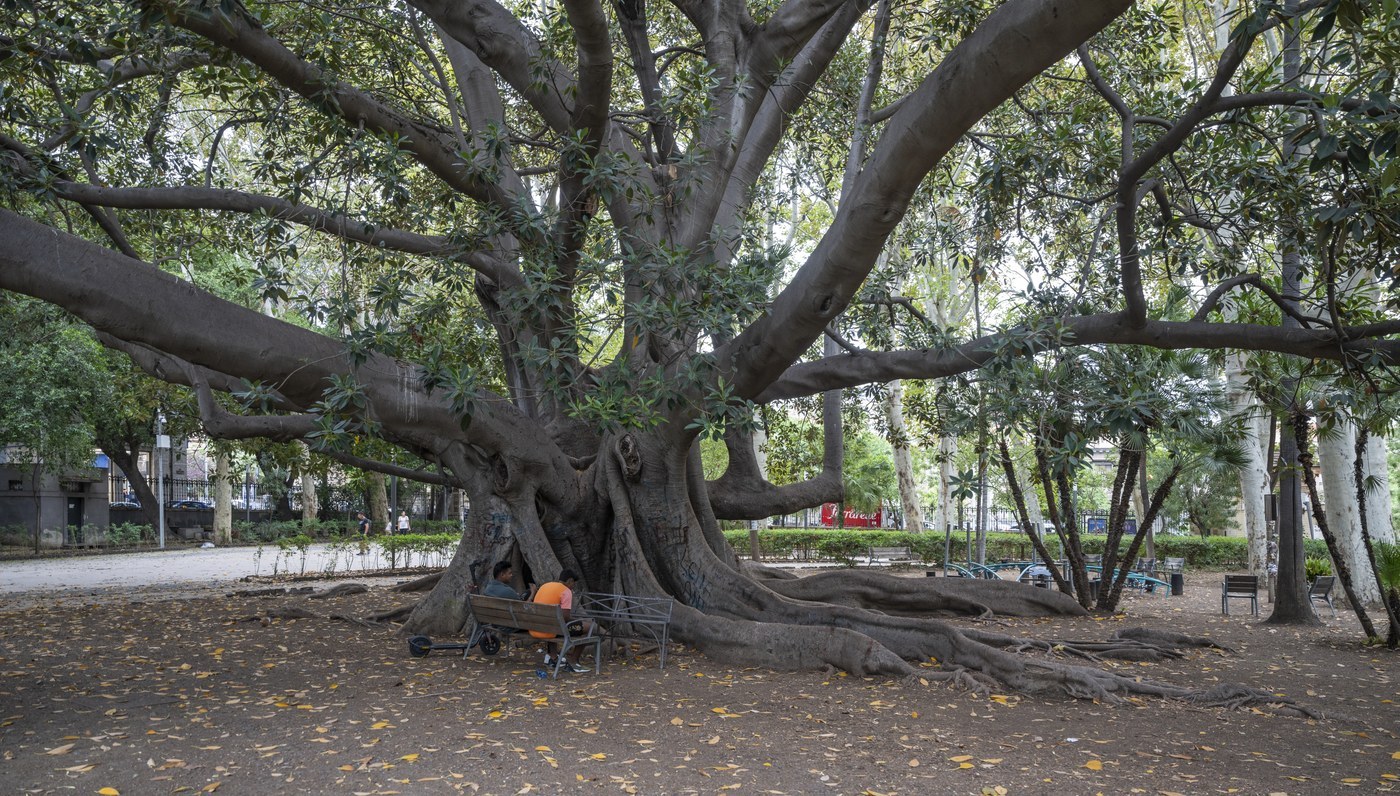
Key Identifying Features
The rubber tree / rubber plant (Ficus elastica) is identified by:
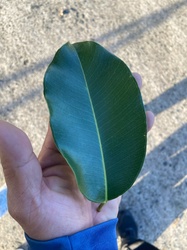
- Large, thick, glossy, leathery oval leaves with smooth (untoothed) margins.
- A prominent pale central midrib and faint parallel side veins.
- New leaves wrapped in a striking rosy-red sheath that drops as the leaf unfurls.
Leaves & Stems
Leaves are broad ellipses, 15–30 cm (6–12 in) long, very stiff and shiny, deep green (or burgundy/variegated in cultivars like 'Tineke' and 'Ruby'). The upper surface is smooth and waxy; the midrib is often pale or reddish. Leaves are arranged alternately along sturdy stems.
The key dynamic feature is the bright red, pointed sheath (stipule) that protects each emerging leaf — it falls away once the new leaf opens, leaving a ring scar on the stem. The plant forms an upright woody trunk and, in the tropics, drops aerial roots that thicken into supports.
Flowers & Fruit
Like all figs, cutting any part releases milky white latex (historically tapped for rubber). Indoors it rarely flowers; in the wild it bears small, paired figs pollinated by a specific fig wasp. The latex is the most reliable confirming trait for identification, along with the red leaf sheath.
How to Tell It Apart from Look-Alikes
- Fiddle-leaf fig (Ficus lyrata): leaves are violin-shaped with deeply sunken veins, not the smooth ovals of the rubber plant.
- Ficus benghalensis / altissima: oval leaves too, but with more prominent lighter veins and a more matte, fuzzy young growth; rubber plant leaves are glossier with a red sheath.
- Magnolia / Schefflera: superficially leathery leaves but no milky latex and no red stipule — both are absent in those plants.
The clincher: thick glossy oval leaf + red emerging sheath + milky latex = rubber tree.
Where You'll Find It
Native to the rainforests of South and Southeast Asia (NE India, Malaysia, Indonesia), where it grows into a massive tree, sometimes a banyan-like strangler. Worldwide it's a classic indoor tree for bright, indirect light. Outdoors it grows only in warm, frost-free climates (USDA zones 10–12).
Quick ID Checklist
- Large, thick, glossy oval leaves, smooth margins
- Pale or reddish central midrib
- Red pointed sheath on new leaves
- Milky white latex when cut
- Upright woody trunk; aerial roots in the tropics
A bold indoor tree with thick, shiny oval leaves, red new-leaf sheaths, and milky sap is the rubber tree.
Frequently asked questions
What is the red part on the new leaves?
That's the stipule or leaf sheath, a protective casing that wraps each emerging leaf. It's bright pinkish-red and drops off once the new leaf unfurls, leaving a small ring scar on the stem. It's a key ID feature of the rubber plant.
How do I tell a rubber tree from a fiddle-leaf fig?
Rubber tree leaves are smooth-edged glossy ovals with a flat surface, while fiddle-leaf fig leaves are violin-shaped with deeply corrugated, sunken veins. Both produce milky latex when cut.
Why are my rubber plant's new leaves red?
Many cultivars and even green forms produce reddish new growth and red leaf sheaths. Variegated types like 'Ruby' keep pink and red tones in mature leaves, which is normal and a feature of the species.
What growth habit does the rubber tree have?
It forms an upright, single woody trunk and, in tropical conditions, drops aerial roots that thicken into supports. Indoors it grows as a tall, bold single-stemmed tree.
Rubber Tree identified by the community
Recent Rubber Tree specimens identified with Plant Identifier.