
Rue Identification Guide
How to recognize common rue (Ruta graveolens) by its blue-green lobed foliage, pungent scent, and yellow flowers, and how to avoid mistaking it for similar herbs.
Read the full Rue encyclopedia entry →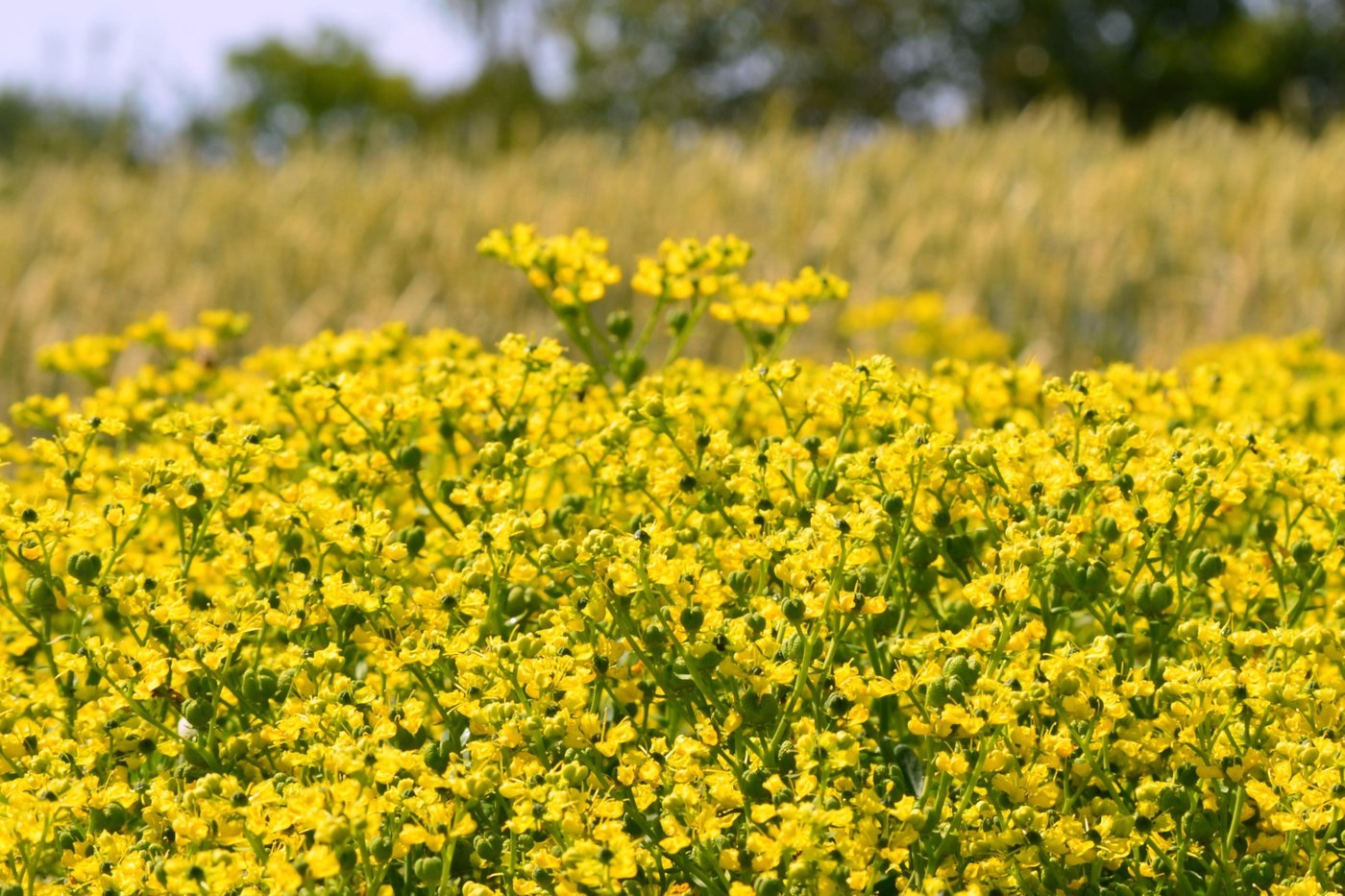
Key Identifying Features
Rue (Ruta graveolens) is a small evergreen subshrub that you can often identify by smell alone: crush a leaf and it releases a strong, sharp, acrid odor many people find unpleasant. Combine that with its distinctive blue-green to grayish foliage and you have a reliable first impression.
- Woody at the base, herbaceous and rounded above, growing 2-3 ft (60-90 cm) tall and wide
- Foliage has a waxy, slightly powdery surface giving a glaucous blue-green color
- Strongly aromatic and bitter
Leaves & Stems
The leaves are the most recognizable trait. They are bipinnately divided into many small, spoon-shaped or oblong leaflets, giving a delicate, fern-like or feathery look. Individual end segments are rounded with a tiny notch at the tip, not pointed. Leaves are alternate, dotted with translucent oil glands when held to light. Stems are smooth, becoming woody and brown at the base while upper growth stays green and soft.
Caution: Rue sap contains furanocoumarins that cause phytophotodermatitis - painful blistering when skin contacts the plant and is then exposed to sunlight. Handle with gloves.
Flowers & Fruit
Rue blooms in summer, producing flat-topped clusters of small dull-yellow flowers at the stem tips. Each flower is about 1/2 in (1-1.5 cm) across with 4-5 concave, hooded petals that have wavy or fringed edges - a distinctive cupped look. The central terminal flower often has 5 petals while side flowers have 4. A prominent green disk and 8-10 stamens sit in the center. The fruit is a 4-5 lobed capsule that dries brown and splits to release small black seeds.
How to Tell It Apart from Look-Alikes
- Rue anemone or meadow rue (Thalictrum): Share the common name and have lobed leaflets, but lack rue's pungent smell and have fluffy petal-less flowers.
- Common rue vs. garden herbs like dill/fennel: Those have thread-fine leaves and umbrella-shaped flower heads; rue's leaflets are broad and spoon-shaped.
- The unmistakable cues are the strong acrid scent, blue-green waxy color, and cupped fringed yellow petals.
Where You'll Find It
Rue is a Mediterranean native widely grown in herb and ornamental gardens, sometimes escaping to dry, rocky, sunny waste ground and roadsides. It thrives in poor, well-drained soil and full sun, staying evergreen in mild climates.
Quick ID Checklist
- Strong acrid odor when leaves are crushed
- Blue-green, waxy, ferny bipinnate leaves with rounded, notched leaflet tips
- Dull yellow flowers with 4-5 cupped, fringed petals in summer
- Woody-based subshrub, 2-3 ft tall
- 4-lobed seed capsules
- Causes skin blistering in sunlight - handle with care
Frequently asked questions
How can I be sure a plant is rue?
Crush a leaf - rue has an unmistakably strong, sharp, acrid smell. Pair that with blue-green waxy ferny foliage and small cupped yellow flowers with fringed petals for a confident ID.
Is rue dangerous to touch?
Yes. Its sap contains furanocoumarins that can cause phytophotodermatitis, a blistering rash that develops when treated skin is exposed to sunlight. Wear gloves and long sleeves when handling it.
Why is rue called the 'herb of grace'?
The name dates to historical and religious use, but for identification purposes it simply refers to common rue, Ruta graveolens, the blue-green Mediterranean garden subshrub.
What color are rue's leaves?
A distinctive glaucous blue-green to gray-green, with a waxy, slightly powdery surface that helps separate it from ordinary green garden herbs.