Rue
Ruta graveolens
Rue is an aromatic evergreen subshrub with blue-green, deeply lobed foliage, long grown as an ornamental and pollinator herb in dry, sunny gardens.
- Light
- Full sun
- Water
- Low; drought-tolerant once established
- Difficulty
- Easy
Got a plant like this?
Identify any plant from a photo, free.
Overview
Rue (Ruta graveolens) is a hardy Mediterranean perennial grown for centuries as a ceremonial and ornamental herb. It forms a tidy, woody-based mound of distinctive blue-green foliage with a pungent scent.
Once a staple of monastery gardens, rue is now grown mostly as an ornamental and pollinator plant, prized for its cool foliage color and its role as a host plant for swallowtail butterflies.
How to identify it
- Foliage: Bluish-green, smooth, deeply divided (bipinnate) leaves with rounded, spoon-shaped lobes
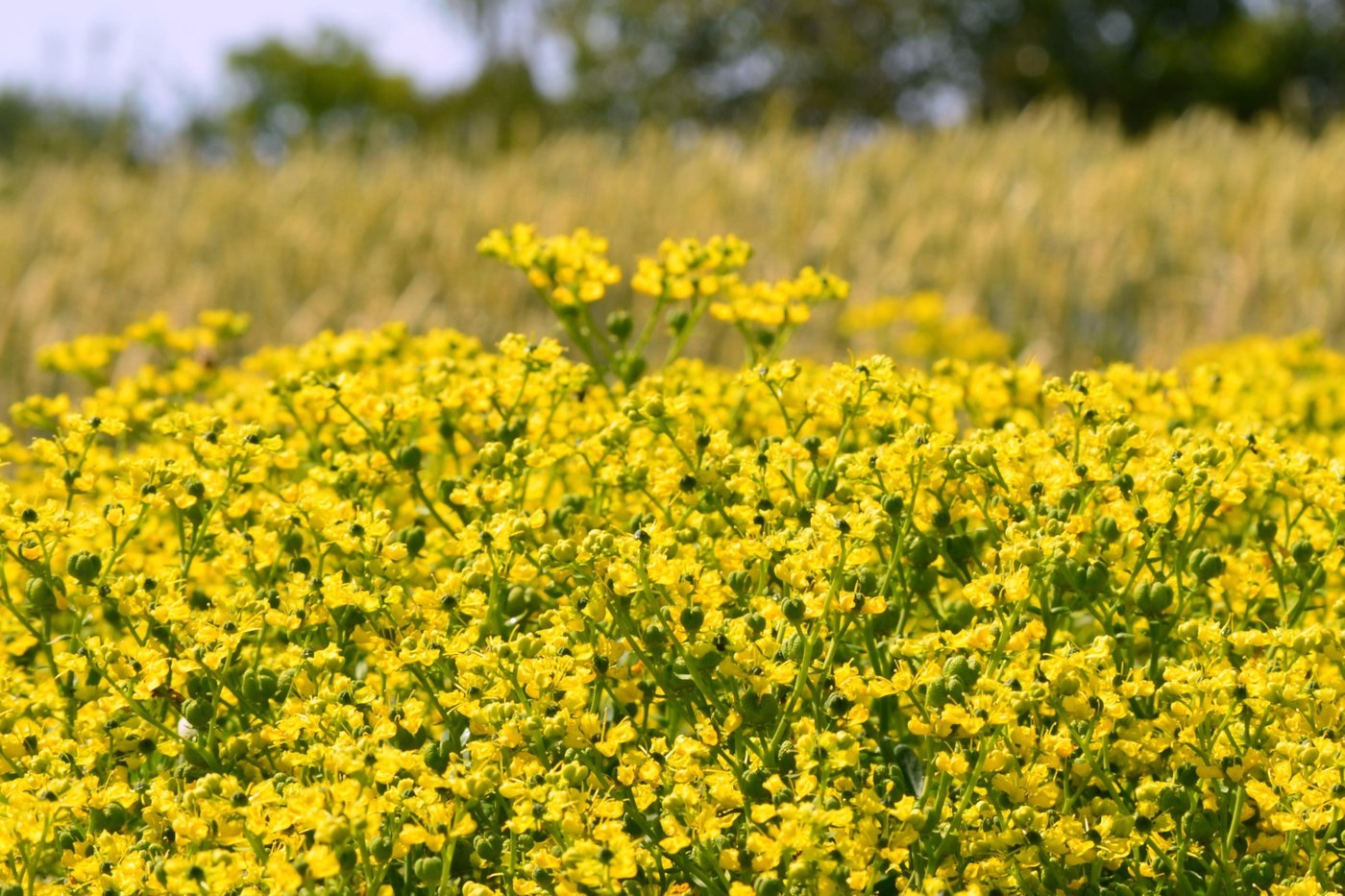
- Flowers: Small four- to five-petaled yellow flowers with frilly margins, borne in loose clusters in summer
- Habit: Woody-based subshrub, typically 2-3 ft tall and wide
- Scent: Strong, acrid, somewhat goat-like aroma when foliage is bruised
- Seed: Distinctive lobed seed capsules follow the flowers
Care & growing
Light: Full sun for best form and color.
Water: Drought-tolerant; water sparingly and avoid soggy soil.
Soil: Lean, well-drained, even rocky or alkaline soils; dislikes rich, wet ground.
Temperature: Hardy to about USDA zone 5; evergreen in mild climates.
Feeding: None needed; excess fertility weakens the plant.
Propagation: Sow seed in spring or take softwood cuttings. Prune lightly in spring to maintain shape.
Habitat & origin
Rue is native to the Balkan Peninsula and southeastern Europe and has naturalized across the Mediterranean. It thrives on dry, sunny, rocky slopes and poor soils.
It is widely grown in herb gardens, xeriscapes, and historic gardens throughout temperate Europe and North America.
Frequently asked questions
Why is rue grown in gardens?
For its attractive blue-green, deeply divided foliage, its value as a swallowtail butterfly host plant, and its long ornamental and ceremonial history.
Does rue repel pests?
It has a reputation as an insect and cat repellent, and the strong scent does deter some pests, though results vary.
How big does rue grow?
It forms a tidy, woody-based subshrub typically 2-3 ft tall and wide, with a mounded form.
What soil does rue prefer?
Lean, well-drained, even rocky or alkaline soils in full sun; it dislikes rich, wet ground.
Rue guides
In-depth guides for identifying, growing, and caring for Rue.
How to Care for Rue
Grow Rue (Ruta graveolens), a tough, drought-tolerant evergreen subshrub prized for its lacy blue-green foliage and yellow blooms.
Rue Identification Guide
How to recognize common rue (Ruta graveolens) by its blue-green lobed foliage, pungent scent, and yellow flowers, and how to avoid mistaking it for similar herbs.