
How to Care for Salmonberry
Grow vigorous native Salmonberry for early pink blooms and lush thickets in moist, part-shade woodland settings.
Read the full Salmonberry encyclopedia entry →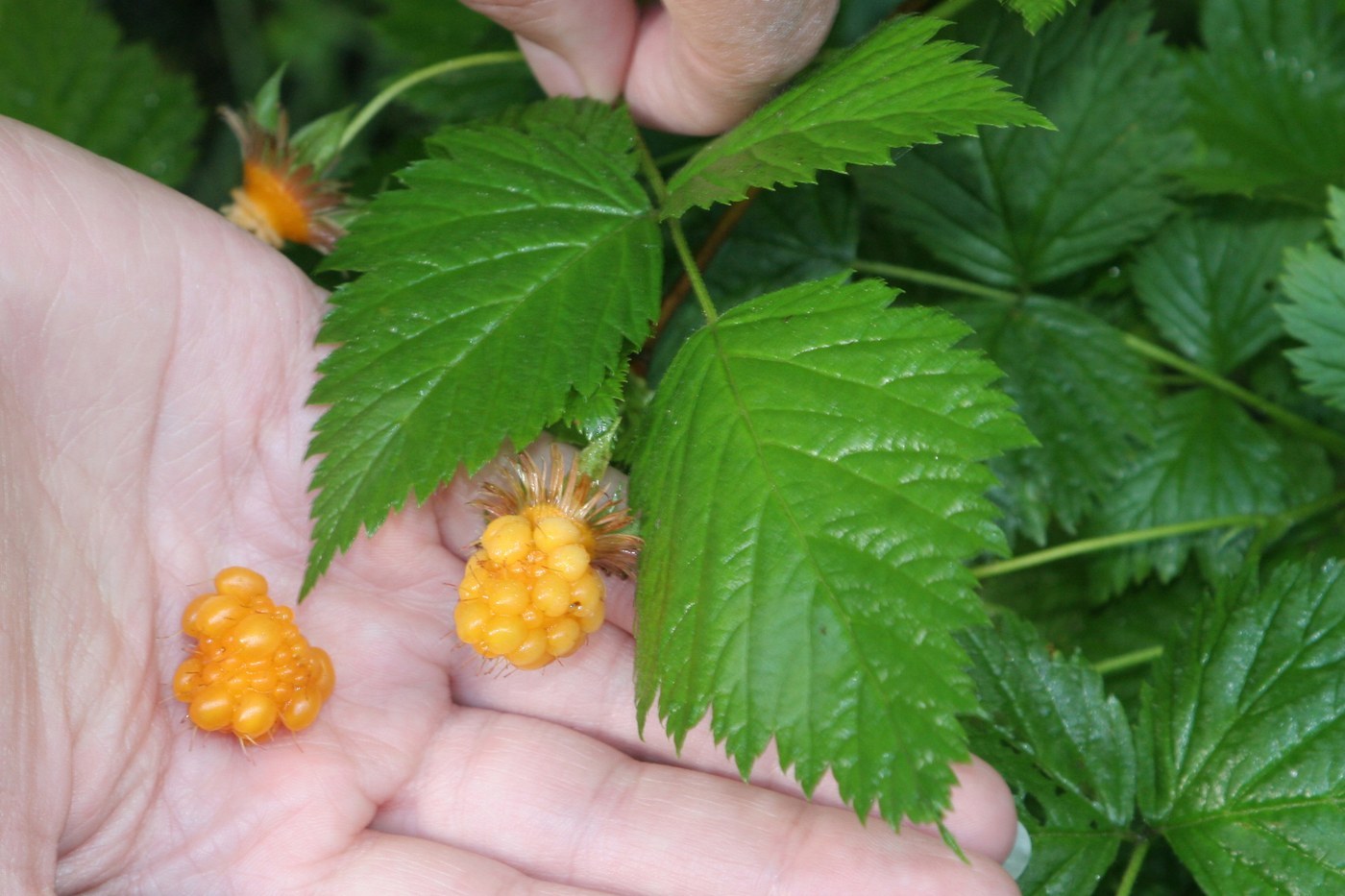
Salmonberry (Rubus spectabilis) is a vigorous, thicket-forming shrub of the Pacific Northwest, valued in the garden for its bright magenta-pink spring flowers, arching canes, and lush, three-part leaves. It is an easy, fast-growing plant for moist, semi-shaded naturalistic and woodland plantings.
Light
Salmonberry grows in partial shade to full sun. In cool coastal climates it flowers and grows well in more sun, while in warmer or drier areas it prefers dappled or afternoon shade to protect it from heat and drying. It naturally colonizes shady streambanks and forest edges, so it copes gracefully with lower light.
Water
Keep the soil consistently moist. Salmonberry is a moisture lover that thrives along streams and in damp ground, and it will struggle in dry soil. Water regularly, especially in sun and during dry spells, and mulch to retain moisture. It tolerates occasional wet, boggy conditions better than most shrubs.
Soil & Potting
It prefers rich, moisture-retentive soil high in organic matter, slightly acidic to neutral. Amend with compost or leaf mold at planting to feed its vigorous roots. It is adaptable to a range of soils as long as they stay damp, and it tolerates heavier ground where drainage is imperfect.
Humidity & Temperature
A cold-hardy woodland shrub, salmonberry withstands frost and cool, humid conditions well and is deciduous, dropping its leaves in fall. It thrives in the mild, moist maritime climate of its native range and appreciates cooler summers; provide extra moisture and shade where summers run hot and dry.
Feeding
Salmonberry rarely needs much feeding in decent soil. An annual spring mulch of compost supplies enough nutrients for strong growth. If growth is weak, a light application of balanced fertilizer in spring will help, but overfeeding only fuels its already aggressive spreading.
Propagation
It propagates readily. Established plants spread by underground rhizomes and suckers that can be dug and transplanted, and softwood or hardwood cuttings root easily. Layering low canes into moist soil also works well. Because it spreads energetically, give it room or plan to control its runners.
Repotting / Pruning
Prune after flowering or in late winter to remove old, spent canes at the base and thin crowded growth, keeping the thicket productive and airy. Salmonberry can become invasive in favorable conditions, so cut back suckers and dig out unwanted runners to keep it in bounds.
Common Problems & Pests
Salmonberry is tough and largely pest-free. Its chief drawback is vigor, spreading beyond its allotted space if unchecked. In dry sites it suffers leaf scorch and poor growth. Occasional fungal leaf spots or rust can appear in crowded, damp, poorly ventilated stands; thinning canes improves airflow.
Seasonal Care Tips
In spring, enjoy the early flowers and topdress with compost. Through summer, keep the roots moist and remove excess suckers to control spread. In late winter, prune out old canes and thin the clump. Being deciduous, it needs no winter protection in its hardiness range.
Frequently asked questions
How do I keep Salmonberry from spreading too much?
It spreads aggressively by rhizomes and suckers. Dig out unwanted runners regularly, prune back canes, and consider a root barrier or a contained area. Avoid overfeeding, which only fuels vigorous spreading.
How much water does Salmonberry need?
A lot. It is a moisture-loving shrub of streambanks and damp woods, so keep the soil consistently moist, water regularly in sun and during dry spells, and mulch to retain moisture. It tolerates occasionally wet ground.
Can Salmonberry grow in full sun?
Yes, in cool coastal climates it grows and flowers well in full sun as long as the soil stays moist. In hotter, drier regions give it partial or afternoon shade to prevent heat stress and leaf scorch.
When should I prune Salmonberry?
Prune after flowering or in late winter. Remove old, spent canes at the base and thin crowded growth to keep the thicket airy and productive, and cut back suckers to control its spread.