Salmonberry
Rubus spectabilis
Salmonberry is a Pacific Northwest bramble with magenta spring flowers and golden-to-red raspberry-like fruit. It thrives in moist, shaded coastal habitats.
- Light
- Partial shade to full sun
- Water
- Keep consistently moist
- Difficulty
- Easy
Got a plant like this?
Identify any plant from a photo, free.
Overview
Salmonberry (Rubus spectabilis) is a deciduous shrub in the rose family, native to the moist coastal forests of western North America. It is among the earliest brambles to flower and fruit, producing showy magenta-pink blossoms in early spring followed by soft, raspberry-like fruit.
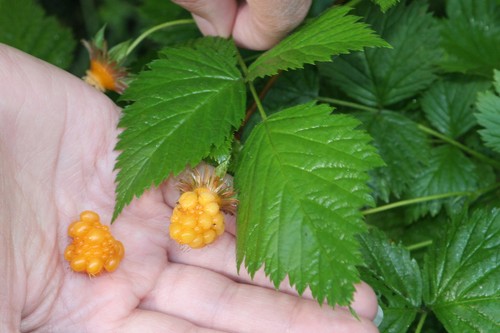
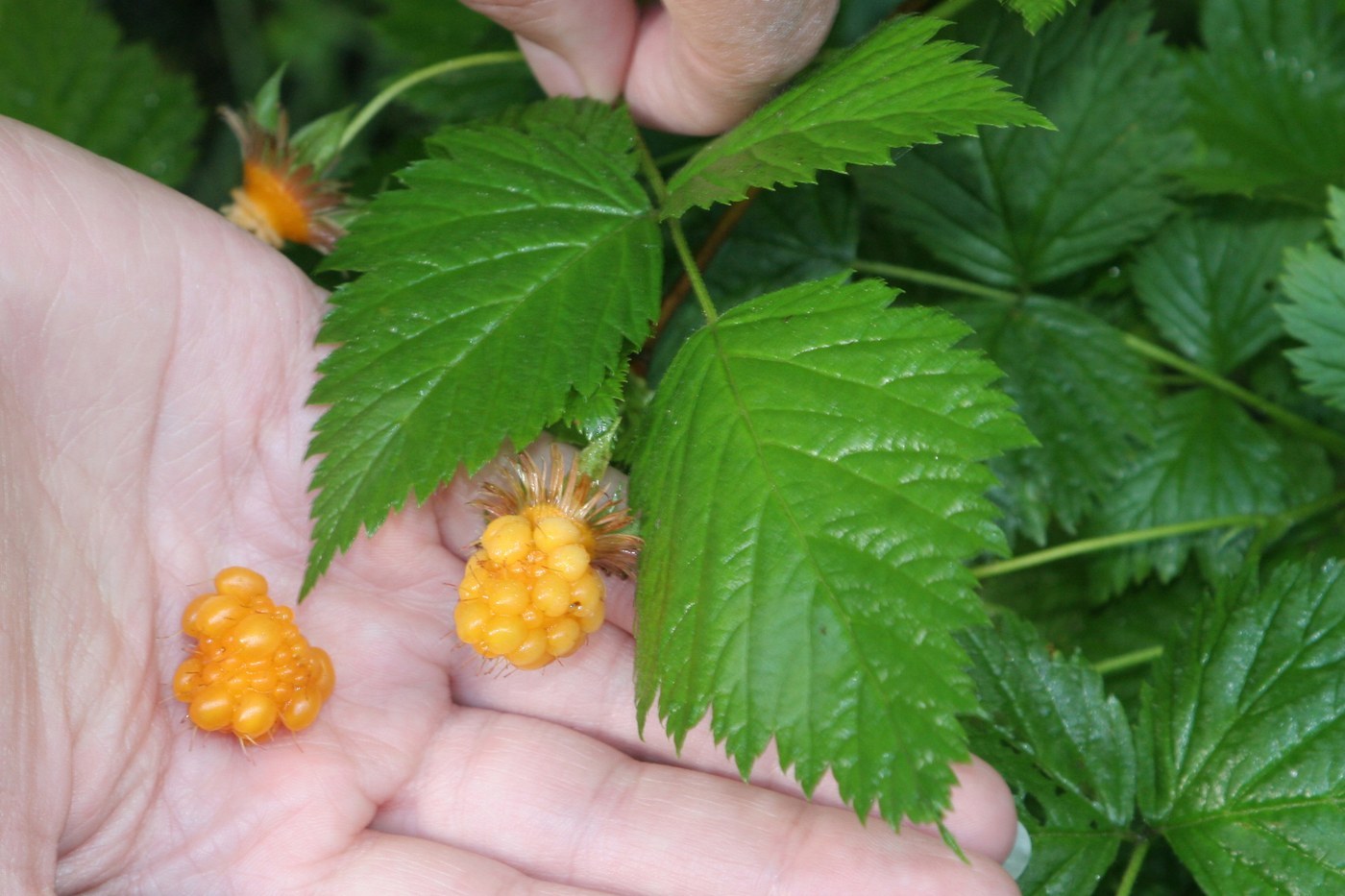
The berries range in color from golden-yellow to orange and deep red, and the name may come from this salmon-like coloring.
Vigorous and thicket-forming, salmonberry plays an important ecological role and is valued as an ornamental and wildlife shrub in native plantings.
How to identify it
- Fruit: Aggregate of drupelets like a raspberry, 1/2–3/4 in, ranging from yellow-orange to red; soft
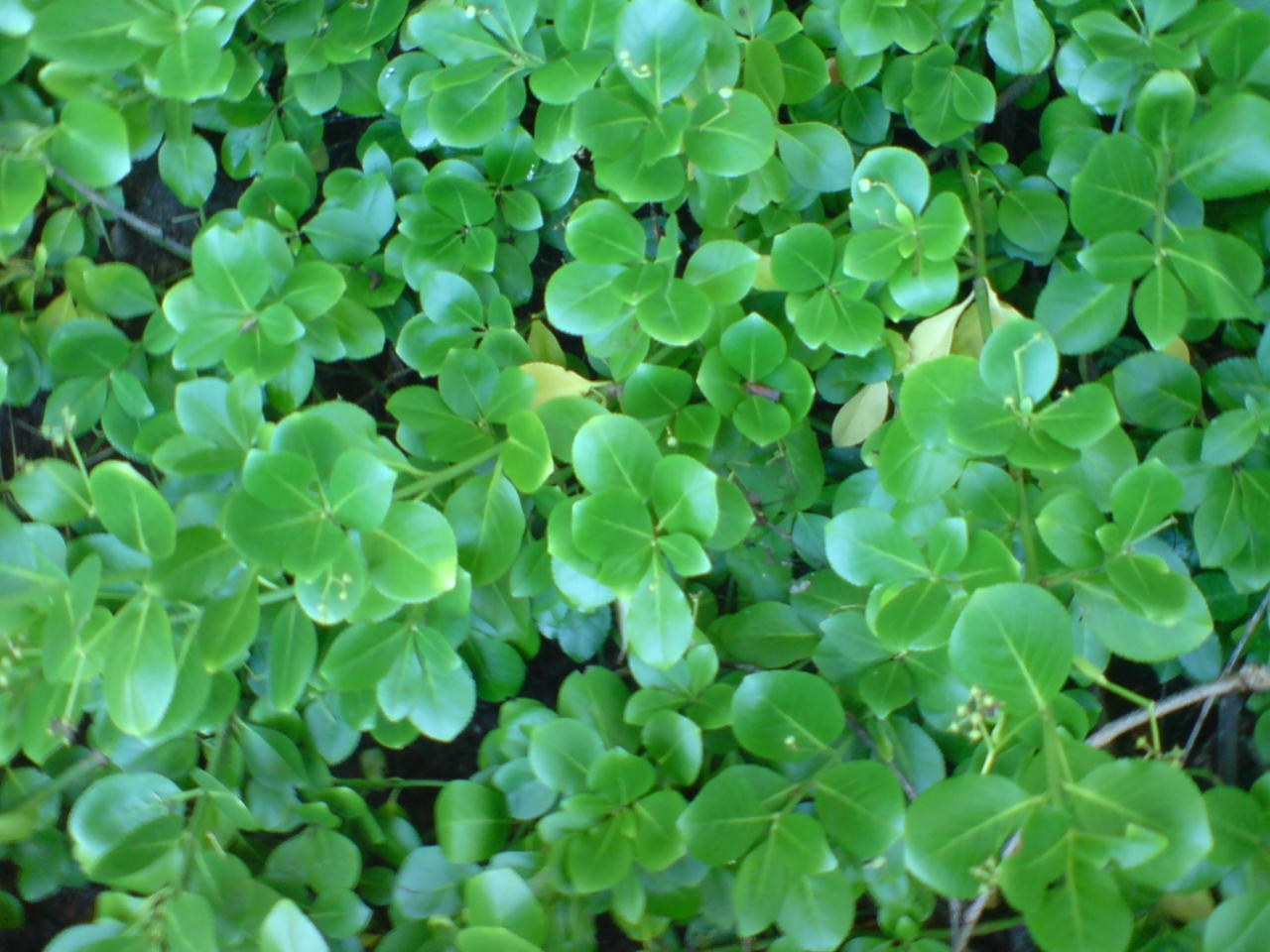
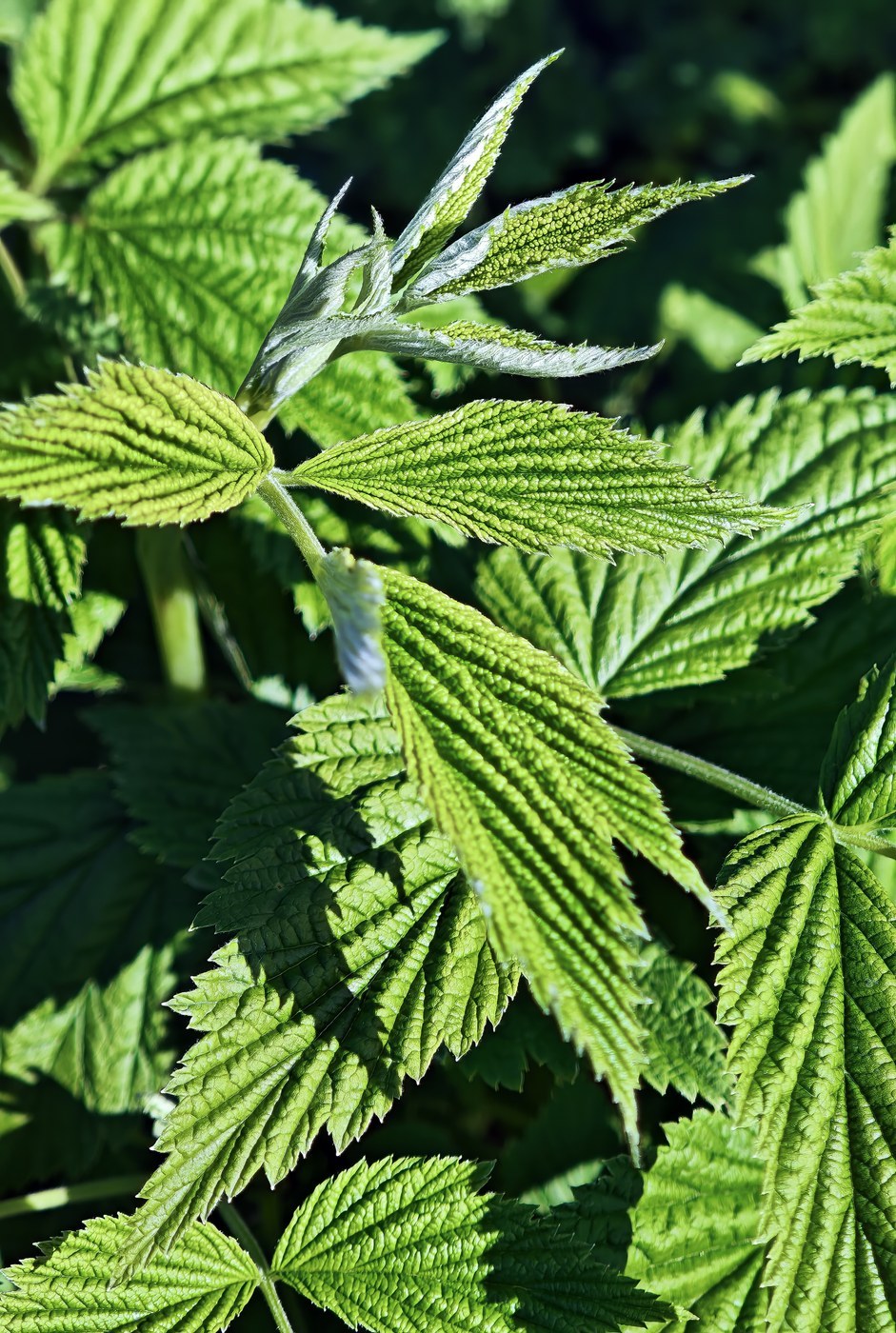
- Leaves: Compound with three serrated leaflets, the terminal one largest, bright green
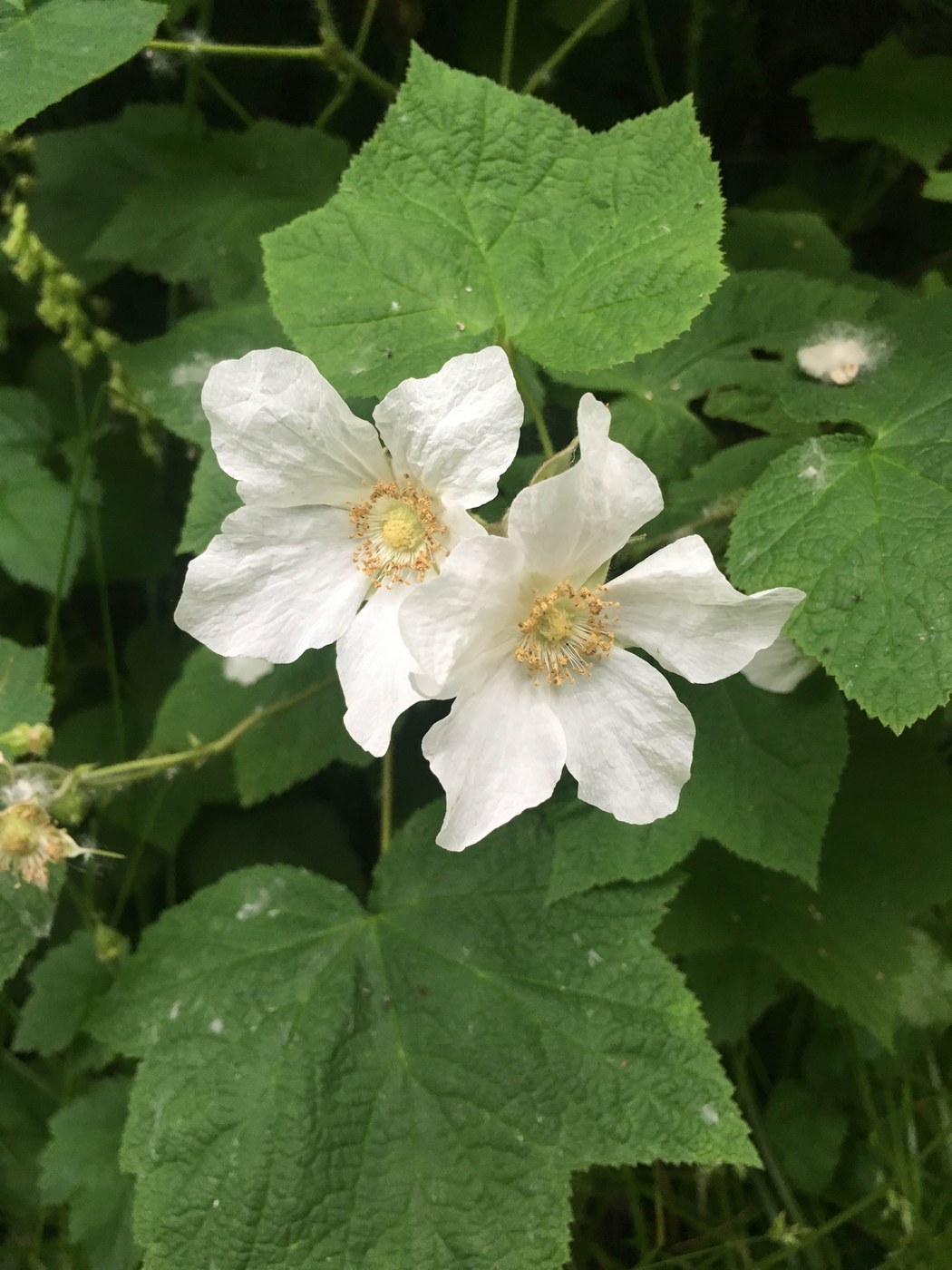
- Flowers: Solitary, showy, deep pink to magenta, five-petaled, appearing early
- Stems: Erect, with fine prickles and shredding golden-brown bark
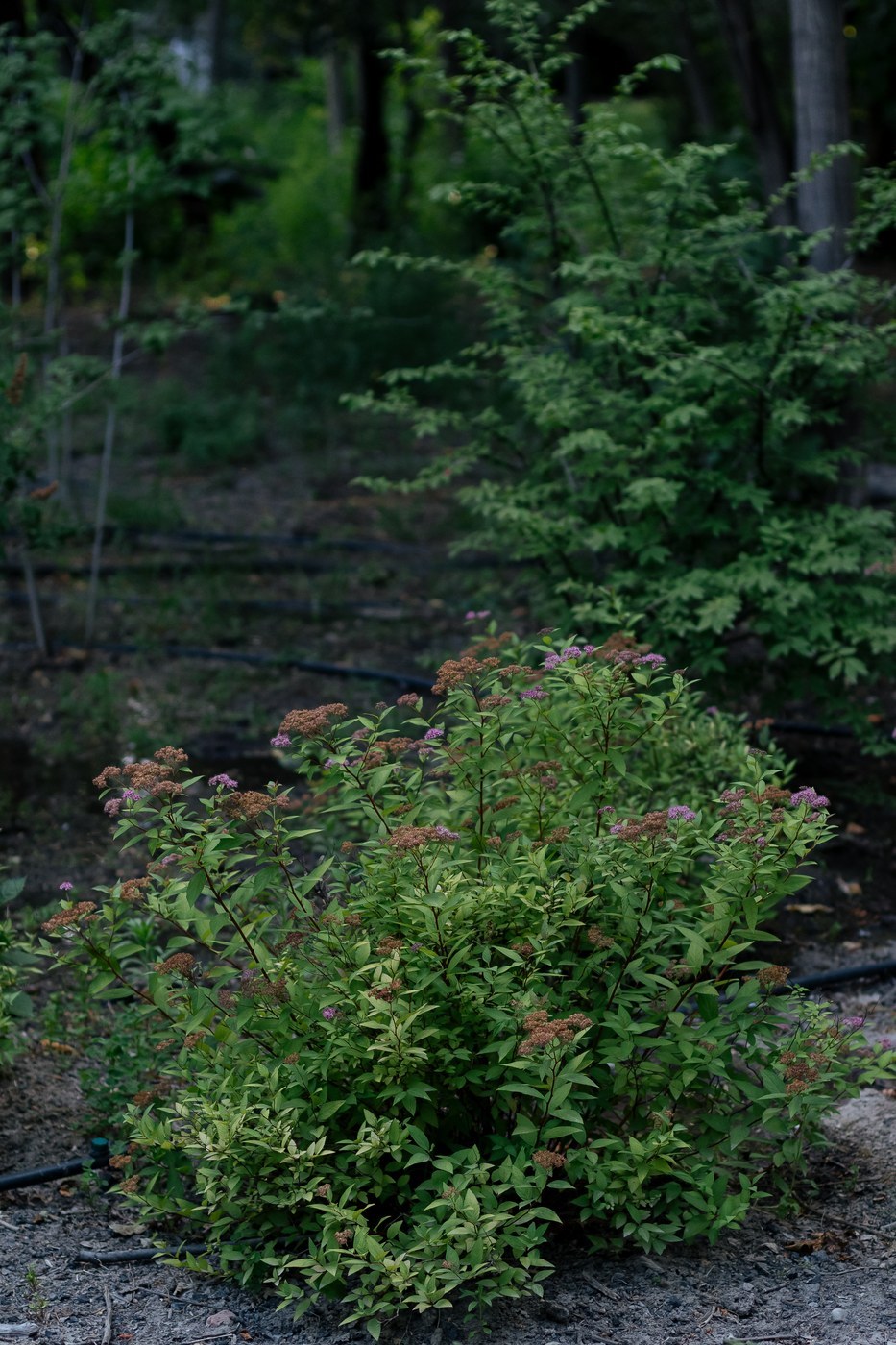
- Size: 3–13 ft tall, forming dense thickets
Care & growing
Light: Tolerates full sun in cool, moist climates but naturally grows in partial shade and woodland edges.
Water: Needs consistently moist soil; it favors streambanks and damp ground and is not drought-tolerant.
Soil: Rich, moist, well-draining soil high in organic matter; tolerates a range of pH.
Temperature: Hardy in cool maritime climates, roughly USDA zones 5–9; thrives in mild, humid conditions.
Feeding: Minimal; mulching with organic matter suits its woodland habit.
Propagation: Spreads readily by suckers and rhizomes; also grown from cuttings or seed. Can be aggressive in favorable sites.
Habitat & origin
Salmonberry is native to the Pacific coast of North America, from Alaska south to California, where it grows in moist coastal forests, along streams, in clearings, and at woodland edges.
It is a characteristic understory and disturbance species of the temperate rainforest. It is planted in native, woodland, and wildlife gardens in suitable mild, damp climates.
Frequently asked questions
Why are they called salmonberries?
The name likely refers to the salmon-orange color of many of the berries.
Do salmonberries spread aggressively?
Yes. They spread vigorously by rhizomes and suckers and can form dense thickets, so give them room or contain them in a managed garden setting.
What conditions do salmonberries need?
They thrive in cool, moist, partly shaded coastal climates with rich soil. They need steady moisture and do poorly in hot, dry conditions.
Salmonberry guides
In-depth guides for identifying, growing, and caring for Salmonberry.