Saskatoon Berry Identification Guide
How to recognize Saskatoon berry (serviceberry) by its rounded toothed leaves, early white star flowers, and blueberry-like pomes.
Read the full Saskatoon Berry encyclopedia entry →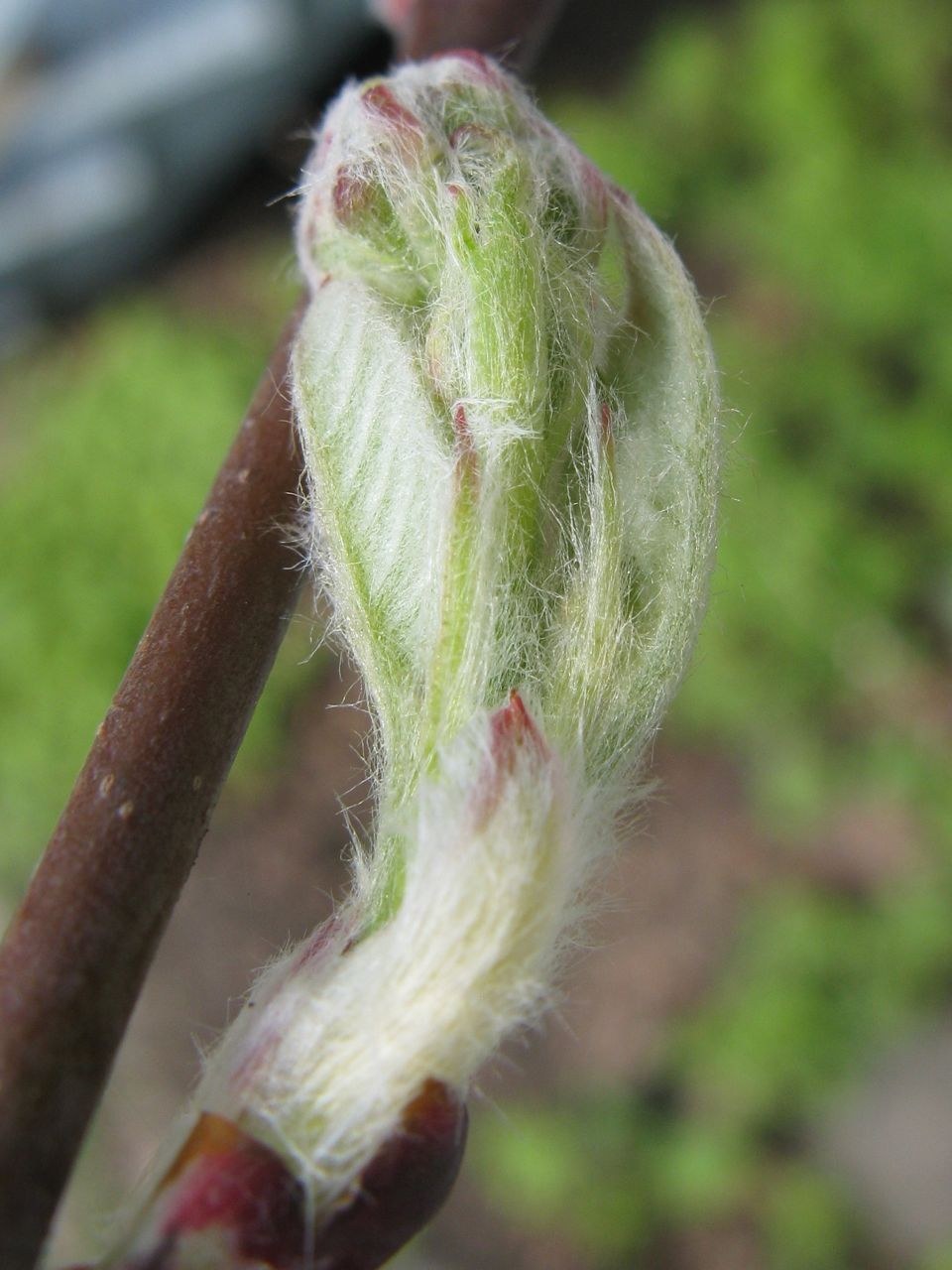
Key Identifying Features
The Saskatoon berry (Amelanchier alnifolia), also called western serviceberry or juneberry, is a deciduous shrub or small tree of western North America in the rose family. Identify it by oval leaves toothed mainly toward the tip, early-spring clusters of white five-petaled flowers, and purple, blueberry-like fruit that are actually tiny pomes (with a five-pointed crown at the end).
- Multi-stemmed shrub or small tree, 1–6 m tall, forming thickets
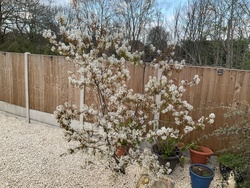
- Drooping clusters of white star-shaped flowers in early spring
- Purple-blue berry-like pomes in early summer
Leaves & Stems
Leaves are alternate, oval to nearly round, 2–5 cm long, with a rounded or squared tip. A key trait: the margins are toothed only on the upper half, with the lower half usually smooth. Young leaves are softly hairy beneath. Stems are smooth and gray, with a reddish or purplish cast on young growth; bark on older trunks is gray and smooth with vertical streaks.
Flowers & Fruit
Flowers appear before or as the leaves expand, in short, upright to drooping clusters (racemes) of 3–20 blooms. Each flower has five narrow, white petals giving an airy, star-like look. The fruit ripens in June–July from red to dark purple or blue-black, about 6–12 mm across, with a soft, sweet, slightly almond-flavored flesh. Crucially, the fruit is a pome (like a miniature apple), so the blossom end carries a persistent five-pointed calyx, distinguishing it from a true berry.
How to Tell It Apart from Look-Alikes
- Blueberry (Vaccinium): also blue with a crown, but blueberries grow on smaller, finely twiggy shrubs with bell-shaped flowers, not five-petaled star flowers; leaves lack the upper-half teeth.
- Chokecherry (Prunus virginiana): flowers in long bottle-brush racemes and fruit is a single-stone drupe (cherry), not a multi-seeded pome; leaves finely toothed all around.
- Other Amelanchier species: very similar; western A. alnifolia has rounder, blunt-tipped leaves toothed only near the apex.
- The rounded leaf toothed near the tip + star-shaped white flower + crowned purple pome combination identifies it.
Where You'll Find It
Native across western Canada and the western/northern United States, in open woods, prairies, riverbanks, and hillsides. It is also widely cultivated commercially (especially in the Canadian Prairies) and in gardens. Cold-hardy and drought-tolerant, it ranges from grasslands to montane slopes.
Quick ID Checklist
- Thicket-forming shrub or small tree
- Oval/round leaves toothed only on the upper half
- Early-spring white five-petaled star flowers in clusters
- Purple-blue fruit with a five-pointed crown (a pome)
- Sweet, mild almond-tinged flavor
- Western North America, open woods and prairies
Frequently asked questions
Is a Saskatoon berry really a berry?
Botanically it's a pome, like a tiny apple, which is why each fruit has a five-pointed crown at the blossom end. The name 'berry' refers to its size and use, not its true structure.
How do I tell it from a blueberry?
Both are blue with a crown, but Saskatoon has five-petaled star-shaped white flowers and rounded leaves toothed near the tip, while blueberry has bell-shaped flowers and untoothed or differently toothed leaves.
When do the berries ripen?
Fruit ripens in June and July, which is why the plant is also called juneberry. It changes from red to deep purple-blue when ready to pick.
What does the leaf margin look like?
The oval leaves are distinctively toothed only along the upper half toward the tip, with the lower portion of the margin usually smooth — a handy field mark.
Saskatoon Berry identified by the community
Recent Saskatoon Berry specimens identified with Plant Identifier.