
Sassafras Identification Guide
How to identify sassafras (Sassafras albidum) by its three differently shaped leaves on one tree and its spicy, citrus-root fragrance.
Read the full Sassafras encyclopedia entry →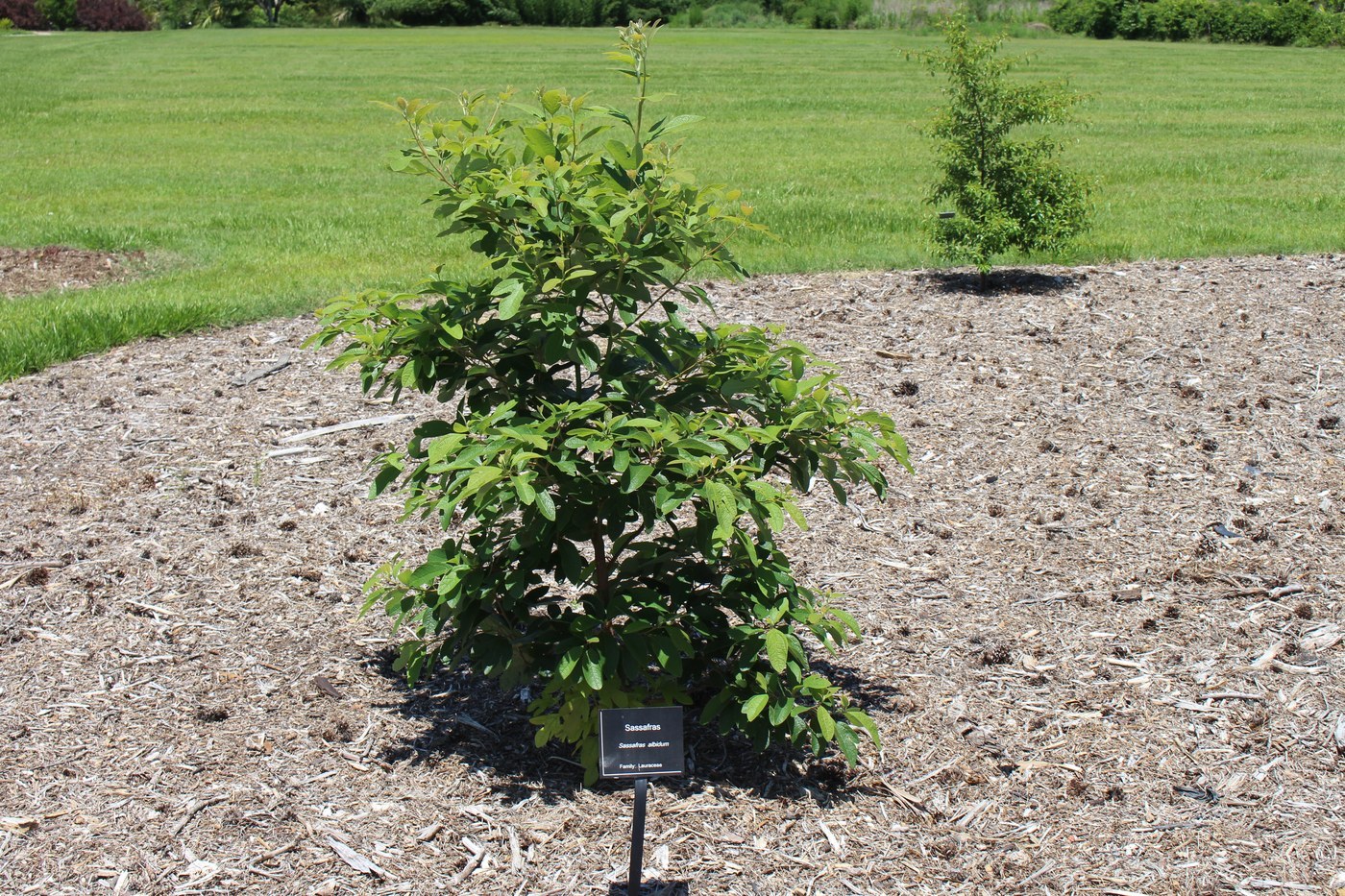
Key Identifying Features
Sassafras (Sassafras albidum) is a small-to-medium deciduous tree famous for bearing three distinctly different leaf shapes on the same plant and for its strongly aromatic, root-beer-like fragrance in crushed leaves, twigs, and roots. It grows 30–60 feet tall, often forming thickets from root suckers.
- Three leaf shapes: unlobed (oval), two-lobed ("mitten"), and three-lobed
- Spicy, citrusy, root-beer scent when leaves or twigs are crushed
- Bright green twigs that stay green through winter
- Brilliant orange, scarlet, and purple fall color
Leaves & Stems
The leaves are the classic clue: on one tree you will find simple oval leaves, mitten-shaped leaves with one thumb-like lobe, and three-lobed leaves, all 3–6 inches long, smooth-edged, and arranged alternately. They turn vivid yellow, orange, scarlet, and purple in autumn. A reliable confirming test is to scratch a twig or crush a leaf — it releases a sweet, spicy, lemony fragrance. Twigs are slender and bright yellow-green, staying green into winter; bark on older trunks is reddish-brown and deeply furrowed.
Flowers & Fruit
Sassafras is dioecious (separate male and female trees). In early spring, small yellow-green flowers appear in clusters as the leaves emerge. Female trees produce shiny, dark-blue, oval fruits (drupes) about ½ inch long, each perched in a bright red, cup-like base on a red stalk — a striking and useful identification feature in late summer.
How to Tell It Apart from Look-Alikes
Few trees share the three-leaf-shape habit, but mitten-shaped leaves also occur on red mulberry and some maples. The decisive tests for sassafras are the green twigs and the strong spicy aroma when crushed — mulberry and maple lack this. Mulberry leaves are toothed; sassafras margins are smooth. The red-cupped blue fruits in fall are also distinctive and not shared by look-alikes.
Where You'll Find It
Native to the eastern United States from Maine to Florida and west to Texas, sassafras grows in old fields, woodland edges, fencerows, and open woods, often pioneering disturbed sites and spreading into clonal thickets via root sprouts. It prefers well-drained, sandy or loamy soils and full to partial sun.
Quick ID Checklist
- Leaves: three shapes (oval, mitten, three-lobed) on one tree, smooth-edged
- Aroma: spicy root-beer/citrus scent when crushed
- Twigs: bright green, staying green into winter
- Fruit: dark-blue drupe in a red cup on a red stalk (female trees)
- Habitat: old fields and woodland edges of the eastern U.S.
A tree with mitten leaves, green twigs, and a spicy root-beer smell is sassafras.
Frequently asked questions
Why does one sassafras tree have differently shaped leaves?
Sassafras naturally produces three leaf forms on the same plant: simple oval leaves, two-lobed mitten shapes, and three-lobed leaves. Finding all three together is one of the surest ways to identify it.
What does sassafras smell like?
Crushed leaves, twigs, and especially roots give off a sweet, spicy, citrusy aroma reminiscent of root beer. This scent is a classic confirming test in the field.
How do I tell sassafras from red mulberry, which also has mitten leaves?
Sassafras has smooth leaf margins, bright green twigs, and a strong spicy fragrance, while mulberry has toothed leaves, brown twigs, and no such aroma.
Does every sassafras tree make fruit?
No. Sassafras is dioecious, so only female trees produce the dark-blue fruits set in red cups. Male trees flower but never bear fruit.