
How to Care for Satin Pothos
Grow the elegant Satin Pothos (Scindapsus pictus) for its silver-splashed, velvety heart-shaped leaves on easygoing trailing vines.
Read the full Satin Pothos encyclopedia entry →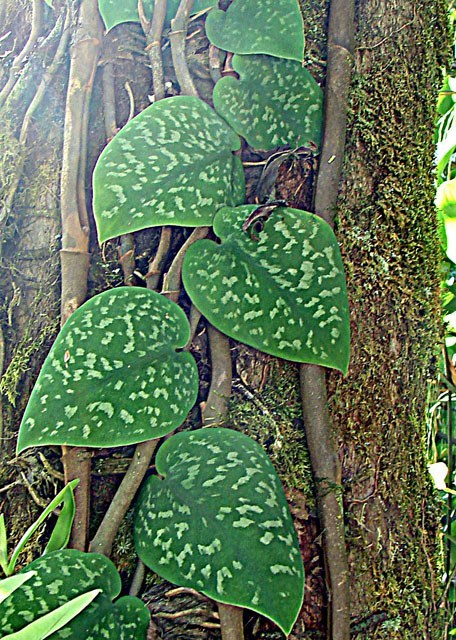
The Satin Pothos (Scindapsus pictus) is a trailing tropical vine admired for its velvety, heart-shaped leaves dusted with shimmering silver variegation. Despite the common name it is a Scindapsus rather than a true pothos, but it is just as forgiving and easy to grow.
Light
Provide medium to bright indirect light to keep the silvery markings bold. It tolerates lower light but grows more slowly with smaller, less variegated leaves. Avoid harsh direct sun, which fades and scorches the foliage.
Water
Water when the top inch of soil dries out, then water thoroughly and let excess drain away. It is somewhat drought-tolerant and prefers to dry slightly between waterings rather than staying constantly wet. Overwatering leads to yellowing leaves and root rot, so err on the drier side in winter.
Soil & Potting
Use a light, well-draining potting mix, such as a standard houseplant mix amended with perlite and orchid bark for aeration. A pot with drainage holes is essential. It grows well trailing from a hanging pot or shelf, or climbing a moss pole.
Humidity & Temperature
Average household humidity is acceptable, but it appreciates moderate to high humidity for lusher leaves. Keep temperatures between roughly 65 and 85 degrees Fahrenheit and protect it from cold drafts and temperatures below 55 degrees.
Feeding
Feed with a balanced, diluted liquid fertilizer once a month during spring and summer. Reduce feeding to none in fall and winter when growth naturally slows.
Propagation
Propagate easily from stem cuttings with at least one node. Root cuttings in water or directly in moist soil, keeping them warm and in bright indirect light. Roots usually appear within a few weeks.
Repotting / Pruning
Repot every couple of years or when roots fill the pot, ideally in spring. Prune or pinch back long vines to encourage bushier growth and to keep the plant tidy; use the trimmings as cuttings. Wipe the leaves occasionally to remove dust and keep the silver sheen bright.
Common Problems & Pests
Yellowing leaves typically signal overwatering, while curling or crispy leaves point to underwatering or dry air. Faded variegation means too little light. Watch for mealybugs, spider mites, and scale, treating with insecticidal soap or by wiping the foliage. Good drainage prevents most root problems.
Seasonal Care Tips
In spring and summer, provide bright indirect light, regular watering as the topsoil dries, and monthly feeding for active growth. In fall and winter, cut back on water and stop fertilizing as the plant rests, keeping it warm and away from cold windows.
Frequently asked questions
Is Satin Pothos a true pothos?
No. Despite the name, it is Scindapsus pictus, a close relative in the same family. Its care is very similar to pothos, but its velvety, silver-splashed leaves are distinctive.
Why are the silver markings fading?
Reduced variegation usually means the plant needs more light. Move it to a spot with medium to bright indirect light to bring back the bold silver pattern.
How often should I water Satin Pothos?
Water when the top inch of soil dries out, then water thoroughly and let it drain. It prefers to dry slightly between waterings, so water less in winter.
Why are the leaves turning yellow?
Yellow leaves most often result from overwatering or poor drainage. Let the top inch of soil dry before watering and ensure the pot drains freely.