Satin Pothos
Scindapsus pictus
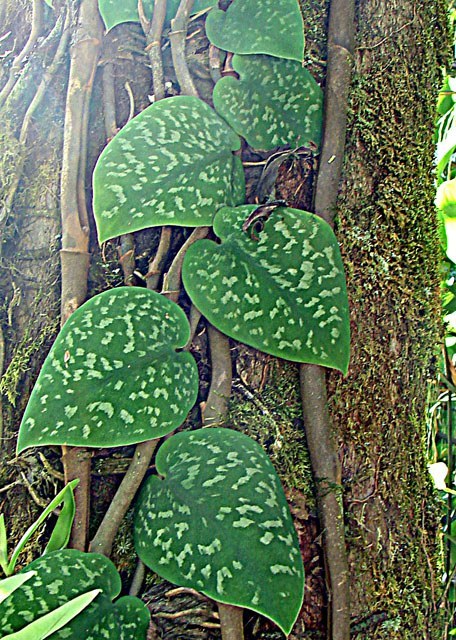
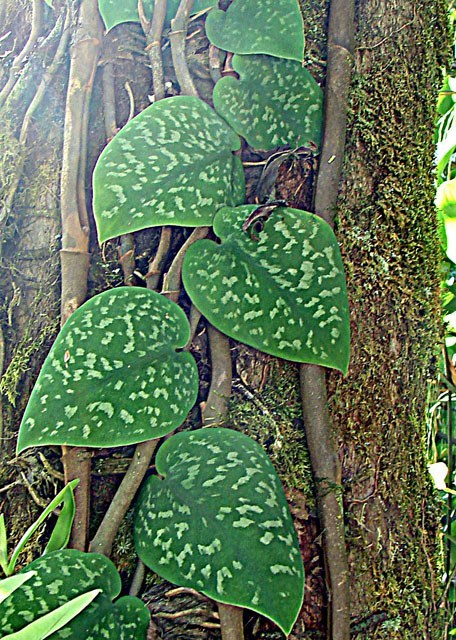
A trailing tropical vine with heart-shaped, matte green leaves splashed in shimmering silver. Despite the name it is not a true pothos, but it shares the same easygoing, low-light tolerance.
- Light
- Medium to bright indirect light
- Water
- When top inch dries
- Difficulty
- Easy
Got a plant like this?
Identify any plant from a photo, free.
Overview
Satin Pothos is a member of the genus Scindapsus, distinct from true pothos (Epipremnum) though similar in habit and care. Its common name comes from the velvety, satin-like sheen of its leaves.
Each heart-shaped leaf is a deep matte green dusted with silvery-grey variegation that catches the light. As a forgiving, fast-trailing vine, it is one of the most beginner-friendly statement houseplants.
How to identify it
Look for trailing vines of matte, heart-shaped leaves marked with metallic silver patches.
- Leaves: heart-shaped with a slightly asymmetrical base, matte deep green
- Variegation: silvery-grey blotches and edging with a satin sheen
- Habit: trailing or climbing vine with aerial roots at the nodes
- Stems: slender, flexible, rooting where they touch moist soil
- Size: trails 3-10 ft over time indoors
Care & growing
Light: Medium to bright indirect light; brighter light boosts the silver markings, but avoid direct sun.
Water: Water when the top inch of soil dries; it tolerates occasional drought better than soggy roots.
Soil: Well-draining, peaty houseplant mix.
Temperature: 65-80F; enjoys average to high humidity.
Feeding: Balanced fertilizer monthly in spring and summer.
Propagation: Very easy from stem cuttings rooted in water or moist soil; cut just below a node.
Habitat & origin
Native to Southeast Asia, including parts of India, Bangladesh, Thailand, and the Indonesian archipelago, where it climbs tree trunks in humid tropical forests.
It is grown worldwide as a popular, low-maintenance houseplant, trailing from shelves and hanging baskets or trained up a moss pole.
Frequently asked questions
Is Satin Pothos the same as regular pothos?
No. It belongs to the genus Scindapsus rather than Epipremnum, though it looks and grows similarly. Care is nearly identical.
Why is my plant losing its silver markings?
Too little light dulls the variegation. Move it to a brighter spot with indirect light to restore the silvery sheen.
How do I make it bushier?
Pinch back the growing tips and propagate the cuttings back into the same pot. This encourages branching and fuller growth.
Satin Pothos guides
In-depth guides for identifying, growing, and caring for Satin Pothos.

How to Care for Satin Pothos
Grow the elegant Satin Pothos (Scindapsus pictus) for its silver-splashed, velvety heart-shaped leaves on easygoing trailing vines.
Satin Pothos Identification Guide
Identify Satin Pothos (Scindapsus pictus) by its matte, silver-spotted heart-shaped leaves and trailing vines. Covers how it differs from true pothos and philodendron.