
Scarlet Oak Identification Guide
Recognize scarlet oak by its deeply C-shaped sinuses, brilliant scarlet fall color, and concentric rings on the acorn cap. Covers leaves, fruit, look-alikes, and habitat.
Read the full Scarlet Oak encyclopedia entry →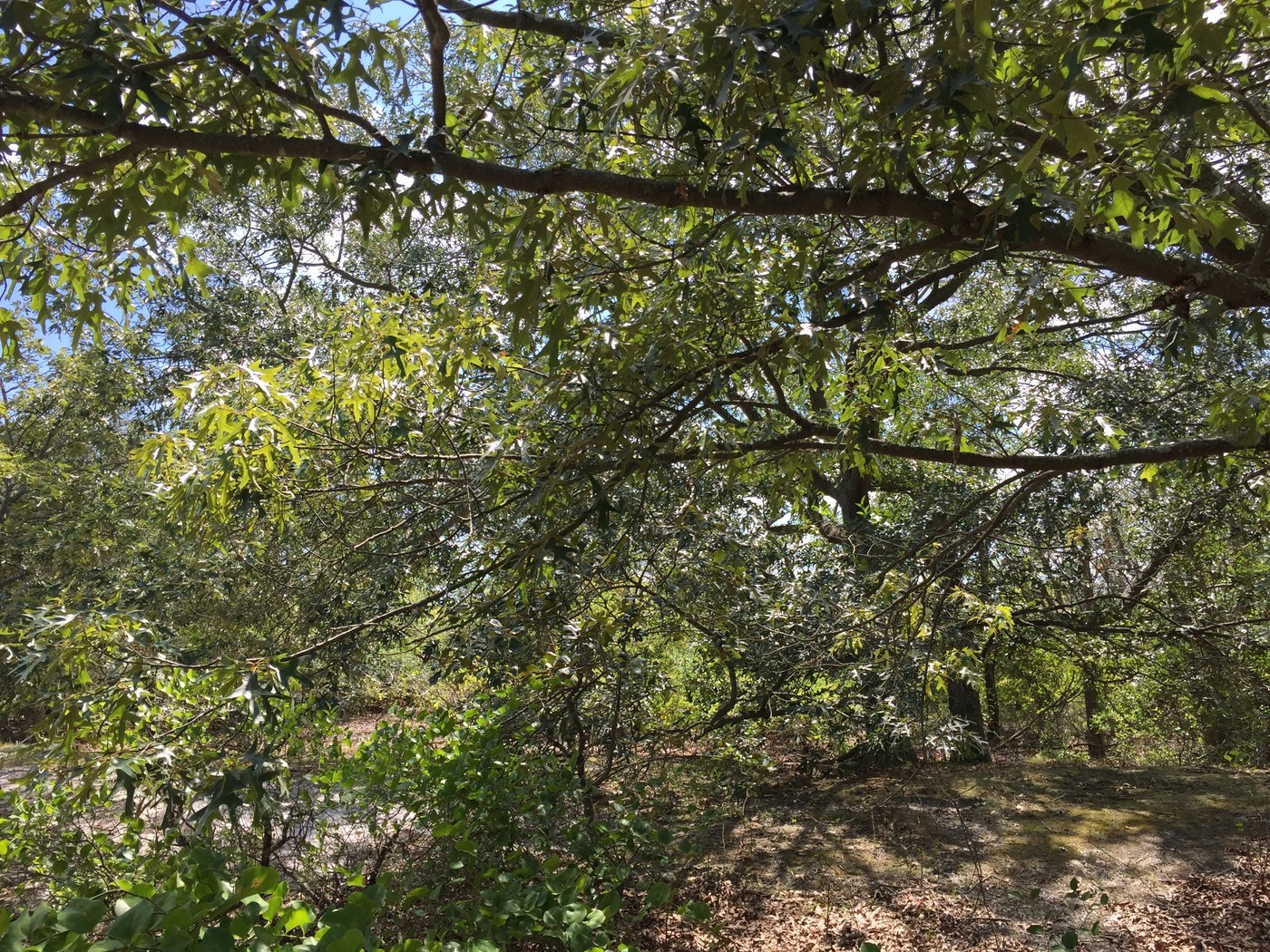
Key Identifying Features
Scarlet oak (Quercus coccinea) is a graceful red-group oak famous for its intense scarlet autumn foliage. Its leaves are deeply cut with wide, C-shaped sinuses that give them an airy, almost skeletal look. It grows 60-80 feet tall with an open, rounded crown and is a tree of dry, sandy, well-drained soils in the eastern United States.
Leaves & Stems
- Leaves are 3-6 inches long with 7 (sometimes 9) bristle-tipped lobes.
- The sinuses between lobes are deep and rounded, cutting more than halfway to the midrib, leaving relatively little leaf tissue — a hallmark of the species.
- Both surfaces are smooth and glossy; tufts of hair (axillary tufts) often sit in the vein angles on the underside.
- Fall color is a brilliant, glowing scarlet, often the brightest red of any eastern oak.
- Twigs are slender; buds are reddish-brown and noticeably hairy on the upper half — a useful detail.
Flowers & Fruit
- Drooping yellow-green catkins appear in spring.
- Acorns are oval, about a half to three-quarter inch, with a deep bowl-shaped cap covering up to half the nut.
- A diagnostic feature: the cap and the upper tip of the nut often show fine concentric rings (circular grooves) around the base of the nut.
- Acorns mature in two seasons.
How to Tell It Apart from Look-Alikes
- Pin oak (Quercus palustris) has similar deeply cut leaves but smaller acorns, a flatter shallow cap, and persistent downward-angled lower branches; it favors wet soils while scarlet oak favors dry.
- Black oak (Quercus velutina) has shallower sinuses, leathery leaves, larger fuzzy buds, and yellow-orange inner bark.
- Northern red oak (Quercus rubra) has much shallower sinuses cutting less than halfway to the midrib and larger acorns with shallow caps.
Where You'll Find It
Scarlet oak thrives on dry, sandy or gravelly upland soils, ridges, and poor sites across the eastern and central United States. It is also widely planted as an ornamental for its fall color. Look for it on dry hillsides mixed with black oak, hickory, and pine.
Quick ID Checklist
- Leaves with deep, C-shaped rounded sinuses cutting well past halfway
- 7 bristle-tipped lobes and glossy surfaces
- Brilliant scarlet fall color
- Acorn cap deep, with concentric rings near the nut base
- Reddish buds hairy on the upper half
- Dry, sandy upland soils
Wide C-shaped leaf sinuses plus concentric-ringed acorns and fiery red fall color confirm scarlet oak.
Frequently asked questions
How do I tell scarlet oak from pin oak?
Check the acorn and habitat: scarlet oak has larger acorns with concentric rings near the base and grows on dry soils, while pin oak has tiny flat-capped acorns, persistent drooping lower branches, and prefers wet ground.
What gives scarlet oak its name?
Its autumn foliage turns an exceptionally brilliant scarlet red, typically brighter and more intense than other eastern oaks.
Are there bud clues for scarlet oak?
Yes, its reddish-brown terminal buds are distinctly hairy on the upper half, which helps separate it from northern red oak whose buds are smoother.
How deep are scarlet oak leaf sinuses?
The rounded C-shaped sinuses cut more than halfway to the midrib, removing much of the leaf tissue and giving the leaf a delicate, skeletal appearance.