
Scarlet Runner Bean Identification Guide
Recognize the scarlet runner bean by its twining vines, bright red pea-like flowers, large trifoliate leaves and long rough pods. This guide details its identifying traits.
Read the full Scarlet Runner Bean encyclopedia entry →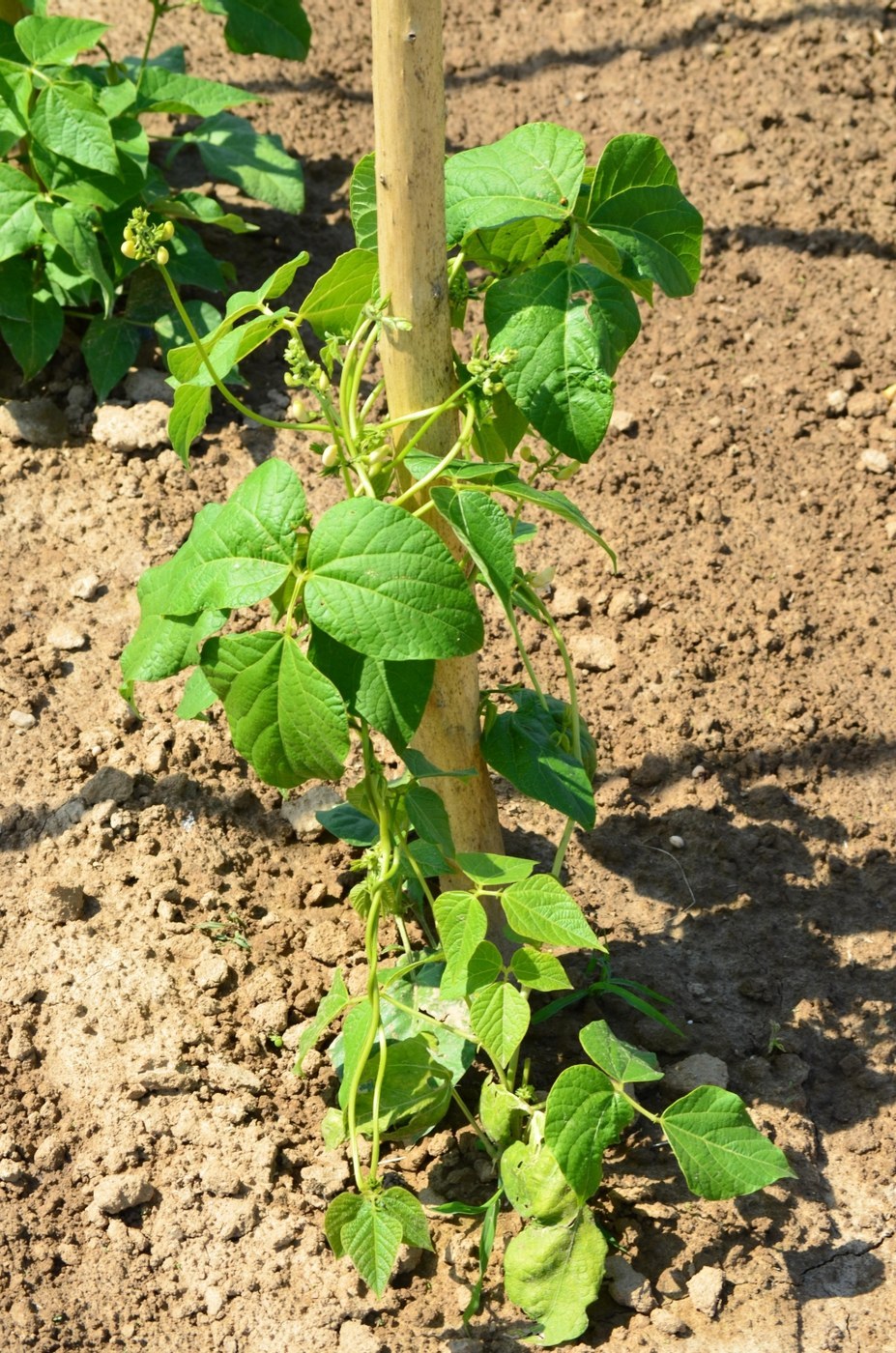
Key Identifying Features
Scarlet runner bean (Phaseolus coccinea) is a vigorous twining legume grown for its showy red flowers.
- Flowers: clusters of bright scarlet (sometimes white or bicolor) pea-like (papilionaceous) flowers on long stalks
- Vines: twining, climbing stems that wind counterclockwise up supports, reaching 2-4 m
- Leaves: large trifoliate (three broad leaflets) typical of beans
- Pods: long, flattened, rough/warty green pods that can reach 15-30 cm
- Seeds: large, plump, usually purple-black mottled with pink/red
Leaves & Stems
Leaves are alternate and compound with three broad, heart-shaped to triangular leaflets, each pointed, on a long stalk, much like a common bean. The twining stems are slightly hairy and grasp supports by spiraling (they have no tendrils). Unlike the common bean, the runner bean is a perennial in mild climates, growing from a tuberous root, though it is usually grown as an annual.
Flowers & Fruit
The flowers have the classic legume structure: a large upper banner petal, two wing petals and a keel enclosing the stamens. They cluster on upright stalks (racemes) held among the foliage, glowing scarlet. After pollination they form long, rough-textured green pods that hang in clusters. Mature seeds are large and beautifully mottled. A key distinguishing detail from common bean: in runner bean the seed leaves (cotyledons) stay underground (hypogeal germination).
How to Tell It Apart from Look-Alikes
- Common bean (Phaseolus vulgaris): usually white, pink or pale flowers, smoother pods, smaller seeds, and cotyledons that emerge above ground
- Sweet pea (Lathyrus odoratus): has tendrils, winged stems and fragrant flowers, with smaller flat pods
- Hyacinth bean (Lablab): purple flowers and stems, glossy flat purple pods
- Morning glory: funnel-shaped flowers, no pea structure, heart-shaped simple leaves
The scarlet pea flowers + trifoliate leaves + rough long pods + large mottled seeds + twining (tendril-free) vine confirm scarlet runner bean.
Where You'll Find It
Native to the cool highlands of Central America, scarlet runner bean is grown worldwide as an ornamental and vegetable climber on trellises, fences, arches and bean poles. It prefers full sun and cool, moist summers, flowering from mid-summer into autumn and attracting hummingbirds and bees.
Quick ID Checklist
- Twining vine 2-4 m, no tendrils
- Bright scarlet pea-like flowers in upright clusters
- Large trifoliate leaves (three broad leaflets)
- Long, rough/warty green pods
- Large purple-black, pink-mottled seeds
- Tuberous perennial root (grown as annual)
Frequently asked questions
How is scarlet runner bean different from common bean?
Runner bean has bright red flowers, rougher and longer pods, larger mottled seeds and germinates with its seed leaves underground, while common bean usually has paler flowers and raises its cotyledons above ground.
Does it climb with tendrils?
No, scarlet runner bean climbs by twining its stems around supports rather than using tendrils, which separates it from peas and sweet peas.
Is it an annual or a perennial?
It is a perennial in frost-free climates, growing back from a tuberous root, but it is most often grown as an annual where winters are cold.