
How to Care for Schisandra
Grow Schisandra chinensis, a hardy twining vine, in dappled shade with rich, moist, well-drained soil and sturdy support.
Read the full Schisandra encyclopedia entry →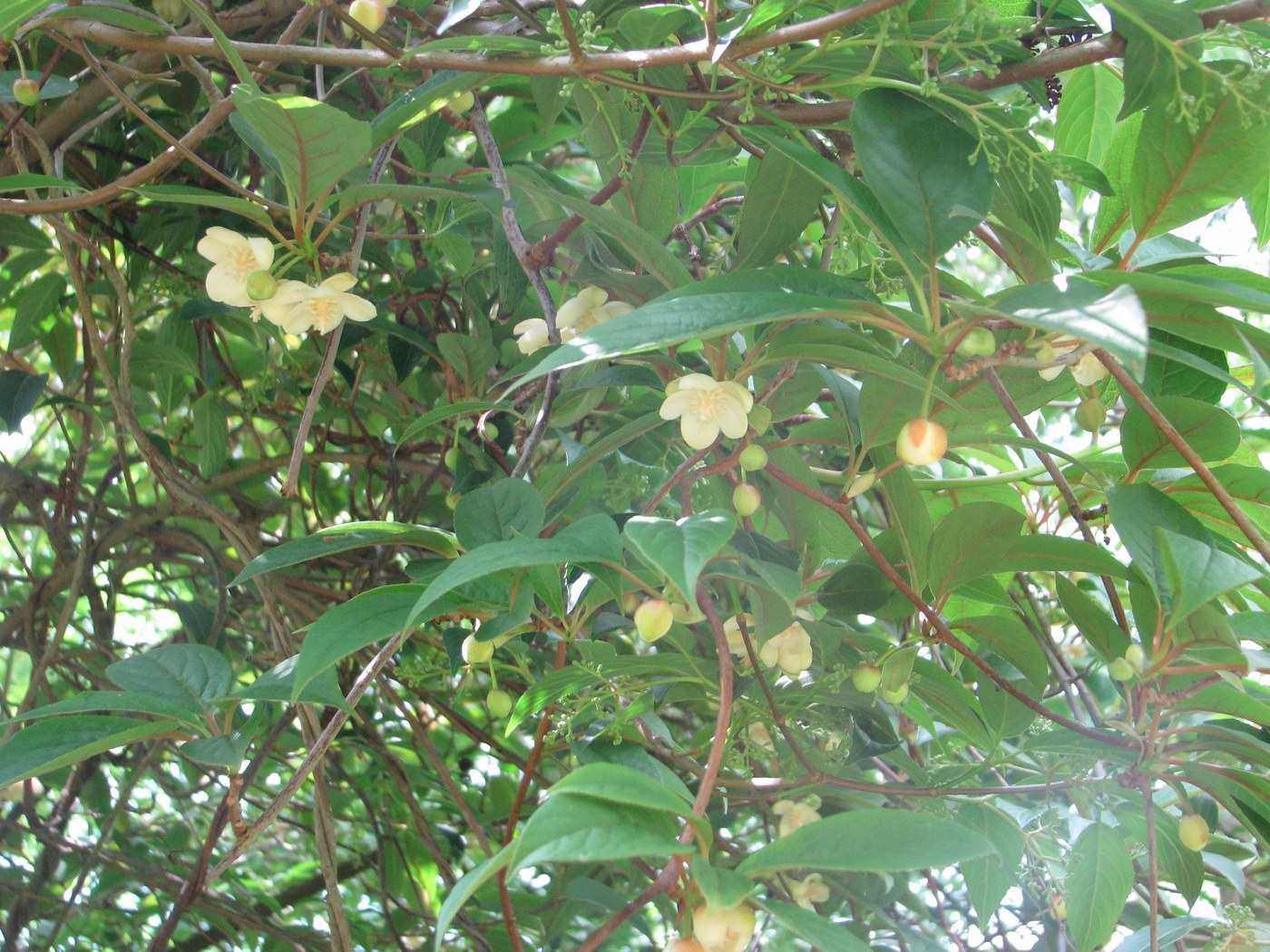
Schisandra (Schisandra chinensis) is a hardy, deciduous twining woodland vine grown ornamentally for its glossy foliage, fragrant creamy spring flowers, and trailing clusters of bright red berries on female plants. It is a graceful climber for shaded fences, trellises, and pergolas.
Light
Schisandra grows best in part shade to dappled sun, mimicking its natural woodland-edge habitat. It appreciates protection from harsh, direct midday sun, which can stress the foliage, but needs enough filtered light to flower and set its ornamental fruit. A position with morning sun and afternoon shade, or bright dappled light throughout the day, is ideal.
Water
This vine likes consistently moist soil and should be watered regularly to keep the root zone from drying out, particularly during establishment and in hot, dry weather. It does not tolerate prolonged drought well. Mulch around the base to retain moisture and keep roots cool, but ensure the soil is never waterlogged, as the roots need oxygen as well as moisture.
Soil & Potting
Provide rich, fertile, well-drained soil high in organic matter, with a slightly acidic to neutral pH. Amend the planting site generously with compost or leaf mold to replicate a woodland floor. Good drainage combined with steady moisture is the goal. In containers, use a humus-rich, free-draining mix and be prepared to water more frequently.
Humidity & Temperature
Schisandra is very cold-hardy and suited to temperate climates with distinct seasons; it benefits from winter chill. It prefers cool, moist growing conditions and moderate humidity, and can struggle in extreme, dry heat. Shelter it from strong drying winds, and site it where summer temperatures are not excessive.
Feeding
Feed in spring as growth resumes with a balanced fertilizer or a top-dressing of compost and well-rotted organic matter. An annual mulch of organic material provides slow, steady nutrition and helps maintain the rich, moisture-retentive soil this vine favors. Avoid excessive nitrogen, which promotes leafy growth over flowering and fruiting.
Propagation
Schisandra can be propagated by seed, semi-hardwood cuttings, or layering. Seed benefits from a period of cold stratification before sowing. Semi-ripe cuttings taken in summer can be rooted under humid conditions. Layering, by pinning a low stem to the soil until it roots, is a reliable method. Note that plants are often dioecious, so both a male and a female vine are needed for berry production.
Repotting / Pruning
Provide a sturdy trellis, arbor, or fence for this twining vine to climb from the outset. Prune in late winter or early spring while dormant to remove dead or crowded stems and to shape the plant and control its size. Container-grown specimens can be repotted every couple of years into fresh, rich mix as they outgrow their pots.
Common Problems & Pests
Schisandra is relatively trouble-free. Leaf scorch and stress can occur if the plant is sited in too much hot sun or allowed to dry out. Poorly drained soil may lead to root rot. Occasional pests include aphids on new growth, which can be rinsed off or treated with insecticidal soap. Ensure good support so heavy fruiting stems do not tear.
Seasonal Care Tips
In spring, feed and mulch as new growth begins and train young shoots onto their support. Through summer, water regularly to keep the soil moist and protect the vine from intense afternoon sun. In autumn, enjoy the fall color and red berries on female plants. In late winter, carry out structural pruning while the vine is dormant.
Frequently asked questions
Does Schisandra need a male and female plant to fruit?
Often yes. Schisandra chinensis is typically dioecious, meaning male and female flowers occur on separate plants, so you generally need both a male and a female vine nearby for the female to produce its ornamental red berries.
How much sun does Schisandra need?
It grows best in part shade to dappled sun, reflecting its woodland-edge origins. Give it filtered light or morning sun with afternoon shade, and protect it from harsh direct midday sun.
What kind of support does Schisandra need?
As a twining vine it needs a sturdy trellis, arbor, pergola, or fence to climb. Provide the support at planting time and train the young shoots onto it as they grow.
How often should I water Schisandra?
Water regularly to keep the soil evenly moist, especially while the vine is establishing and during hot, dry weather. It dislikes drought, so mulch the base to conserve moisture while avoiding waterlogged soil.