Scotch Pine Identification Guide
Recognize Scotch (Scots) Pine, Pinus sylvestris, by its paired blue-green twisted needles and distinctive flaky orange upper bark.
Read the full Scotch Pine encyclopedia entry →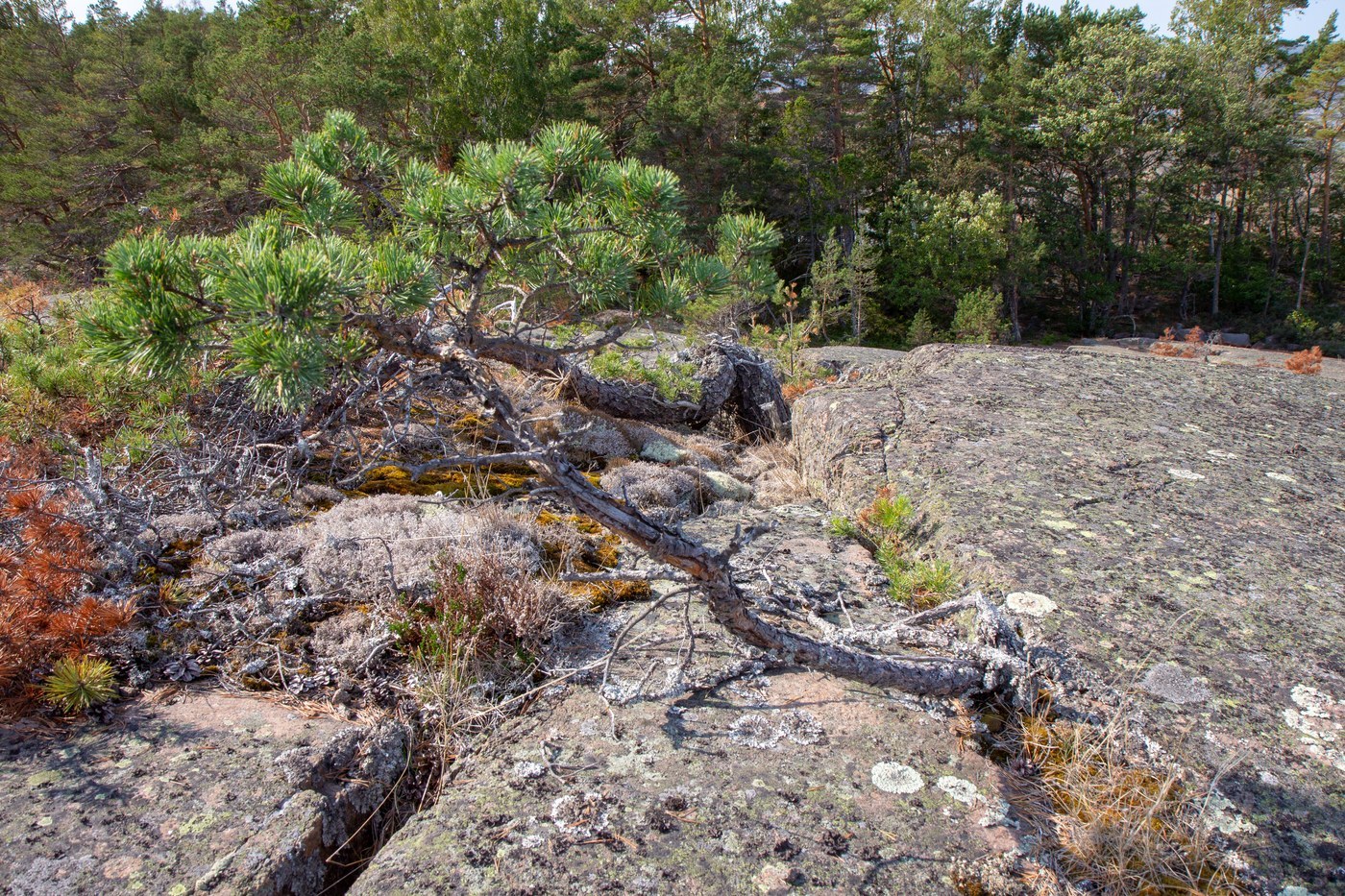
Key Identifying Features
Scotch Pine (Pinus sylvestris), also spelled Scots pine, is a medium to large evergreen pine, 30-60 ft tall, with an irregular, often picturesque crown that becomes flat-topped and open with age. Its single most diagnostic feature is the bright orange to rusty-red, papery, flaking bark on the upper trunk and branches - a feature no other common pine shows as vividly.
- Bark: orange-red and flaky up high; gray-brown and fissured at the base
- Crown: irregular, twisting, often leaning with age
- Needles: short, blue-green, twisted, in pairs
Leaves & Stems
Needles are borne two per bundle (fascicle) - count them to confirm. They are relatively short, 1 1/2 to 3 inches long, distinctly blue-green to gray-green, stiff, and noticeably twisted or spiraled along their length. This combination of short, twisted, glaucous paired needles is characteristic. Twigs are gray-brown; buds are reddish-brown and resinous. The blue-green color is strongest in cold weather.
Flowers & Fruit
Scotch pine is a conifer with cones. Seed cones are small, 1 1/2 to 3 inches long, conical, and gray-brown, with a short stalk; they point backward (recurved) along the twig and lack prominent spines. Cones take two years to mature. Yellow pollen cones cluster at the base of new shoots in spring.
How to Tell It Apart from Look-Alikes
- Red pine (Pinus resinosa): also paired needles, but they are much longer (4-6 in), green not blue, and snap cleanly when bent; bark is reddish but not as orange-flaky high up.
- Austrian/black pine (Pinus nigra): paired but long (4-6 in), stiff, dark green needles; dark gray bark - no orange.
- Mugo pine: also paired short needles, but a shrubby, low-mounding form rather than a tree, and green not blue.
- Japanese black pine: paired, long, stiff needles and white candle-like buds; trunk not orange.
The short twisted blue-green paired needles plus flaky orange upper bark make Scotch pine unmistakable.
Where You'll Find It
Native across Europe and Asia, Scotch pine is widely naturalized and planted in North America, especially as a Christmas tree and in shelterbelts. Look for it in old plantations, parks, and reverting fields; many old specimens have a wonderfully gnarled, leaning silhouette.
Quick ID Checklist
- Needles in pairs (2 per bundle), short (1.5-3 in)
- Needles blue-green and clearly twisted
- Upper-trunk bark bright orange-red and papery/flaking
- Small gray-brown cones, recurved, no spines
- Irregular, often leaning, flat-topped crown with age
Frequently asked questions
What's the fastest way to confirm a Scotch pine?
Look at the upper trunk and large branches: the flaky, bright orange-red bark is distinctive. Then check that needles come in pairs, are short (under 3 in), blue-green, and twisted.
How many needles per bundle?
Two. Scotch pine is a two-needle (diploxylon) pine. Pull a bundle apart at the base to count - this rules out three- and five-needle pines.
Why do the needles look blue-gray?
A waxy coating gives them a glaucous blue-green cast, most intense in cold weather. Combined with their short, twisted form, this distinguishes Scotch pine from longer-needled green pines.
Is it the same as a Christmas-tree pine?
Yes, Scotch pine has long been one of the most popular Christmas tree species in North America because of its needle retention and bushy shearable form.
Scotch Pine identified by the community
Recent Scotch Pine specimens identified with Plant Identifier.