
How to Care for Sea Buckthorn
Grow Hippophae rhamnoides as a tough, silvery-leaved ornamental shrub - drought- and wind-tolerant with bright autumn berries.
Read the full Sea Buckthorn encyclopedia entry →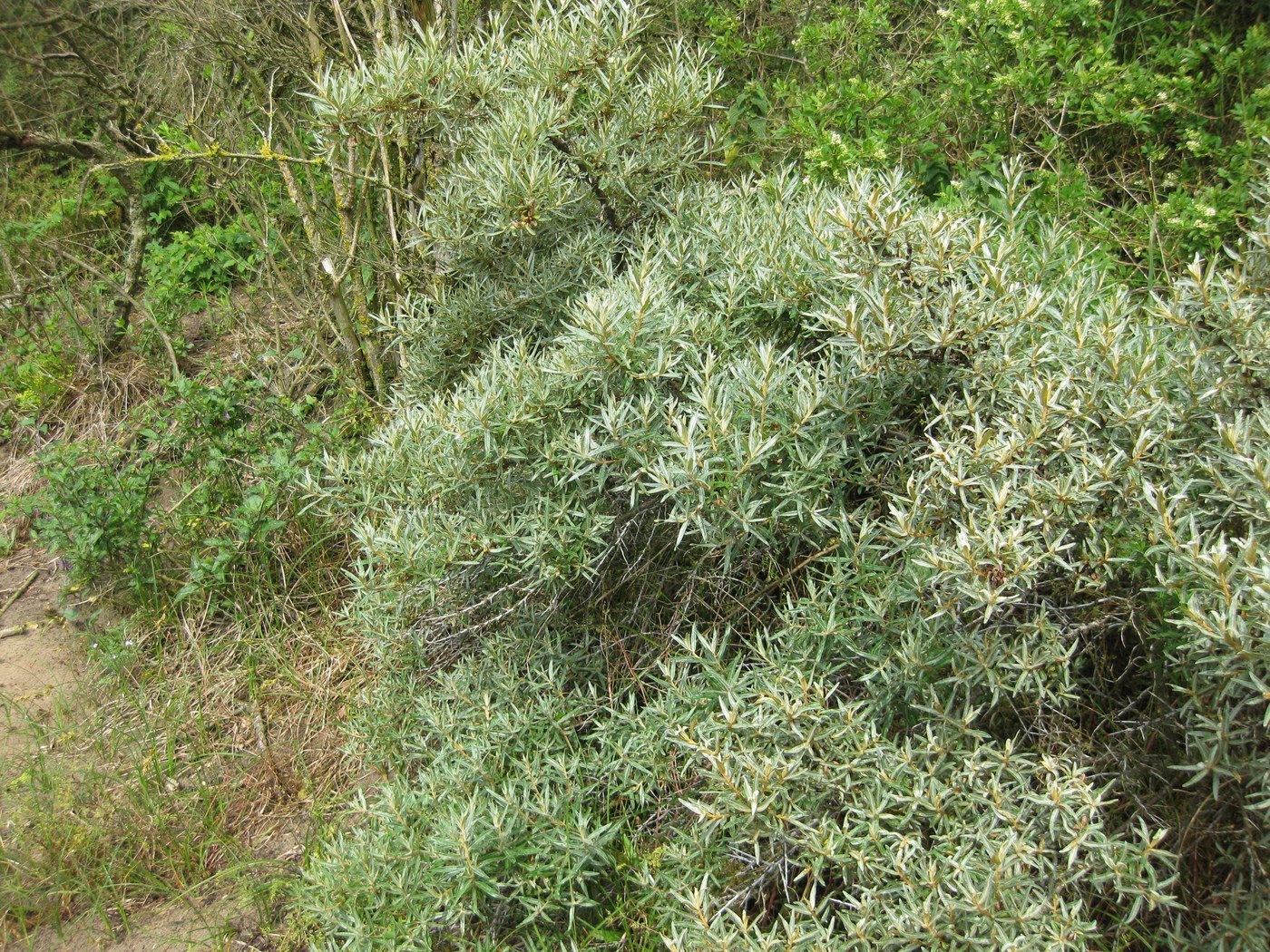
Sea buckthorn (Hippophae rhamnoides) is a hardy, thorny deciduous shrub with narrow silvery-green foliage and a rugged, wind-resistant constitution. Grown ornamentally, it prizes for its shimmering silver leaves and, on female plants, dense clusters of bright orange autumn berries. It is exceptionally tough, thriving where many shrubs fail.
Light
Give sea buckthorn full sun. It is a true sun-lover that develops its best silvery foliage, densest form, and heaviest berry set in an open, unshaded position. It will not thrive or fruit well in shade.
Water
Water regularly through the first year to establish deep roots; after that it is markedly drought-tolerant and rarely needs irrigation. It tolerates dry, sandy, and exposed sites well but dislikes prolonged waterlogging, so avoid soggy ground.
Soil & Potting
Remarkably adaptable, sea buckthorn grows in poor, sandy, stony, and even saline coastal soils, and tolerates a broad pH range. Sharp drainage matters far more than richness - it actually prefers lean soil. It fixes its own nitrogen via root nodules, so it needs no fertile ground. In containers, use a free-draining gritty mix.
Humidity & Temperature
Very cold-hardy and unfazed by wind, salt spray, and coastal exposure, sea buckthorn is an excellent shelterbelt and seaside plant. It has no special humidity needs and handles heat, cold, and drying winds with ease.
Feeding
Feeding is largely unnecessary. Because it fixes nitrogen, sea buckthorn thrives without fertilizer and can actually suffer from over-rich conditions. On very poor soils a light spring dressing of compost is more than enough.
Propagation
Propagate by seed (which needs cold stratification), by hardwood or softwood cuttings, by layering, or by digging up the abundant root suckers. Remember it is dioecious - you need both male and female plants for female shrubs to set the ornamental berries.
Repotting / Pruning
Prune in late winter while dormant to shape, remove crossing or dead wood, and control size - beware the sharp thorns. It suckers vigorously and can spread, so remove unwanted suckers to keep it in bounds. Repot container specimens in early spring into a gritty mix.
Common Problems & Pests
Sea buckthorn is largely pest- and disease-free thanks to its toughness. Its main drawbacks in the garden are its spreading suckers and its thorns rather than pests. Overly wet or heavy soil can cause root problems, and very rich soil may reduce vigor - both are easily avoided with a lean, well-drained site.
Seasonal Care Tips
Plant in spring or fall, siting male and female plants together for berries. Water through the first summer, then let it fend for itself. Prune and remove suckers in late winter. Enjoy the silver foliage all season and the bright orange berry display in autumn and into winter on female plants.
Frequently asked questions
Why does my sea buckthorn have no berries?
Sea buckthorn is dioecious - only female plants bear berries, and only when a male plant grows nearby for pollination. Ensure you have both sexes planted together in full sun.
Does sea buckthorn need fertilizer?
Rarely. It fixes its own nitrogen through root nodules and thrives in poor soil, so it needs little or no feeding; over-rich ground can actually reduce its vigor.
How do I stop sea buckthorn from spreading?
It spreads by root suckers. Dig out unwanted suckers regularly, or install a root barrier, and prune in late winter to keep the shrub within bounds.
Can sea buckthorn grow near the coast?
Yes, it is outstanding for seaside gardens, tolerating salt spray, wind, and sandy soil, which makes it a classic shelterbelt and dune-stabilizing shrub.