
Sea Thrift Identification Guide
Recognize Armeria maritima by its grassy cushion of leaves and round pink pompom flowers on bare stalks.
Read the full Sea Thrift encyclopedia entry →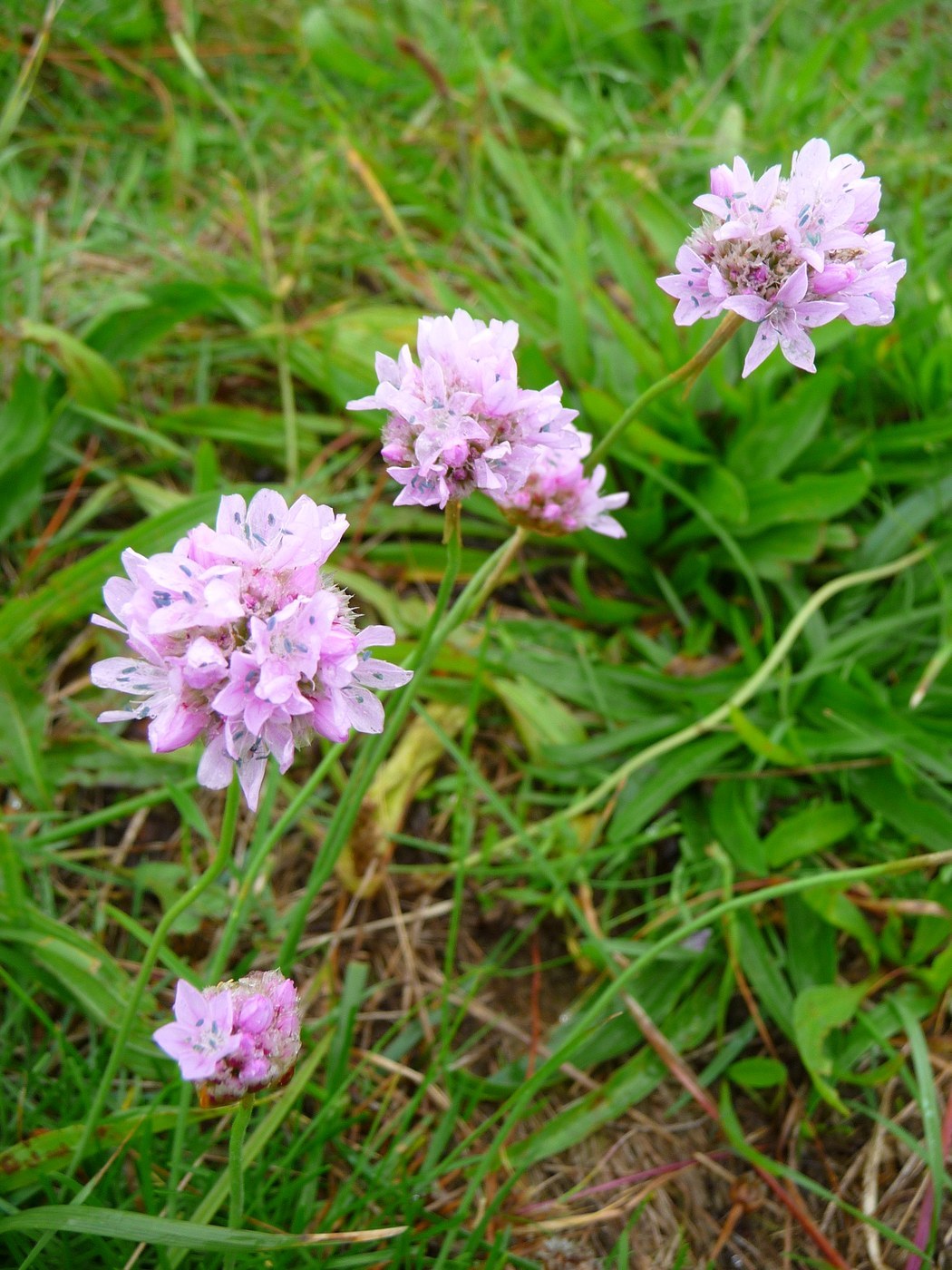
Key Identifying Features
Sea thrift (Armeria maritima), also called sea pink or thrift, is a low, tufted coastal perennial. Its hallmarks:
- A dense, mounded cushion of grass-like leaves hugging the ground
- Round, pompom flower heads of pink (sometimes white) blooms
- Each flower head perched atop a single leafless, wiry stalk
- A compact 4-8 in tall, evergreen habit
Leaves & Stems
Leaves form a tight basal rosette/tussock and are narrow, linear, and grass-like, 1-4 in long, dark green, and somewhat fleshy. They have a single vein and a soft, slightly grooved texture. Crucially, the flowering stems are bare (leafless) and slender, rising 4-8 in above the foliage cushion. At the base of each flower head sits a papery brown sheath (involucre) that extends a short tube down the stalk — a useful close-up clue.
Flowers & Fruit
Blooming late spring into summer (and sporadically after), each stalk bears a single globe-shaped head about 1 in across, packed with tiny, 5-petaled papery flowers in rose-pink, lavender-pink, or white. The heads are dry and papery to the touch and hold their shape well, even drying on the plant. Seeds are small and enclosed in the persistent papery calyx.
How to Tell It Apart from Look-Alikes
- Chives (Allium) — also pink pompoms on bare stalks, but chive leaves are hollow, tubular, and onion-scented; thrift leaves are solid, flat-ish, and odorless.
- Clover (Trifolium) — rounded pink heads, but clover has three-part leaves on the flower stems, not a grassy basal cushion.
- Sea campion / sea pinks confusion — true sea thrift's papery globe heads and tight grassy mound are distinct.
- Ornamental grasses — similar foliage tuft, but grasses never produce round pink pompoms.
The grassy evergreen cushion plus papery pink pompoms on naked stalks is unmistakable.
Where You'll Find It
Sea thrift is a true coastal specialist, growing on sea cliffs, salt marshes, rocky shores, and sand dunes around the North Atlantic and other temperate coasts. It tolerates salt spray, wind, and poor soil. In gardens it's a favorite for rock gardens, edging, and seaside plantings. Look for its pink dots carpeting clifftops in May and June.
Quick ID Checklist
- Low cushion of narrow, grass-like evergreen leaves
- Bare, leafless flower stalks 4-8 in tall
- Round pink (or white) papery pompom heads ~1 in wide
- Papery brown sheath beneath each head
- Coastal, rocky, or salty habitat
A tidy grassy tuft topped with bare stalks each carrying one pink papery ball is sea thrift.
Frequently asked questions
How do I tell sea thrift from chives?
Both have pink pompoms on bare stalks, but chive leaves are hollow, tubular, and smell of onion; sea thrift leaves are solid, grassy, and odorless.
Is sea thrift evergreen?
Yes. Its grassy basal cushion stays green year-round in mild climates, making it useful as a tidy rock-garden mound.
Why do the flowers feel papery?
The calyx and bracts are dry and membranous, so the heads keep their shape and even dry on the plant, almost like everlasting flowers.
Where does sea thrift grow in the wild?
On coastal cliffs, salt marshes, rocky shores, and dunes, where it tolerates salt spray and wind better than most plants.