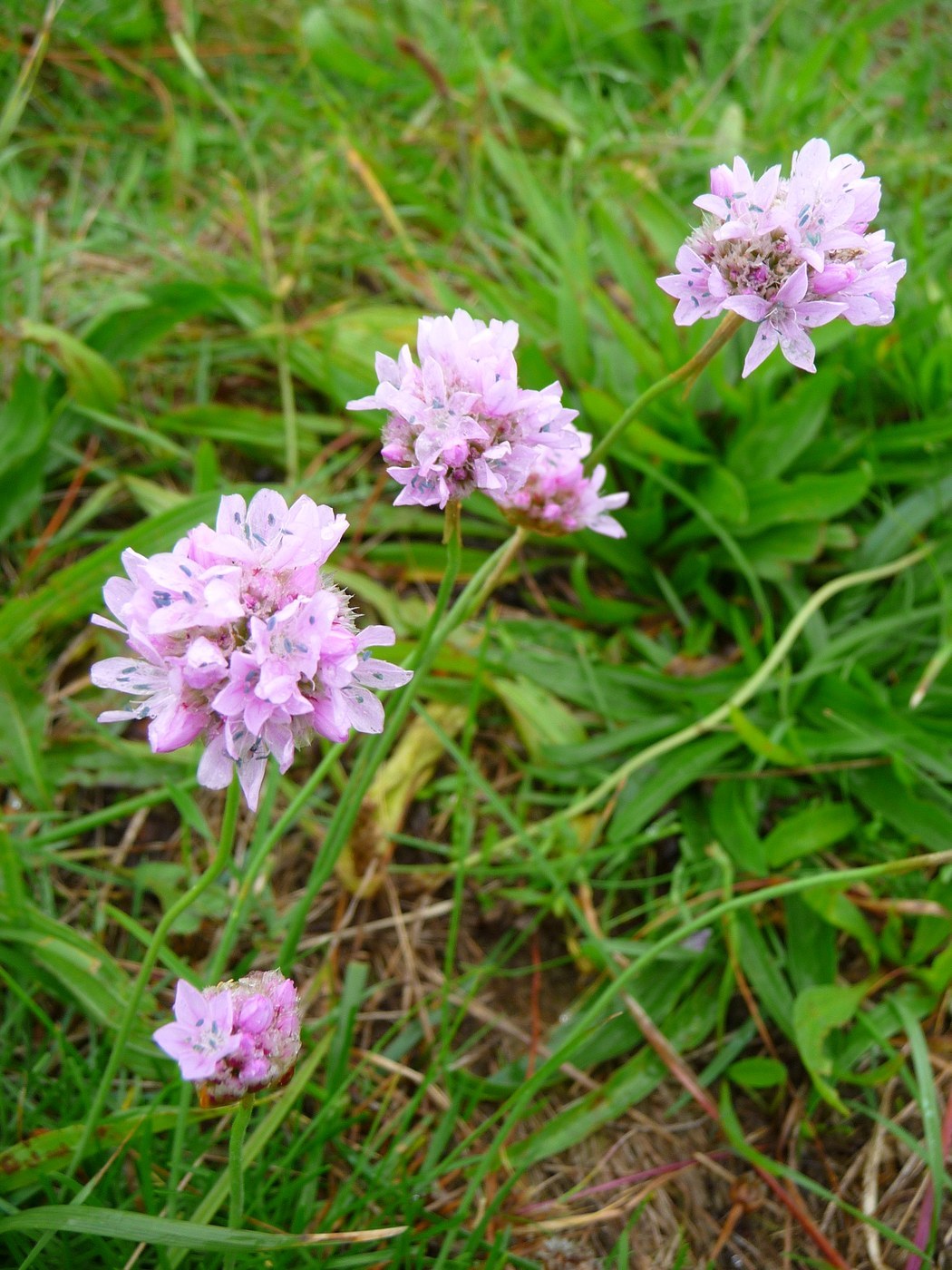
Sea Thrift
Armeria maritima
Sea thrift is a compact, evergreen coastal perennial forming tidy cushions of grassy foliage topped with round pink pompom flowers. It is exceptionally tough, thriving in poor, salty, well-drained soils.
- Light
- Full sun
- Water
- Drought-tolerant; water sparingly
- Difficulty
- Easy
Got a plant like this?
Identify any plant from a photo, free.
Overview
Sea thrift (Armeria maritima) is a low, mounding evergreen perennial in the leadwort family (Plumbaginaceae). It forms neat grassy tufts that erupt with globe-shaped pink (sometimes white) flower heads on slender stalks in spring and early summer.
Naturally adapted to coastal cliffs and salt marshes, it is remarkably tolerant of wind, salt, and poor soil. This makes it a star performer in rock gardens, edging, and seaside plantings.
Its compact, cushion-like form and long bloom season make it a favorite for small spaces and containers.
How to identify it
Look for tight grassy cushions topped with round flower balls.
- Leaves: Narrow, grass-like, dark green, forming a dense low rosette or cushion 4 to 6 inches tall
- Flowers: Tiny blooms packed into rounded, papery globes about 1 inch across, usually pink to rose
- Stems: Slender, leafless flower stalks rising 6 to 10 inches above the foliage
- Habit: Compact evergreen mound, slowly spreading
- Bloom time: Late spring into summer, often reblooming
Care & growing
An easy, low-maintenance plant that thrives on neglect in lean soil.
- Light: Full sun for best flowering and compact growth
- Water: Drought-tolerant once established; water sparingly and avoid soggy soil
- Soil: Sandy, gritty, well-draining soil; tolerates poor and salty conditions; dislikes rich, wet ground
- Temperature: Hardy in USDA zones 4 to 8
- Feeding: Little to none; overfeeding causes floppy, open growth
- Propagation: Division of clumps in spring, or seed; deadhead to prolong bloom
Habitat & origin
Native to coastal cliffs, sea bluffs, salt marshes, and sandy or rocky shores across the Northern Hemisphere, including Europe, North America, and Asia.
Its salt and wind tolerance make it ideal for seaside gardens, rockeries, gravel gardens, and the edges of paths and borders. It is widely cultivated worldwide as an ornamental ground cover and edging plant.
Frequently asked questions
Why is it called thrift?
The name likely refers to how it thrives in poor, lean soils where little else will grow.
Can sea thrift tolerate salt?
Yes, it is naturally adapted to coastal cliffs and salt spray, making it excellent for seaside gardens.
Why is my sea thrift dying in the center?
Older clumps often brown out in the middle. Dividing the plant every few years rejuvenates it.
Does sea thrift stay green in winter?
Yes, the grassy foliage is evergreen in most climates, offering year-round structure.
Sea Thrift guides
In-depth guides for identifying, growing, and caring for Sea Thrift.
How to Care for Sea Thrift
Grow Sea Thrift (Armeria maritima) for tidy grassy cushions topped with pink pompom blooms. A drought-tough coastal perennial for sun and sharp drainage.
Sea Thrift Identification Guide
Recognize Armeria maritima by its grassy cushion of leaves and round pink pompom flowers on bare stalks.