Sedum Identification Guide
Identify sedum (stonecrop) by its thick, water-storing succulent leaves and clustered star-shaped flowers, in both upright and creeping forms.
Read the full Sedum encyclopedia entry →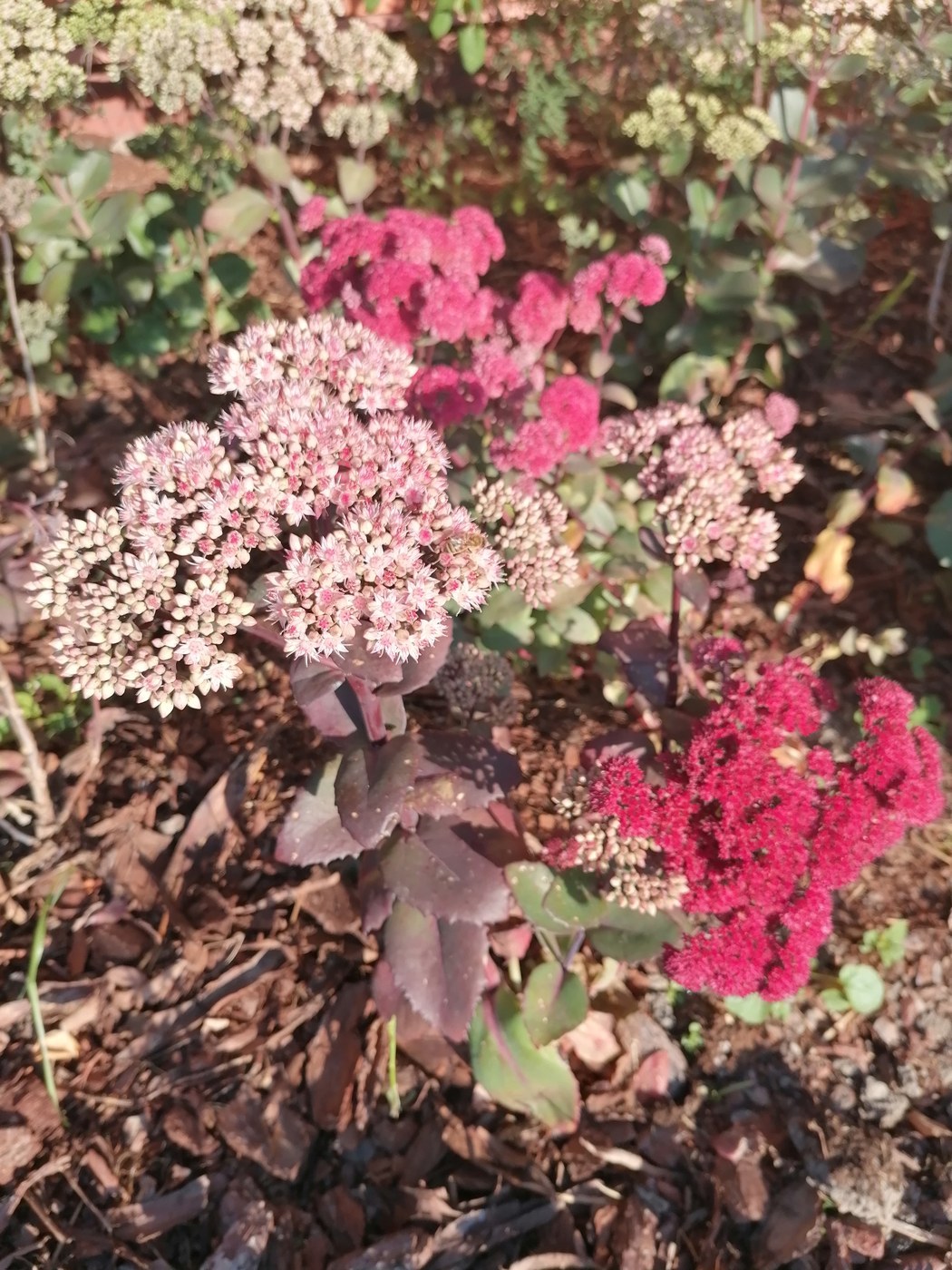
Key Identifying Features
Sedum, or stonecrop (genus Sedum / Hylotelephium), is a succulent perennial identified by its thick, fleshy, water-storing leaves and flat or rounded clusters of small star-shaped flowers. It comes in upright border types and low creeping groundcovers.
- Leaves: thick, fleshy, succulent, smooth
- Flowers: small 5-petaled stars in dense clusters
- Forms: tall clumping (e.g., 'Autumn Joy') or low mat-forming
- Habit: drought-tough, sun-loving
Leaves & Stems
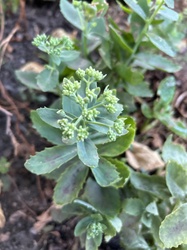
All sedums share plump, juicy leaves that snap or squish when pressed — the clearest sign of the genus. Upright border sedums (now often Hylotelephium) have fleshy, toothed, blue-green oval leaves in whorls or pairs up stout stems reaching 1-2 ft. Creeping stonecrops have tiny, often cylindrical or scale-like leaves densely packed along trailing stems that root where they touch soil. Many take on red, bronze, or purple tints in sun or cold. Stems are succulent and often reddish.
Flowers & Fruit
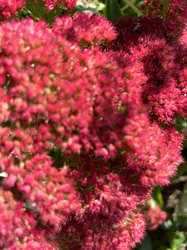
Flowers are small, star-shaped, with five (sometimes four) pointed petals, massed into dense flat-topped or domed clusters. Upright types bloom pink to rusty-red in late summer and fall, the heads aging from green buds (like broccoli) to pink to coppery-brown that persists through winter — a strong ID clue. Creeping types flower yellow, white, or pink in summer. Fruits are small clusters of dry follicles.
How to Tell It Apart from Look-Alikes
- Hens-and-chicks (Sempervivum): rosette succulents too, but form tight ball-like rosettes of pointed leaves, not branching leafy stems with star clusters.
- Echeveria / other succulents: distinct rosettes, usually tender.
- Ice plant (Delosperma): creeping succulent with showy daisy-like (not star-cluster) flowers.
- Spurge (Euphorbia): can look fleshy but has milky sap — sedum sap is watery.
The defining combo is thick succulent leaves + clustered 5-petaled star flowers + drought-tough, sunny habit.
Where You'll Find It
Sedums thrive in rock gardens, green roofs, dry walls, borders, and xeriscapes, plus naturalized on rocky outcrops and old walls (hence "stonecrop"). They love full sun and sharp drainage and tolerate poor, dry soil. Upright border sedums are autumn stars in perennial beds.
Quick ID Checklist
- Thick, fleshy, succulent leaves
- Star-shaped 5-petaled flowers in dense clusters
- Upright clumps or creeping mats
- Watery (not milky) sap
- Often red/bronze tints in sun; fall bloom on tall types
- Dry, sunny, well-drained sites; persistent winter seed heads
Frequently asked questions
How do I know a plant is a sedum?
The surest sign is thick, fleshy, water-storing leaves that squish when pressed, combined with dense clusters of small, five-petaled star-shaped flowers. Sedums also have watery, not milky, sap.
What's the difference between sedum and hens-and-chicks?
Both are succulents, but hens-and-chicks (Sempervivum) form tight, ball-like rosettes of pointed leaves, while sedums have leafy branching or trailing stems topped by clusters of star flowers.
Why does my tall sedum bloom look like broccoli before flowering?
That's normal for upright border sedums like 'Autumn Joy.' The flat flower heads start as tight green buds resembling broccoli, then open pink and age to rusty-bronze, persisting into winter.
Why are my creeping sedum leaves turning red?
Many sedums develop red, bronze, or purple tints in strong sun, drought, or cold weather. It's a natural stress response and doesn't harm the plant, plus it can help confirm the ID.
Sedum identified by the community
Recent Sedum specimens identified with Plant Identifier.