
Serviceberry Identification Guide
How to identify Serviceberry (Amelanchier) by its early white five-petaled flowers, finely toothed oval leaves, and round blueberry-like fruit.
Read the full Serviceberry encyclopedia entry →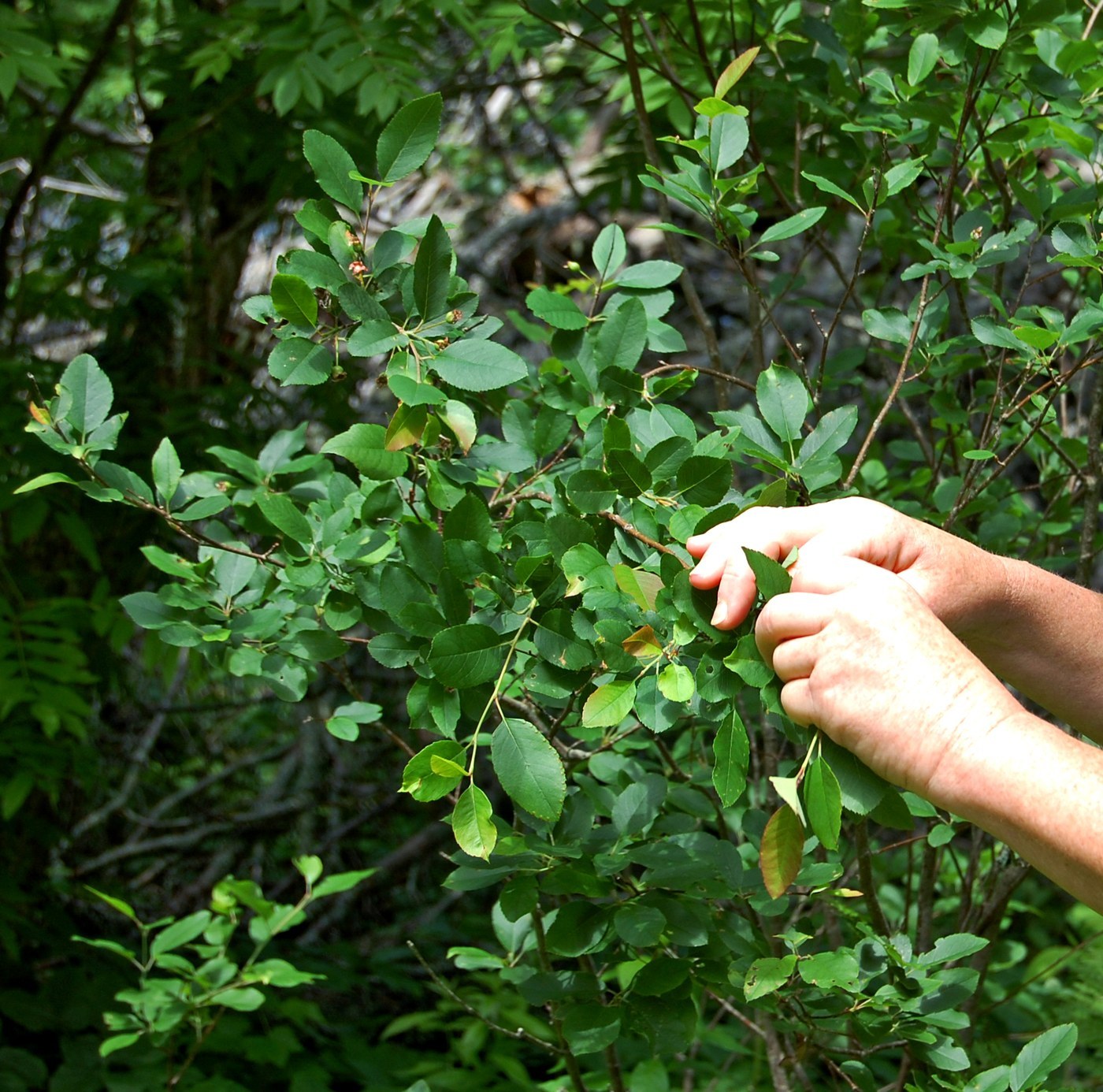
Key Identifying Features
Serviceberry (Amelanchier species), also called shadbush, juneberry, or saskatoon, is a small tree or large shrub among the first woody plants to bloom in spring, covered in delicate white flowers, and later bearing round blueberry-like fruit.
- Early-spring sprays of white, five-petaled flowers with narrow strap-like petals
- Oval, finely toothed leaves, often with silvery hairs when young
- Round, blueberry-like fruit ripening red to purple-black
- Smooth gray bark with darker vertical stripes
- Multi-stemmed shrub or small tree, 2-10 m tall
Leaves & Stems
Leaves are alternate, simple, oval to oblong (3-7 cm), with finely toothed (serrated) margins and a rounded or slightly heart-shaped base. Emerging leaves are often folded and covered in soft silvery-white hairs, becoming smooth green; many species show excellent orange-red fall color. Veins are neat and parallel-running toward the teeth.
The bark is a giveaway: smooth, light gray, often marked with darker vertical fissures or stripes, especially on the trunk. Stems are slender; the plant is often multi-stemmed and clump-forming.
Flowers & Fruit
- Flowers open very early (March-May), often before or with the leaves, in drooping or upright clusters (racemes). Each flower has five slender, white, strap-shaped petals, giving a slightly airy, spidery look compared with cherries or pears.
- Fruit is a small round pome 6-12 mm across, resembling a blueberry, ripening from green through red to deep purple-black in early-to-mid summer, with a small five-pointed crown at the tip (like an apple).
How to Tell It Apart from Look-Alikes
- Wild cherries (Prunus) have flowers with rounder petals and bear true cherries (drupes with a single stone), not crowned pome berries; serviceberry fruit has a tiny five-pointed crown at the tip.
- Hawthorn has lobed or toothed leaves but thorns and clustered haws; serviceberry is thornless with strap-petaled flowers.
- Shadbush blooms earlier than most, and the narrow white petals + crowned berry + striped gray bark combination is diagnostic.
Where You'll Find It
Native across North America (with relatives in Europe and Asia), serviceberries grow in woodland edges, streambanks, open forests, and rocky slopes, and are widely planted as ornamental landscape trees for their spring bloom, fruit, and fall color. They tolerate a range of soils in sun to part shade.
Quick ID Checklist
- Early-spring white flowers with five narrow strap-like petals
- Oval finely toothed leaves, silvery-hairy when young, good fall color
- Round blueberry-like fruit with a tiny crown, ripening purple-black
- Smooth gray bark with darker vertical stripes
- Thornless, multi-stemmed shrub or small tree
Frequently asked questions
Why is it called serviceberry, shadbush, and juneberry?
The names reflect folklore and timing: it blooms when shad fish run upstream (shadbush), when spring burial 'services' could resume after winter thaw (serviceberry), and its fruit ripens in June (juneberry/saskatoon).
How do I tell serviceberry from a wild cherry?
Look at the fruit and flowers. Serviceberry fruit is a small pome with a five-pointed crown at the tip (like a tiny apple), and its flowers have narrow strap-shaped petals. Cherries are smooth single-stoned drupes with rounder-petaled flowers.
Is serviceberry one species or many?
Amelanchier is a genus of about 20+ species that hybridize freely, so exact species ID can be tricky. The genus as a whole is identified by the early white strap-petaled flowers, crowned berries, and smooth striped gray bark.