
Shagbark Hickory Identification Guide
How to identify shagbark hickory (Carya ovata) by its shaggy peeling bark, compound leaves with five leaflets, and round nuts in splitting husks.
Read the full Shagbark Hickory encyclopedia entry →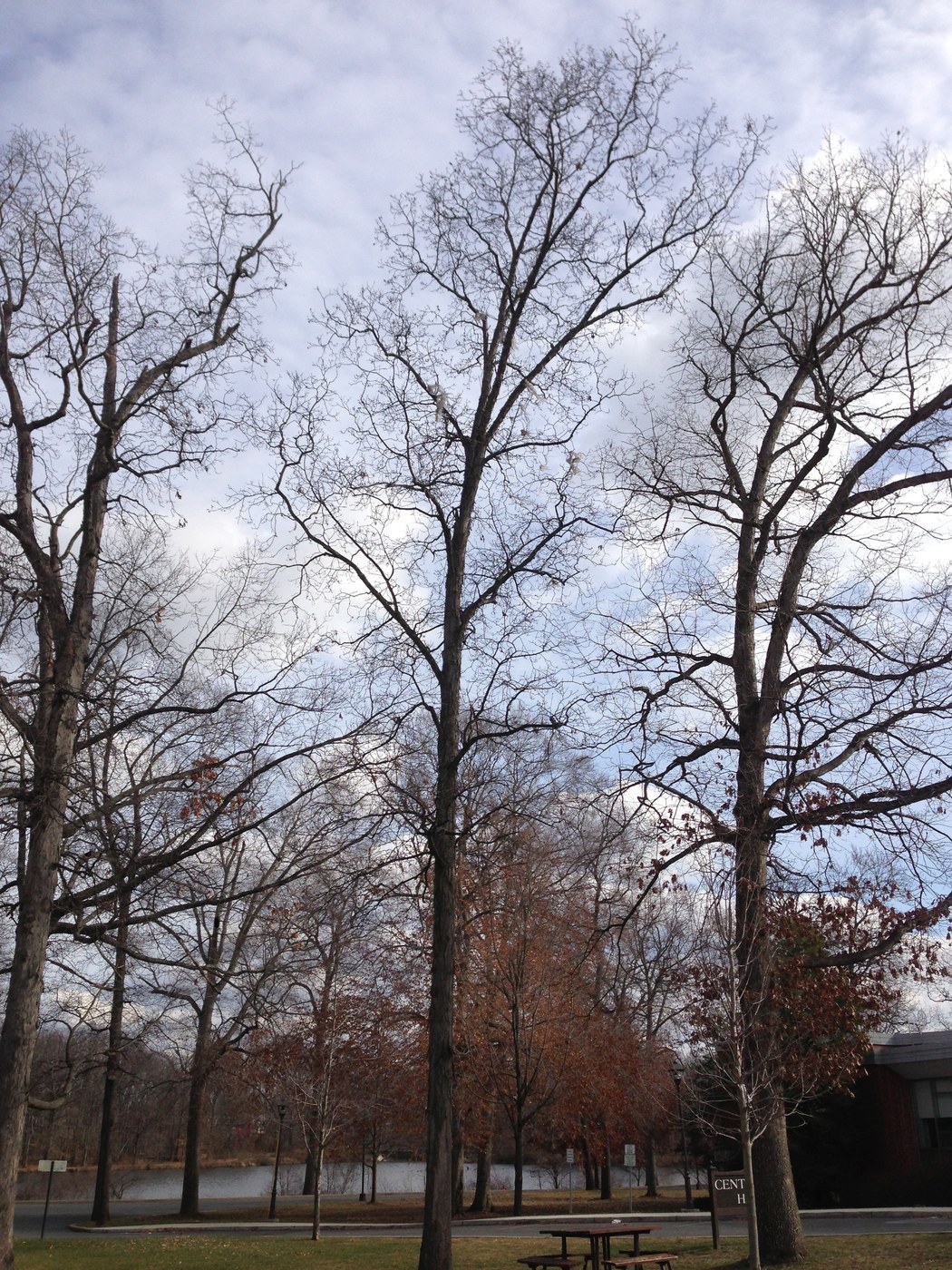
Key Identifying Features
Shagbark hickory (Carya ovata) is a tall deciduous tree named for its unmistakable shaggy bark that peels away in long, loose vertical strips. It grows 60–80 feet tall with a straight trunk and an irregular, oblong crown.
- Shaggy gray bark peeling in long plates that curl out at top and bottom
- Compound leaves with usually 5 (sometimes 7) leaflets, the terminal three much larger
- Round nuts in thick husks that split cleanly into four
- Large, fuzzy, dome-shaped terminal buds
Leaves & Stems
The leaves are pinnately compound, 8–14 inches long, with usually 5 leaflets — the upper three notably larger than the lower two. Leaflets are finely toothed, pointed, and often have tiny tufts of hairs along the teeth (visible with a hand lens). Foliage turns rich golden-yellow in fall. The twigs are stout with a large, broad, hairy terminal bud, and the pith is solid (not chambered like walnut). The bark is the standout: smooth and gray on young trees, then separating into long, hard plates that peel loose at the ends, giving older trunks a distinctly shaggy, unkempt look.
Flowers & Fruit
Shagbark hickory is monoecious. In spring, drooping yellow-green male catkins dangle in threes while small female flowers form at branch tips. The fruit is a round nut, 1–1.5 inches, enclosed in a thick, woody green-to-brown husk that splits completely into four sections at maturity. Inside is a light-colored, four-ribbed shell holding a single kernel.
How to Tell It Apart from Look-Alikes
The shaggy bark separates it from most hickories at a glance. Shellbark hickory (Carya laciniata) also has peeling bark but typically 7 leaflets and larger nuts. Pignut and bitternut hickories have tight, non-shaggy bark and fewer/more leaflets, and bitternut has bright sulfur-yellow buds. Black walnut and ash have compound leaves but lack the shaggy bark and split-husk round nuts; walnut also has a chambered pith. Solid pith plus shaggy bark plus 5 leaflets confirms shagbark.
Where You'll Find It
Native to eastern North America, shagbark hickory grows in upland forests, rich slopes, and well-drained bottomlands, often mixed with oaks. It is long-lived and slow-growing, valued for its strong wood.
Quick ID Checklist
- Bark: shaggy, peeling in long loose vertical strips
- Leaves: compound, usually 5 leaflets, top three largest
- Buds: large, broad, fuzzy terminal bud; solid pith
- Fruit: round nut in a thick husk that splits into four
- Habitat: upland hardwood forests of eastern North America
A tall tree with shaggy peeling bark and five-leaflet compound leaves is shagbark hickory.
Frequently asked questions
What makes shagbark hickory bark look shaggy?
Mature bark separates into long, hard vertical plates that loosen and curl outward at the top and bottom while staying attached in the middle, giving the trunk a distinctly shaggy, peeling appearance.
How many leaflets does shagbark hickory have?
Usually five leaflets per compound leaf, with the upper three noticeably larger than the lower two. Occasionally there are seven, which can cause confusion with shellbark hickory.
How do I tell shagbark from bitternut hickory?
Bitternut has tight, non-shaggy bark and distinctive sulfur-yellow buds, whereas shagbark has shaggy peeling bark and broad fuzzy buds.