Shasta Daisy Identification Guide
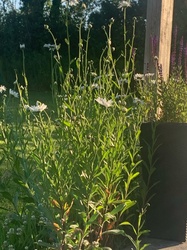
Recognize the Shasta daisy by its large, classic white-petaled, yellow-centered flowers above glossy, toothed dark green leaves.
Read the full Shasta Daisy encyclopedia entry →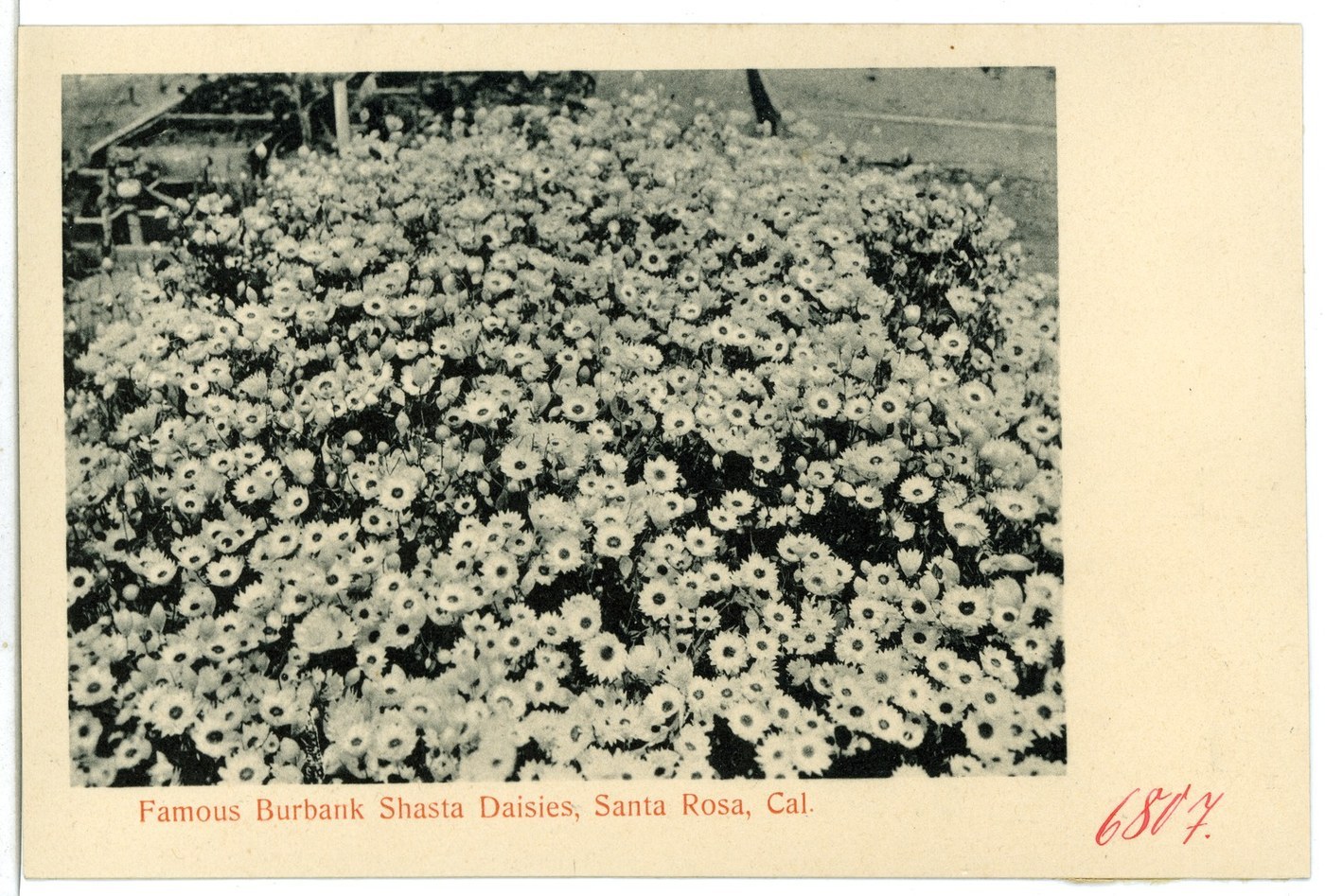
Key Identifying Features
The Shasta daisy (Leucanthemum × superbum) is the quintessential big white daisy of summer gardens: a clean ring of bright white ray petals around a flat golden-yellow disk, on sturdy stems above dark green foliage.
- Flowers: large (2-4 in), pure white petals, yellow center
- Leaves: glossy, dark green, coarsely toothed
- Habit: clumping, upright, 1-3 ft tall
- Bloom: early to late summer, often reblooming
Leaves & Stems
Leaves are dark green, thick, and somewhat glossy, lance-shaped to spoon-shaped, with coarsely toothed or scalloped margins. Lower leaves have stalks and form a basal rosette; upper stem leaves are narrower and stalkless (clasping). Leaves are alternate along the stem. Stems are stiff, upright, and mostly unbranched, each usually topped by a single flower — ideal as cut flowers.
Flowers & Fruit
Each bloom is a composite head with numerous white ray florets surrounding a dense button of yellow disk florets. The petals are broad and overlapping, giving a full, tidy daisy. Some cultivars are double or frilled, but the classic is single. After bloom the center matures into a head of small dry seeds (achenes) without fluffy parachutes.
How to Tell It Apart from Look-Alikes
- Oxeye daisy (Leucanthemum vulgare): the wild roadside cousin — smaller flowers (1-2 in) and more deeply lobed lower leaves; Shasta is a larger, more robust garden hybrid.
- English daisy (Bellis perennis): much smaller, low lawn daisy with a basal rosette only.
- Feverfew (Tanacetum parthenium): smaller white daisies in clusters with divided, strongly scented yellow-green leaves.
- Coneflower (white forms): has a raised spiny cone, not a flat yellow disk, and rough leaves.
The key is large clean white daisy + flat yellow center + glossy coarsely toothed dark green leaves.
Where You'll Find It
Shasta daisies are garden plants grown in sunny borders, cottage gardens, and cutting beds throughout temperate regions. They prefer full sun and well-drained soil. They can naturalize at garden edges but are not a true wildflower; the similar oxeye daisy is the one you'll see colonizing fields and roadsides.
Quick ID Checklist
- Large white ray petals around a flat yellow disk
- Glossy, dark green leaves with coarse teeth
- Basal rosette plus alternate stem leaves
- Stiff stems, one flower per stem
- 1-3 ft clumping habit in full sun
- No raised cone or fluffy seed heads
Frequently asked questions
What's the difference between a Shasta daisy and an oxeye daisy?
Shasta daisies are larger, more robust garden hybrids with bigger flowers and glossy toothed leaves. Oxeye daisy is the smaller-flowered wild species that naturalizes in fields and along roads.
Why doesn't my Shasta daisy have a raised center like a coneflower?
It shouldn't. Shasta daisies have a flat golden disk, not a raised spiny cone. A raised cone means you're looking at Echinacea or Rudbeckia, not a Shasta daisy.
Are Shasta daisies and feverfew the same?
No. Feverfew has many small daisies in clusters and finely divided, strongly scented foliage, while the Shasta daisy bears large single blooms on stiff stems with broad toothed leaves.
How do I identify a Shasta daisy before it blooms?
Look for a clump of dark green, glossy, coarsely toothed leaves forming a basal rosette, with stiff upright stems beginning to rise. The thick, toothed, shiny leaves are a good early clue.
Shasta Daisy identified by the community
Recent Shasta Daisy specimens identified with Plant Identifier.