
Shirley Poppy Identification Guide
Identify Shirley poppy (Papaver rhoeas) by its hairy stems, nodding buds, and delicate crinkled silky petals in red, pink, and white above a ring of stamens.
Read the full Shirley Poppy encyclopedia entry →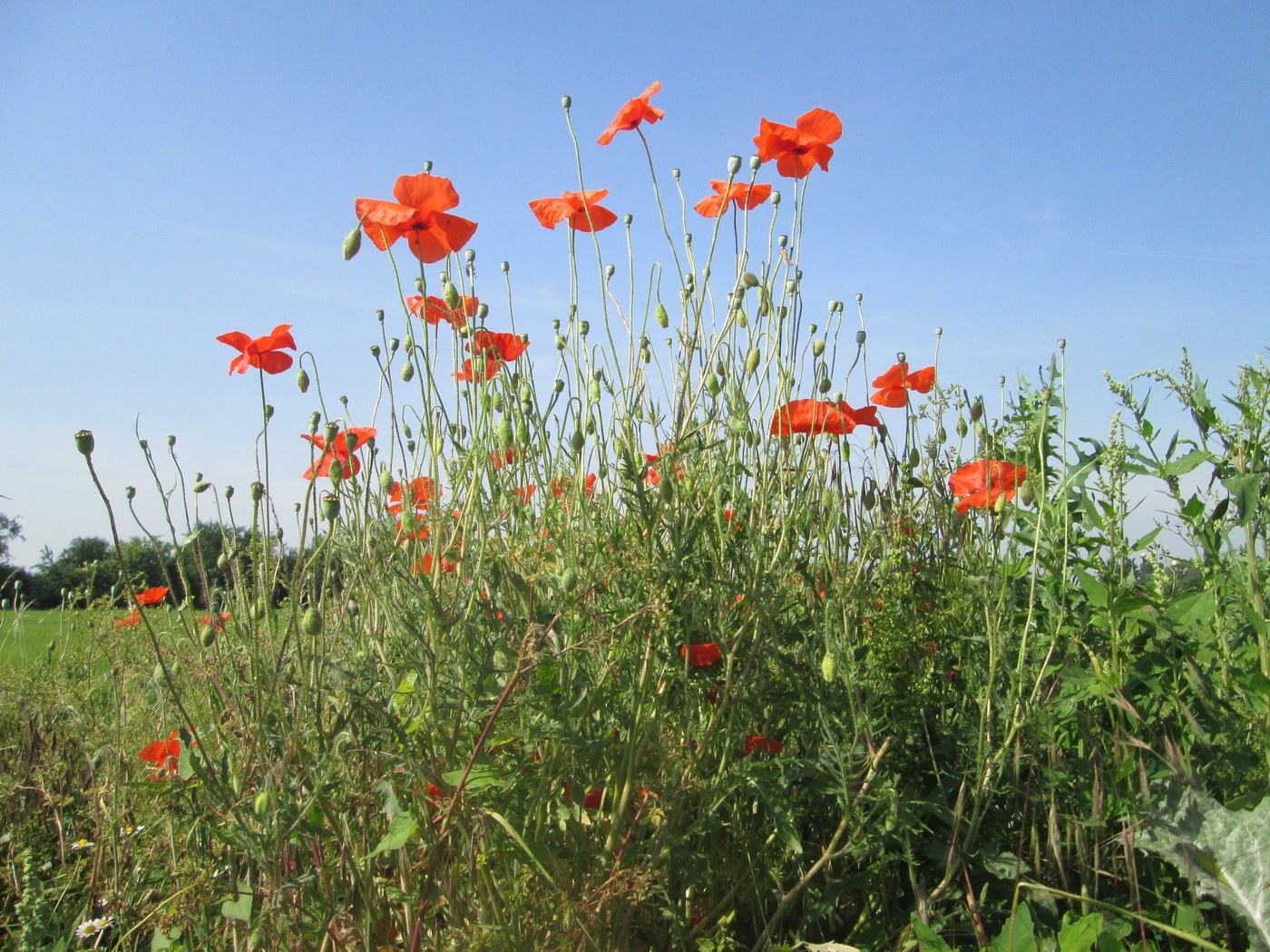
Key Identifying Features
Shirley poppy is a cultivated strain of the corn poppy / field poppy (Papaver rhoeas), the same species as the iconic red remembrance poppy. It is grown for its delicate, papery, crinkled petals in shades of red, pink, salmon, white, and bicolors, often with picotee edges, lacking the black basal blotch of the wild form. Plants are slender annuals 1.5–3 feet tall with hairy stems and nodding buds that lift as the flower opens.
- Slender, branching annual, 1.5–3 ft
- Silky, crinkled, papery petals (usually 4)
- Colors: red, pink, salmon, white, bicolor (no dark blotch)
- Bristly stems and nodding buds
Leaves & Stems
Leaves are alternate, lance-shaped, and deeply lobed or toothed, light to mid-green and covered in stiff hairs (bristles). Stems are thin, wiry, and conspicuously hairy, often holding a single flower each. Flower buds nod (droop) downward while developing, then turn upright as they open — a classic poppy clue. Broken stems exude a milky-white sap.
Flowers & Fruit
Flowers are cup- to bowl-shaped, about 2–4 inches across, with usually four overlapping, tissue-thin petals that look crumpled when first unfurled. At the center is a ring of many dark stamens around a flat-topped seed capsule with a star-like cap (stigmatic disk). After bloom, the capsule dries to a rounded 'pepper-pot' pod that releases tiny seeds through pores under the rim.
How to Tell It Apart from Look-Alikes
- Iceland poppy (Papaver nudicaule) has all-basal leaves and leafless flower stalks; Shirley poppy has leafy, branching stems.
- Oriental poppy (P. orientale) is a large coarse perennial with huge flowers and a dark basal blotch; Shirley poppy is a finer annual without the blotch.
- California poppy (Eschscholzia) has feathery blue-green foliage and satiny orange flowers with a different pod; quite distinct.
Where You'll Find It
Shirley poppies are grown in cottage gardens, meadows, and wildflower mixes, direct-sown in cool weather for late spring to early summer bloom. They prefer full sun and well-drained soil and self-sow freely, naturalizing in disturbed and sunny ground. The wild corn poppy is a classic weed of grain fields across Europe.
Quick ID Checklist
- Slender annual, hairy stems, milky sap
- Nodding buds that lift as they open
- Silky, crinkled petals (red/pink/white, no dark blotch)
- Ring of dark stamens; flat-topped capsule
- Dry pepper-pot seed pod
A fine, hairy-stemmed annual with nodding buds and crumpled silky petals over a flat seed disk is a Shirley poppy.
Frequently asked questions
How is Shirley poppy different from the wild red poppy?
Shirley poppy is a selected strain of the same species (Papaver rhoeas) bred for a range of colors and picotee edges, and it lacks the black basal blotch found at the center of the wild corn poppy.
Why do the buds droop?
Nodding, downward-pointing buds are a classic poppy trait; the bud straightens and lifts upright just as the crinkled petals unfurl.
How can I confirm it is a poppy?
Check for hairy stems with milky sap, papery crumpled petals, a central ring of dark stamens, and a rounded 'pepper-pot' seed capsule after flowering.
Does it come back each year?
It is an annual, but it self-sows so freely from its tiny seeds that it often reappears and naturalizes in the same sunny spot year after year.