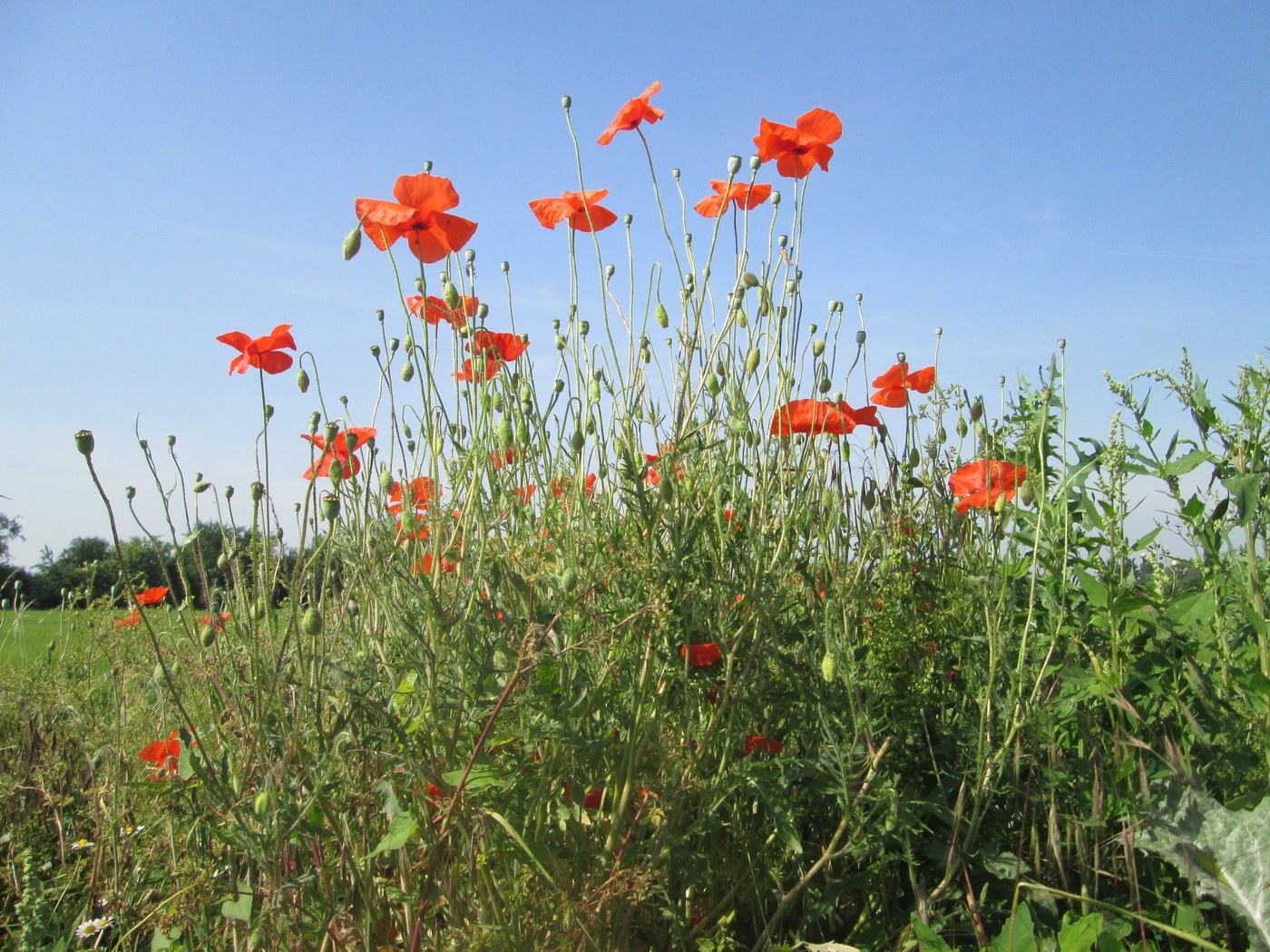
Shirley Poppy
Papaver rhoeas
The Shirley poppy is a refined garden strain of the wild corn poppy, bred for its delicate, papery flowers in soft pinks, whites, reds, and bicolors. These cool-season annuals self-sow freely for drifts of tissue-thin blooms.
- Light
- Full sun
- Water
- Low to moderate; drought tolerant
- Difficulty
- Easy
Got a plant like this?
Identify any plant from a photo, free.
Overview
Shirley poppies are selected forms of Papaver rhoeas, the common corn or field poppy famous from European meadows and First World War remembrance. The Shirley strain, developed in 19th-century England, expanded the color range to pastels, picotees, and doubles while keeping the wild plant's delicate charm.
The flowers are silky and tissue-paper thin, opening from nodding, hairy buds atop slender stems. Each bloom is short-lived, but plants produce a long succession over the cool season.
Easy from seed and quick to self-sow, Shirley poppies are beloved for naturalistic meadow plantings and cottage gardens.
How to identify it
- Height: Slender plants 2-3 ft tall with wiry, branching stems.
- Flowers: Single or semi-double, papery flowers about 2-3 in across in pink, red, white, salmon, and bicolor, often without the dark basal blotch of the wild form.
- Buds: Nodding, bristly buds that lift upright as they open.
- Leaves: Lobed, toothed, light green, bristly leaves.
- Seed pods: Smooth, rounded capsules with a flat cap and tiny seeds.
Care & growing
Light: Full sun.
Water: Low to moderate; drought tolerant once growing, dislikes soggy soil.
Soil: Well-drained soil of average fertility; tolerates poor ground.
Temperature: A cool-season annual; sow in fall or very early spring for bloom before summer heat.
Feeding: Little needed.
Propagation: Sow the tiny seeds directly where they are to grow, as poppies resent transplanting; scatter on the surface and press in lightly. They self-sow readily for future years.
Habitat & origin
Papaver rhoeas is native to Europe, North Africa, and temperate Asia, where it grows in fields, roadsides, and disturbed ground, famously coloring cereal fields and battlefields red.
Shirley poppies are grown worldwide in temperate gardens as cool-season annuals and naturalize easily in meadow and cottage-garden settings.
Frequently asked questions
How is a Shirley poppy different from a corn poppy?
Shirley poppies are a cultivated strain of the wild corn poppy (Papaver rhoeas), bred for a wider range of soft colors, picotee edges, and double forms.
Can I transplant poppy seedlings?
It is best not to. Poppies resent root disturbance, so sow seed directly where you want them to flower.
Will they come back each year?
Though grown as annuals, they self-sow prolifically, so once established they often reappear in following seasons.
How tall do Shirley poppies grow?
They form slender, wiry plants about 2 to 3 feet tall, with branching stems that carry the papery flowers above the foliage.
Shirley Poppy guides
In-depth guides for identifying, growing, and caring for Shirley Poppy.
How to Care for Shirley Poppy
Grow Shirley poppies (Papaver rhoeas) for airy, tissue-paper blooms. Full sun, lean soil, and direct sowing make this annual easy.
Shirley Poppy Identification Guide
Identify Shirley poppy (Papaver rhoeas) by its hairy stems, nodding buds, and delicate crinkled silky petals in red, pink, and white above a ring of stamens.