
How to Care for Shooting Star
Grow the delicate native wildflower Shooting Star with this guide to light, spring moisture, summer dormancy, and woodland-garden care.
Read the full Shooting Star encyclopedia entry →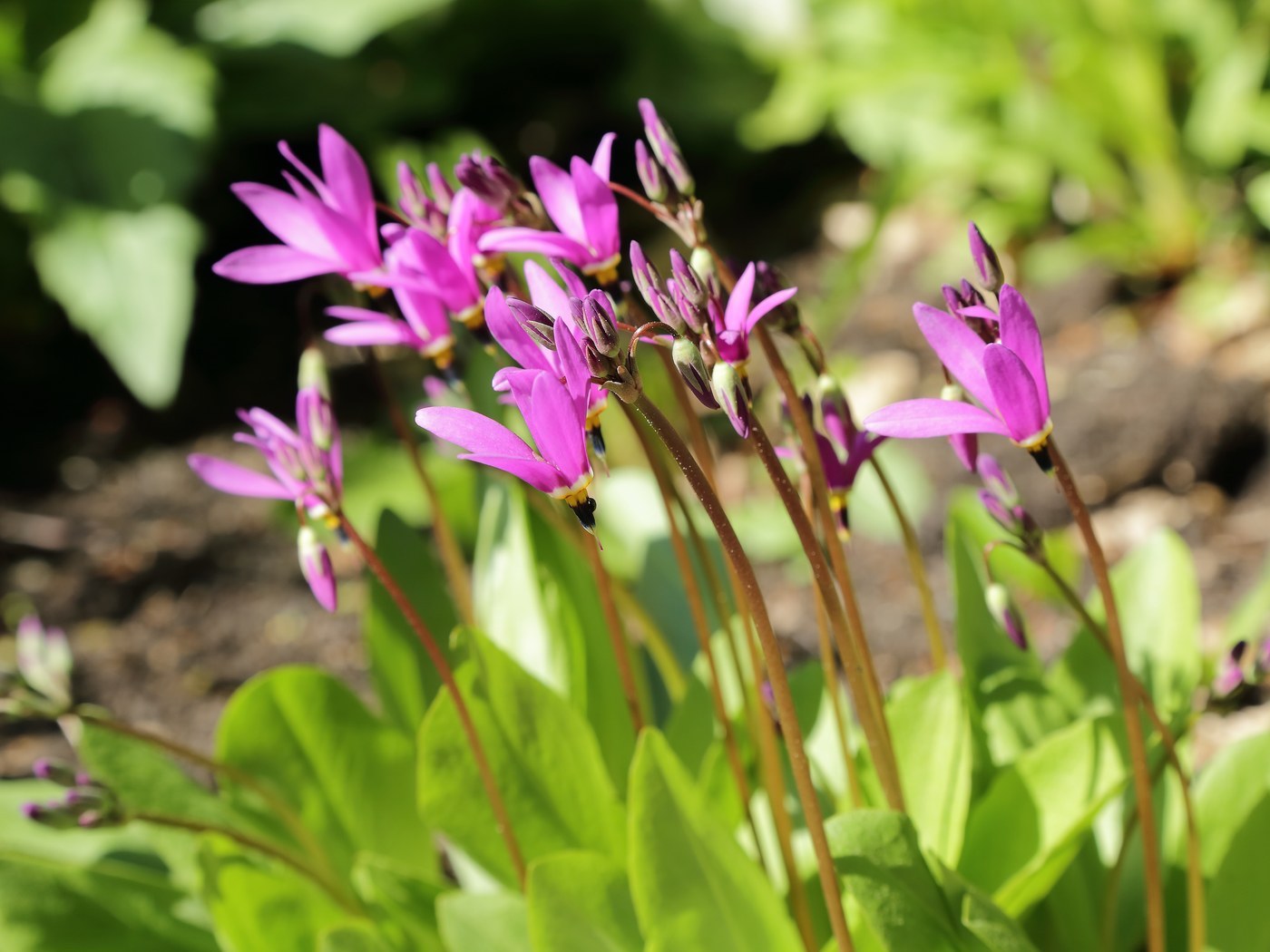
Shooting Star (Dodecatheon meadia) is a charming native spring wildflower prized for its nodding, swept-back petals that resemble tiny darting comets. This herbaceous perennial grows from a basal rosette, blooms in spring, then retreats into summer dormancy, making it a rewarding but rhythm-specific plant to master.
Light
Shooting star grows in partial shade to full sun, thriving in the dappled light of open woodland and prairie edges. It appreciates bright spring sunshine before deciduous trees leaf out, followed by cooler shade as summer heat builds. In hotter climates, protection from harsh afternoon sun preserves the foliage longer.
Water
Provide moderate, even moisture through spring while the plant is actively growing and flowering. As the foliage naturally yellows and dies back in early summer, allow the soil to dry out and keep it on the drier side through the dormant period. Overwatering a dormant plant risks rotting the resting rootstock.
Soil & Potting
Grow in humus-rich, well-draining soil that holds moisture during spring growth yet drains freely afterward. A woodland-style mix amended with leaf mold or compost suits it well. Slightly acidic to neutral soils are ideal, mimicking the rich, organic ground of its native prairies and open woods.
Humidity & Temperature
A hardy temperate perennial, shooting star tolerates cold winters and relishes cool spring conditions. It needs no special humidity. The natural cycle of cool, moist spring followed by warm, dry summer dormancy is central to its health, and a winter chill helps trigger reliable spring emergence.
Feeding
This wildflower is not a heavy feeder. A light topdressing of compost or leaf mold in autumn or early spring supplies ample nutrients. Avoid strong chemical fertilizers, which can overwhelm the plant; gentle, organic enrichment mirroring its woodland habitat is all it needs.
Propagation
Shooting star propagates from seed sown in autumn, as the seeds benefit from cold stratification over winter to germinate in spring. Patience is required, as seedlings take a few years to reach flowering size. Established clumps can also be carefully divided during dormancy, keeping intact roots on each section.
Repotting / Pruning
Little pruning is needed beyond allowing the foliage to yellow and die back naturally after bloom, which feeds the roots for next year. Do not cut back green leaves prematurely. Divide or move plants only while dormant in late summer or autumn, handling the resting rootstock gently to avoid damage.
Common Problems & Pests
Generally trouble-free, shooting star can suffer crown or root rot in soils that stay wet during its summer dormancy, so drainage is key. Slugs and snails may nibble tender spring foliage; hand-picking or barriers help. Its brief growing season means most pest pressure is limited to early spring.
Seasonal Care Tips
Watch for the rosette to emerge in early spring, followed by the distinctive flowers. Keep soil evenly moist through the bloom, then ease off water as leaves yellow and the plant enters dormancy by early to midsummer. Mark its location so you do not disturb the dormant roots, and topdress with leaf mold in autumn to prepare for the next season.
Frequently asked questions
Why did my shooting star disappear in summer?
This is completely normal. Dodecatheon meadia is a spring ephemeral that goes dormant in early to midsummer after flowering, with its foliage yellowing and dying back. Mark its spot so you do not disturb the resting roots.
Should I water shooting star in summer?
No, keep it dry once it goes dormant. It needs moderate moisture only during spring growth and bloom. Watering the dormant rootstock through summer risks rot, so let the soil dry out after the leaves die back.
How do I grow shooting star from seed?
Sow seed in autumn so it receives cold stratification over winter, prompting spring germination. Be patient, as seedlings typically take a few years to mature and flower.
Does shooting star need sun or shade?
It does well in partial shade to full sun, thriving in the dappled light of woodland edges. It enjoys bright spring sun before trees leaf out, then benefits from cooler shade as summer heat arrives.