
Shore Pine Identification Guide
How to identify shore pine (Pinus contorta var. contorta) by its short twisted paired needles, small often-persistent cones, and contorted coastal habit. Covers needles, cones, bark, and look-alikes.
Read the full Shore Pine encyclopedia entry →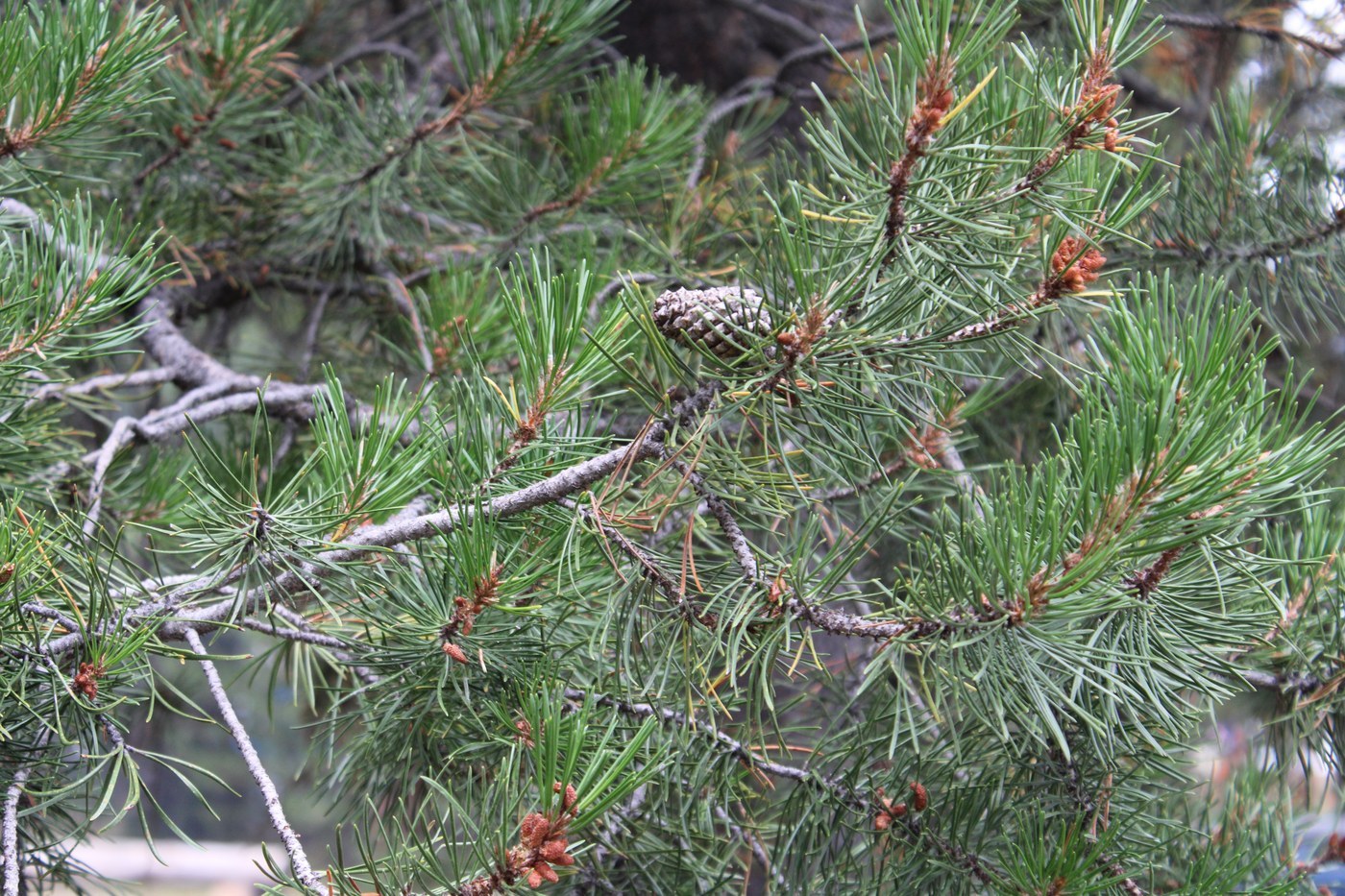
Key Identifying Features
Shore pine (Pinus contorta var. contorta) is the coastal form of lodgepole pine, a tough two-needle pine recognized by short, twisted needles in pairs, a dense, often contorted and bushy crown, and small, lopsided cones with a sharp prickle. It hugs the Pacific coast and is more shrubby and gnarled than its tall inland cousin.
- Needles in pairs (twos), short (3–6 cm), often twisted
- Dense, dark yellow-green foliage; bushy, contorted habit
- Cones small (2–5 cm), egg-shaped, oblique, with a fine prickle
- Thin, scaly, reddish-brown bark
Leaves & Stems
Needles are short (3–6 cm), stout, and frequently twisted, dark to yellowish-green, two per bundle with a persistent basal sheath. They are densely set on the shoots, giving a thick, leafy look. Twigs are slender and orange-brown. The bark of shore pine is thin, finely scaly, and reddish-brown to grey-brown—distinctly different from the very thick, deeply plated bark of related ponderosa-type pines. Exposed to coastal wind, the tree is typically low, rounded, twisted, and shrubby, hence the name contorta.
Flowers & Fruit
Cones are small (2–5 cm), ovoid and asymmetrical (oblique at the base), yellow-brown, each scale tipped with a slender sharp prickle. They often point backward along the branch and may persist closed on the tree for years. Coastal shore-pine cones generally open at maturity (less strongly serotinous than some inland lodgepole). Male cones are small and clustered near shoot bases in early summer.
How to Tell It Apart from Look-Alikes
- Inland lodgepole pine (var. latifolia): Tall, slender, straight trunk; same species but very different growth form. Shore pine is the squat coastal variety.
- Other 2-needle pines (e.g., bishop pine): Bishop pine needles are longer (10–15 cm) and cones larger and strongly clustered/serotinous.
- Ponderosa/Jeffrey: Long needles in threes, huge trees, thick plated bark.
- Spruce/fir/hemlock: Single needles, not bundled in twos.
Where You'll Find It
Along the Pacific coast from Alaska to northern California, on coastal dunes, headlands, bogs, and exposed bluffs where it tolerates salt, wind, and poor soils. Widely used as a tough ornamental and bonsai. Look for a dense, twisted, dark-green small pine right by the sea.
Quick ID Checklist
- Needles two per bundle, short and often twisted
- Dense, bushy, contorted small tree
- Small oblique cones with a fine prickle, often persistent
- Thin, scaly reddish-brown bark
- Coastal: dunes, headlands, bogs from Alaska to California
A short, twisted, two-needled pine forming a dense contorted shrub-tree along the Pacific shore is shore pine.
Frequently asked questions
Is shore pine the same as lodgepole pine?
They are the same species, Pinus contorta. Shore pine is the coastal variety (var. contorta), which is short, bushy, and twisted, while lodgepole pine (var. latifolia) is the tall, straight inland form.
Why is it called contorta?
Exposed to coastal wind and salt, the tree typically grows low, twisted, and contorted, and its short needles are often twisted as well, giving rise to the species name.
How do I tell shore pine from bishop pine?
Both are coastal two-needle pines, but bishop pine has much longer needles (10–15 cm) and larger cones held in whorled clusters that stay closed for years, while shore pine has short needles and small oblique cones.
Where does shore pine grow?
Along the Pacific coast from Alaska to northern California, on dunes, headlands, bogs, and windy bluffs where it tolerates salt, wind, and poor soils.