
How to Care for Siberian Bugloss
A shade-garden favorite with heart-shaped leaves and airy blue spring flowers. Easy in moist soil and dappled light, and long-lived.
Read the full Siberian Bugloss encyclopedia entry →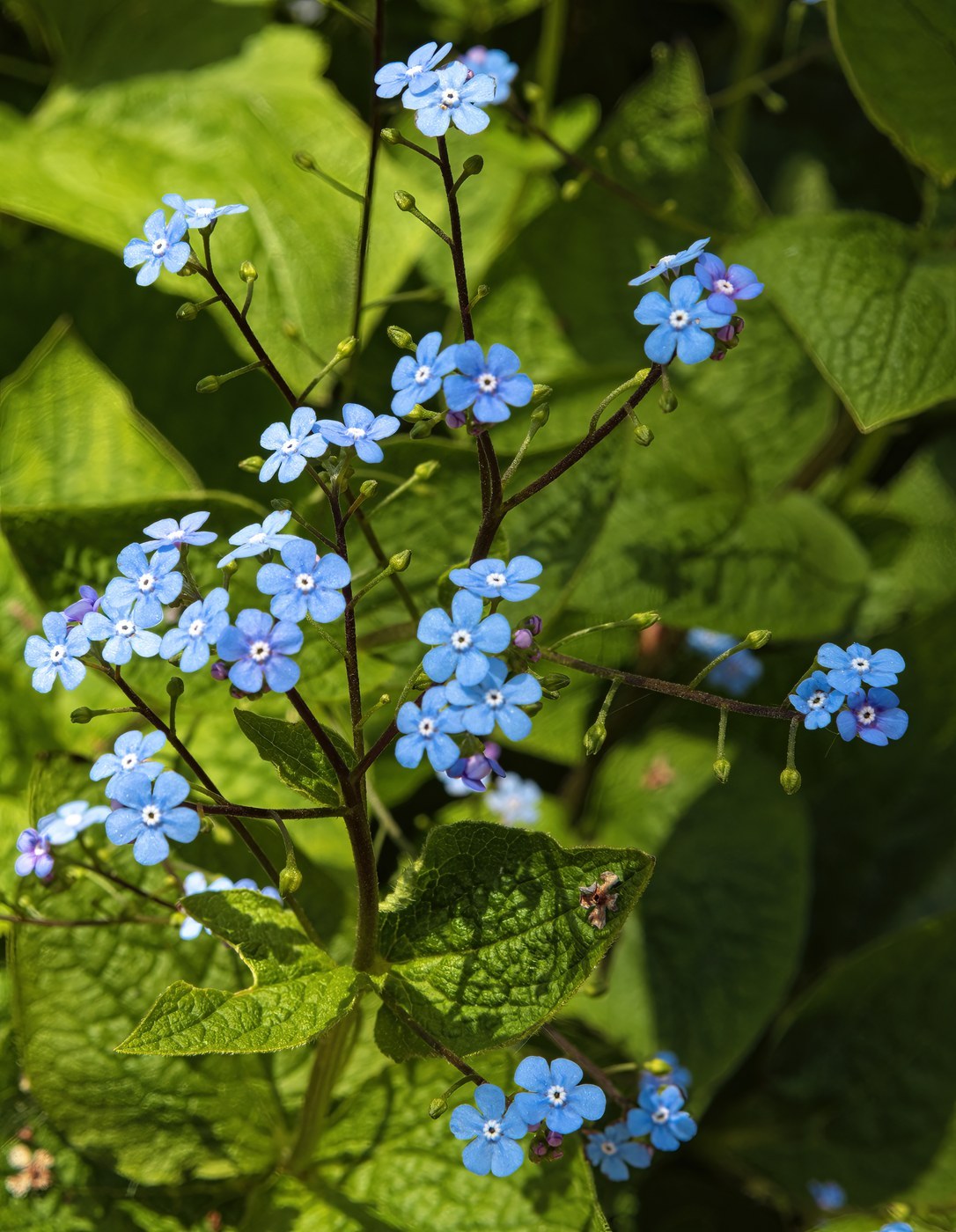
Siberian Bugloss (Brunnera macrophylla) is a clump-forming shade perennial grown for its large, heart-shaped leaves — often silvered or variegated in cultivars — and its dainty sprays of forget-me-not-blue flowers in spring. It is an easy, long-lived groundcover for cool, moist, shaded gardens.
Light
Brunnera thrives in part to full shade. Morning sun with afternoon shade is ideal; deep shade is tolerated but flowering is lighter. Variegated and silver-leaved cultivars need protection from hot direct sun, which scorches their delicate foliage, so give them the shadiest, most sheltered spots.
Water
Keep the soil consistently moist — this plant dislikes drying out and will wilt and develop crispy leaf edges in drought. Water regularly during dry spells, especially for silver-leaved forms. Once established in reliably moist, humus-rich ground it needs little supplemental water, but it never wants to bake dry.
Soil & Potting
Provide moist, well-drained soil rich in organic matter, much like a woodland floor. Work in compost or leaf mold at planting and mulch to retain moisture and keep roots cool. It adapts to most soil textures as long as moisture is steady and drainage is not stagnant.
Humidity & Temperature
Hardy in roughly USDA zones 3–8, Brunnera is a cool-climate plant that resents heat and humidity extremes. In hot-summer regions it needs deeper shade and extra moisture, and foliage may decline in peak heat before flushing again as temperatures ease. It shrugs off cold winters and returns reliably each spring.
Feeding
A light feeder. Top-dress with compost in spring or apply a balanced slow-release fertilizer as growth begins. Annual mulch with organic matter usually supplies enough nutrition for healthy leaves and steady blooms.
Propagation
The easiest method is division in early spring or fall — lift the clump and separate the crowns, which reestablish quickly. Root cuttings taken in dormancy also work well and are the reliable way to increase named variegated cultivars, since seed from those does not come true.
Repotting / Pruning
Remove tattered or scorched leaves through the season to keep the clump tidy, and shear back the flowering stems after bloom to encourage a fresh mound of foliage. Divide congested clumps every three to four years to maintain vigor. Cut back spent foliage in late fall or early spring.
Common Problems & Pests
Remarkably trouble-free. Slugs and snails may nibble the leaves in damp conditions; hand-pick or use barriers. The chief issues are leaf scorch and browning from too much sun or insufficient water — both solved by more shade and steadier moisture. Powdery mildew is occasionally seen in poor air circulation.
Seasonal Care Tips
Enjoy the sky-blue flower sprays in early to mid spring above the emerging foliage. Keep soil moist through summer, refresh mulch, and shear back if leaves tire in heat. In fall, cut down spent foliage and let winter cold do its work — the plant is fully dormant and hardy, returning larger each year.
Frequently asked questions
Why are the edges of my Brunnera leaves turning brown?
Leaf-edge browning almost always signals too much sun or dry soil. Move it to deeper shade and keep the ground consistently moist to prevent scorch.
Can Siberian Bugloss grow in full sun?
No. It is a shade plant; full sun scorches the foliage, especially variegated and silver-leaved types. Part to full shade with moist soil is best.
How do I propagate variegated cultivars?
Divide the clump or take root cuttings. Seed from variegated forms does not come true, so vegetative propagation is the only way to keep the pattern.
Does Brunnera spread aggressively?
It forms slowly expanding clumps rather than running invasively, making it a well-behaved, long-lived groundcover for shady beds.