Siberian Bugloss
Brunnera macrophylla
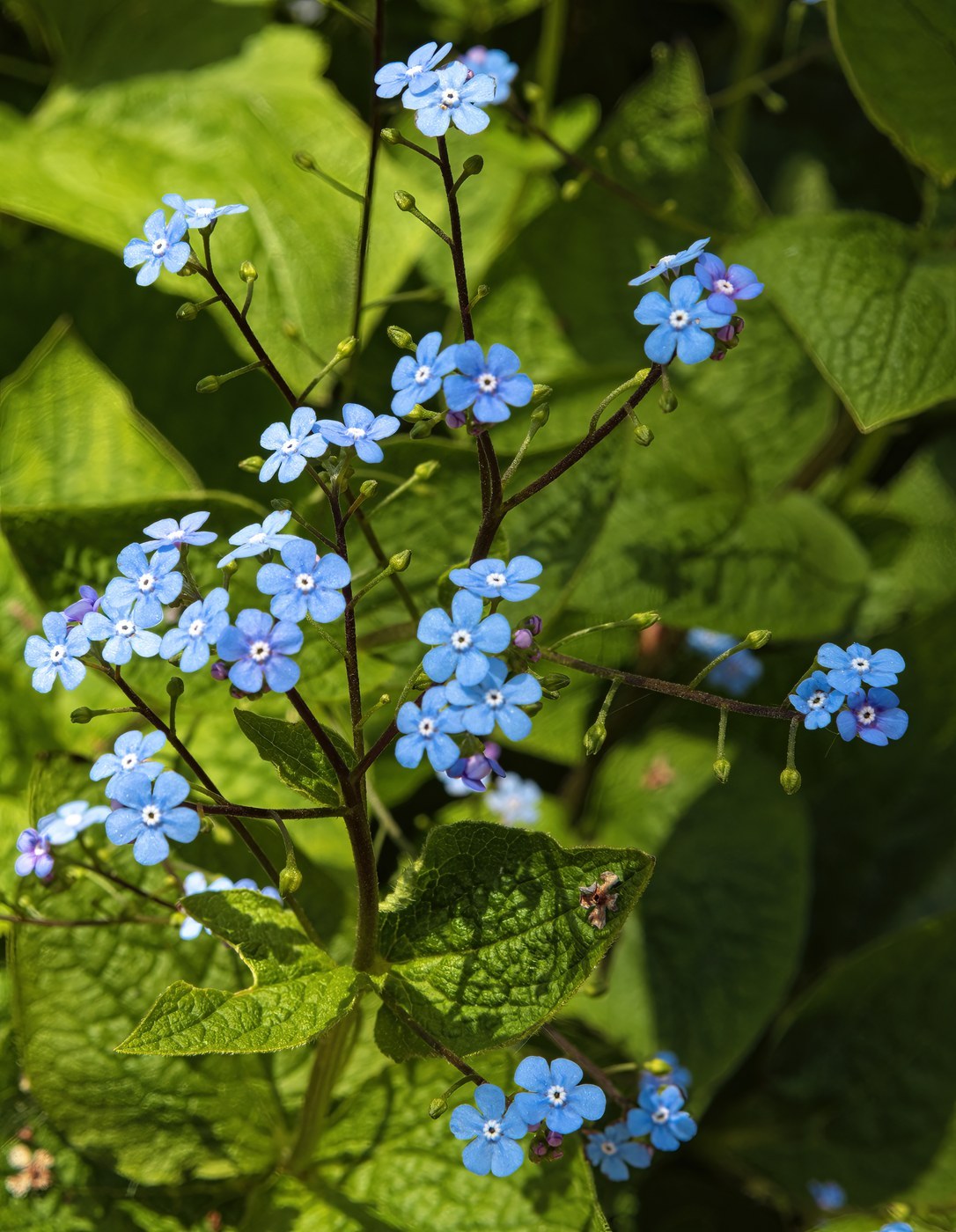
Siberian bugloss is a shade perennial grown for its large, heart-shaped leaves, often silvered, and sprays of dainty blue flowers resembling forget-me-nots in spring. It is a workhorse for woodland gardens.
- Light
- Part to full shade
- Water
- Keep consistently moist
- Difficulty
- Easy
Got a plant like this?
Identify any plant from a photo, free.
Overview
Siberian bugloss (Brunnera macrophylla) is a clump-forming perennial in the borage family (Boraginaceae). In spring it produces airy sprays of tiny, sky-blue flowers that closely resemble forget-me-nots.
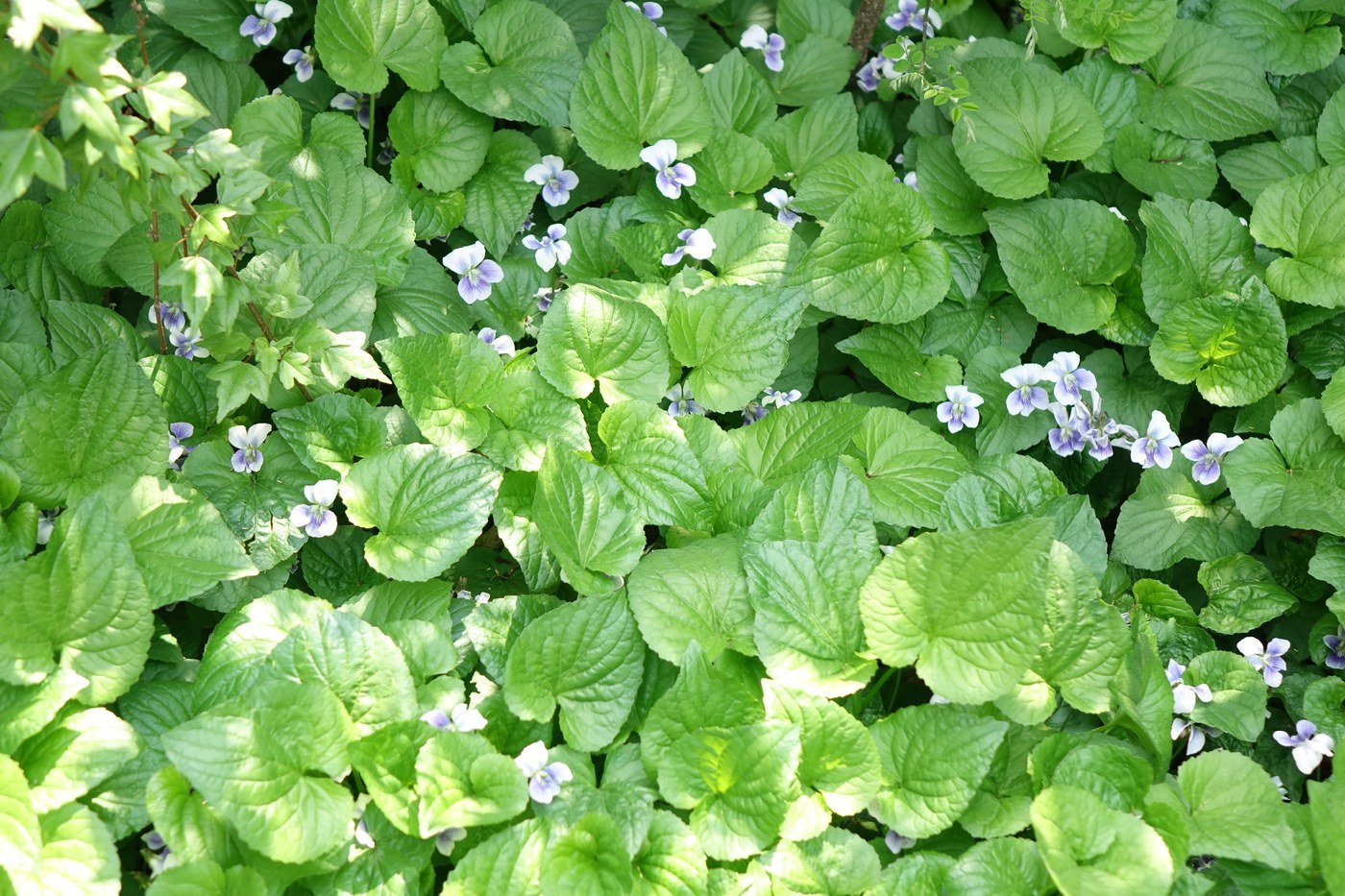
Its main attraction, however, is the bold, heart-shaped foliage, especially in silver-variegated cultivars like 'Jack Frost' that brighten shady corners all season. The leaves grow larger and more impressive after flowering.
Tough, deer-resistant, and easy in shade, it is a reliable ground cover for woodland gardens.
How to identify it
Recognize Siberian bugloss by its heart-shaped leaves and blue spring blooms.
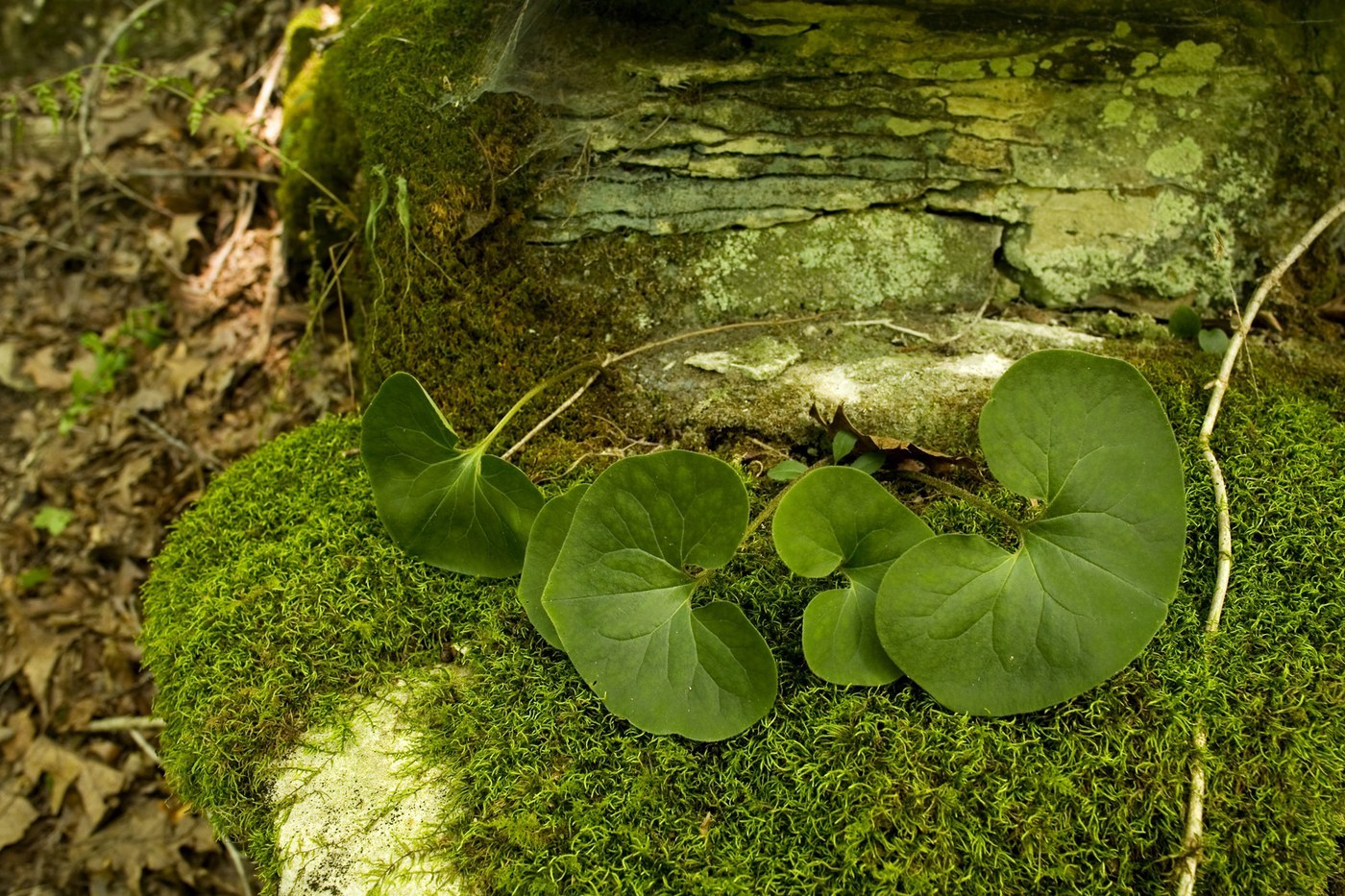
- Leaves: Large, heart-shaped, rough-textured, often silver-frosted or veined in cultivars, on long stalks
- Flowers: Tiny five-petaled blue blooms in loose, branching sprays, much like forget-me-nots
- Size: 12 to 18 inches tall, spreading slowly into mounded clumps
- Habit: Low, foliage-rich ground cover
- Bloom time: Early to mid-spring
Care & growing
An easy, dependable shade plant given moisture.
- Light: Part to full shade; variegated types need shade to avoid leaf scorch
- Water: Keep soil consistently moist; leaves wilt and brown if it dries out
- Soil: Rich, humus-rich, moisture-retentive soil
- Temperature: Hardy in USDA zones 3 to 8
- Feeding: Compost or light feeding in spring
- Propagation: Division in spring or fall; species types self-seed, while variegated cultivars are propagated by division or root cuttings
Habitat & origin
Native to moist woodlands of the Caucasus region of eastern Europe and western Asia, despite the common name referencing Siberia.
It thrives in shaded woodland gardens, along shady borders and paths, and as a ground cover under trees and shrubs. It is widely grown in temperate gardens, with silver-leaved cultivars especially popular.
Frequently asked questions
Is Siberian bugloss the same as forget-me-not?
No, but its blue flowers look very similar. It is a separate, longer-lived perennial often called false forget-me-not.
Why are the leaves browning?
Usually from dry soil or too much sun. Keep it in shade with consistent moisture, especially variegated types.
Can I grow brunnera in deep shade?
Yes, it tolerates full shade well, making it valuable for difficult dark corners under trees.
Do the silver-leaf varieties come true from seed?
No. Variegated cultivars like 'Jack Frost' must be propagated by division or root cuttings, not seed.
Siberian Bugloss guides
In-depth guides for identifying, growing, and caring for Siberian Bugloss.
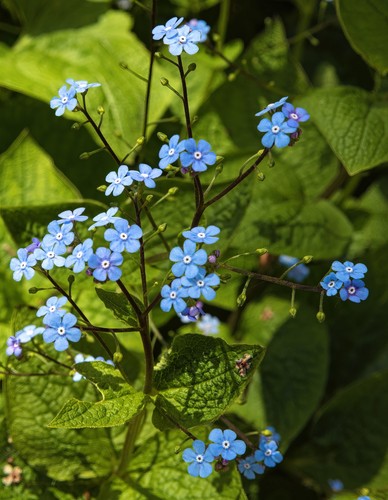
How to Care for Siberian Bugloss
A shade-garden favorite with heart-shaped leaves and airy blue spring flowers. Easy in moist soil and dappled light, and long-lived.
Siberian Bugloss Identification Guide
Identify Brunnera macrophylla by its big heart-shaped leaves and sprays of tiny blue forget-me-not flowers.