
Silk Oak Identification Guide
Identify the silk oak (Grevillea robusta) by its fern-like silvery leaves, one-sided golden-orange toothbrush flowers, and boat-shaped seed pods.
Read the full Silk Oak encyclopedia entry →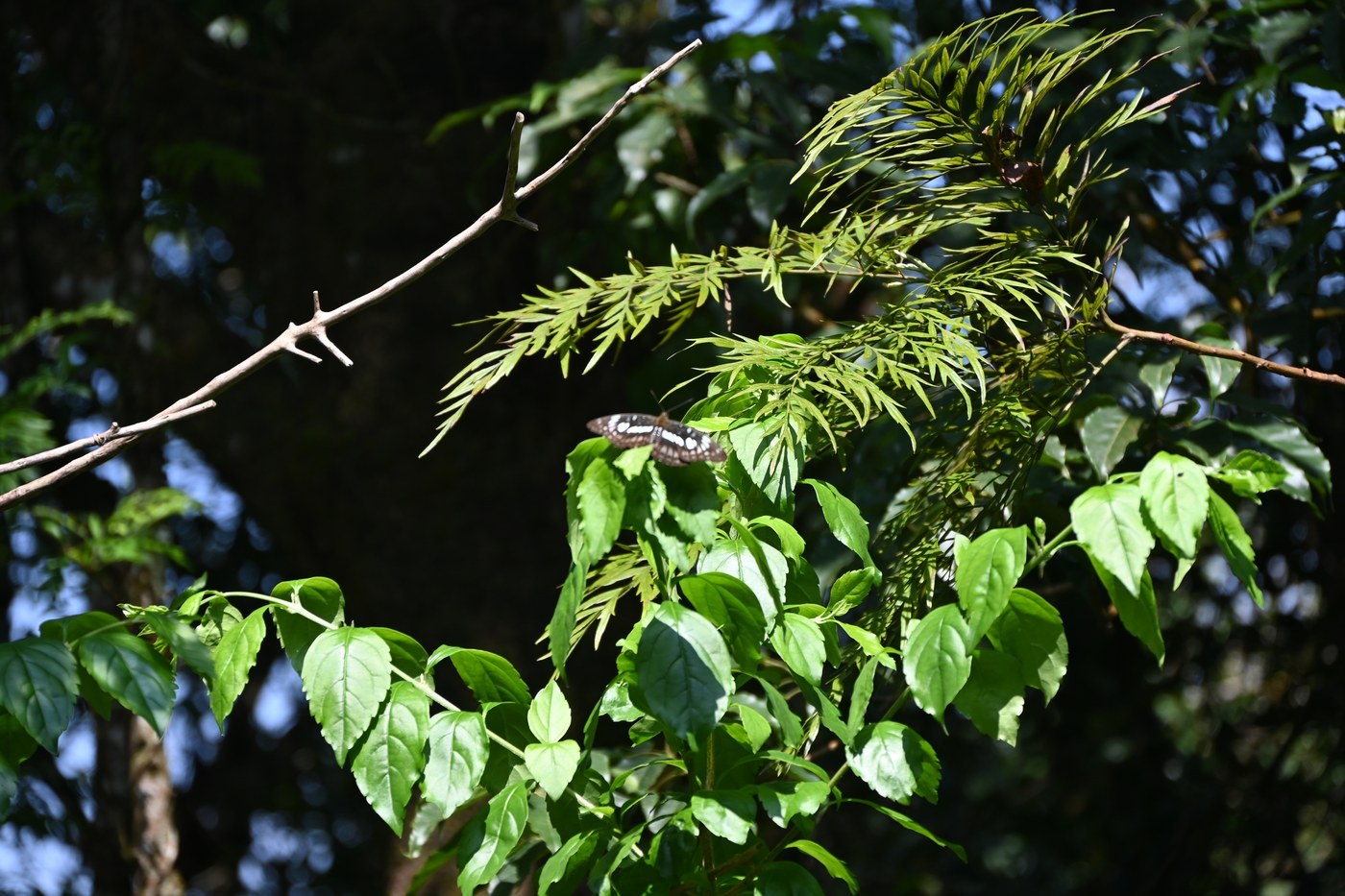
Key Identifying Features
The silk oak (Grevillea robusta), the largest species of Grevillea, is an Australian tree in the protea family recognized by its fern-like, deeply divided gray-green leaves and showy one-sided combs of golden-orange flowers that look like glowing toothbrushes in late spring.
- Bipinnate, fern-like leaves, silvery beneath
- One-sided (secund) brush-shaped racemes of golden-orange flowers
- Hard, boat-shaped black seed pods with a curved beak
- Tall, upright tree (50-100 ft) with a single straight trunk
Leaves & Stems
Leaves are alternate and bipinnately divided (cut into many narrow segments), giving a ferny, lacy appearance 6-12 in long, dark green above and distinctly silvery-silky beneath - the "silk" of the name. The tree is semi-deciduous, shedding many leaves before flowering. Bark is dark gray-brown and furrowed into vertical grooves. The trunk is typically straight and the crown conical when young, broadening with age.
Flowers & Fruit
In spring to early summer the tree bears dense, one-sided cylindrical flower clusters (racemes) 3-6 in long, in glowing golden-orange to amber, with the long curved styles giving the brush-like look. They are rich in nectar and attract birds and bees. The fruit is a distinctive dark, leathery, boat-shaped follicle about 0.75 in long with a persistent curved style (beak), splitting along one side to release flat, papery winged seeds.
How to Tell It Apart from Look-Alikes
- Jacaranda: also has ferny bipinnate leaves, but blooms blue-purple in trumpet flowers and has round flat seed capsules - flower color and shape separate them instantly.
- Firewheel tree (Stenocarpus): related protea with glossy lobed leaves and red flower wheels, not ferny leaves and golden combs.
- Other Grevilleas: share the toothbrush flowers but are mostly shrubs with simpler or needle-like leaves; G. robusta is uniquely tall and tree-like with fully ferny foliage.
- True oaks (Quercus): the name is misleading - silk oak is not an oak; oaks have simple lobed leaves and acorns.
The ferny silver-backed bipinnate leaves + one-sided golden flower brushes + beaked boat-shaped pods confirm silk oak.
Where You'll Find It
Native to subtropical eastern Australia, it is widely planted worldwide as a street tree, shade tree, and (formerly) coffee-shade tree in warm climates (USDA zones 9-11). It has naturalized and become invasive in parts of Hawaii, Florida, southern Africa, and elsewhere. Note: contact with the foliage and flowers can cause skin irritation in sensitive people.
Quick ID Checklist
- Fern-like bipinnate leaves, silvery-silky underneath
- One-sided golden-orange toothbrush flower combs in spring
- Black, boat-shaped seed pods with a curved beak
- Tall straight trunk; furrowed gray-brown bark
- Semi-deciduous; warm, frost-free climate
- Winged, papery seeds
Frequently asked questions
Is the silk oak actually an oak?
No. Despite the name, Grevillea robusta is not related to true oaks. It belongs to the protea family. The 'oak' refers to the wood's oak-like grain, and 'silk' refers to the silvery, silky undersides of its ferny leaves.
How do I tell silk oak from a jacaranda?
Both have ferny, bipinnate leaves, but silk oak blooms golden-orange in one-sided brush-like clusters and has boat-shaped beaked pods, while jacaranda blooms blue-purple in trumpet flowers and has round flat seed capsules.
Can silk oak cause skin irritation?
Yes. The leaves, flowers, and sawdust contain compounds that can cause contact dermatitis in sensitive people, so it is wise to wear gloves when pruning or handling the foliage.
Is silk oak invasive?
It can be. Its winged seeds spread readily, and it has naturalized and become invasive in places like Hawaii, Florida, and parts of southern Africa, so check local guidance before planting.