
Silver Dollar Eucalyptus Identification Guide
Identify Silver Dollar Eucalyptus (Eucalyptus cinerea) by its round, silvery-blue paired leaves, aromatic foliage, and reddish peeling bark.
Read the full Silver Dollar Eucalyptus encyclopedia entry →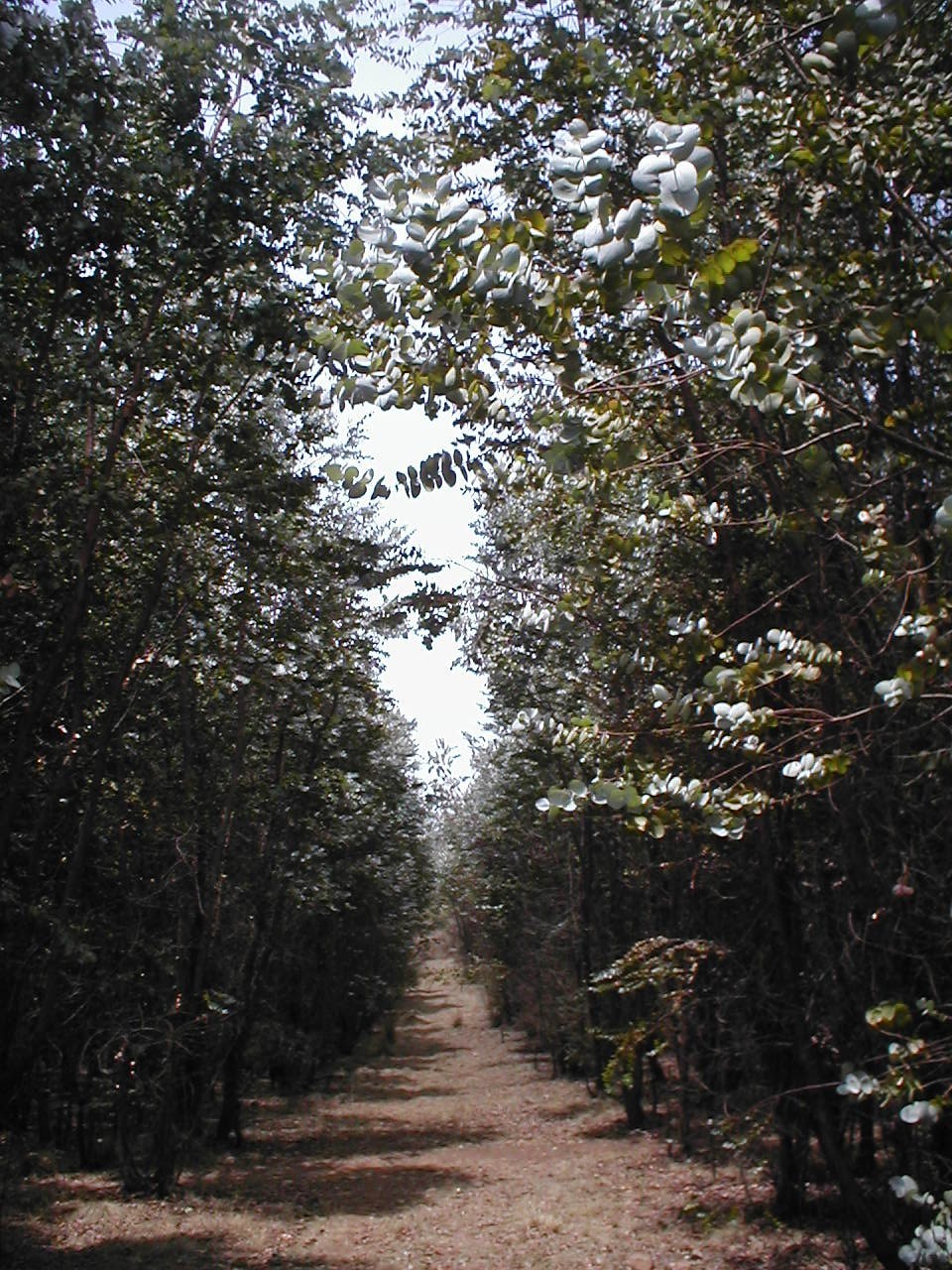
Key Identifying Features
Silver Dollar Eucalyptus (Eucalyptus cinerea), also called Argyle Apple, is grown for its coin-like juvenile foliage. Look for:
- Round to oval silvery-blue leaves that clasp the stem in pairs
- A strong menthol/eucalyptus aroma when leaves are crushed
- A powdery blue-gray (glaucous) coating on stems and leaves
- Reddish-brown, fibrous, peeling bark on trunks and branches
Leaves & Stems
The juvenile leaves are the signature trait and the part used in floristry. They are round to broadly oval, stalkless (sessile), and arranged in opposite pairs that clasp directly around the stem, giving a beaded, coin-on-a-string look. Each leaf is 2.5-5 cm wide, silvery blue-green, and coated in a removable waxy bloom. Crushing a leaf releases a sharp, clean eucalyptus scent.
As the tree matures, adult leaves can become longer, more lance-shaped, and stalked, though E. cinerea often retains rounded juvenile foliage longer than many eucalypts. Stems are square-ish when young and powder-blue.
The bark is rough, fibrous, and reddish-brown, peeling in strips — unusual for a eucalypt and a good confirming trait.
Flowers & Fruit
Flowers are small, fluffy creamy-white clusters of stamens (no showy petals), typically borne in groups of three. They appear mostly in spring. The fruit is a small, woody, cup or bell-shaped capsule (gumnut) about 5-7 mm wide that releases tiny seeds. Flowers and gumnuts are less commonly seen on cut or container-grown plants.
How to Tell It Apart from Look-Alikes
- Eucalyptus polyanthemos (Red Box / Silver Dollar Gum): also has round silvery leaves but they are usually stalked (on a petiole) rather than clasping the stem; E. cinerea leaves sit directly on the stem in pairs.
- Eucalyptus pulverulenta (Silver-leaved Mountain Gum): very similar clasping round leaves but smaller, more crowded, and intensely silver; stems even more powdery.
- Other silver foliage (e.g., dusty miller, Senecio): lack the eucalyptus aroma and the paired clasping arrangement — crush a leaf to confirm scent.
The menthol scent + round stalkless paired leaves + reddish peeling bark together confirm E. cinerea.
Where You'll Find It
Native to New South Wales and Victoria, Australia, it's grown worldwide as an ornamental tree, hedge, or cut-foliage crop (the dried 'silver dollar' stems in bouquets). It thrives in full sun and well-drained soil, hardy in roughly USDA zones 8-11, and is often kept coppiced as a shrub for foliage harvest.
Quick ID Checklist
- Round/oval silvery-blue leaves in opposite pairs
- Leaves clasp the stem directly (no petiole) when juvenile
- Strong eucalyptus/menthol scent when crushed
- Powdery blue waxy bloom on stems and leaves
- Reddish-brown fibrous peeling bark
Frequently asked questions
Why are the leaves round on Silver Dollar Eucalyptus but pointed on other eucalyptus trees?
Those round leaves are the juvenile foliage. Eucalyptus cinerea holds its rounded, coin-like juvenile leaves for a long time, which is why it is grown for florals. Mature growth can become longer and more lance-shaped.
How can I be sure it is eucalyptus and not another silver plant?
Crush a leaf. Genuine eucalyptus releases a strong, clean menthol-camphor aroma. Combined with paired round leaves clasping the stem and reddish peeling bark, that scent confirms the ID.
What is the blue powder on the stems and leaves?
It is a natural waxy bloom (glaucous coating) that reflects sunlight and reduces water loss. It rubs off easily and is completely normal, giving the plant its silvery-blue look.
Does Silver Dollar Eucalyptus flower?
Yes, it produces small fluffy creamy-white flowers (mostly stamens, no petals) in spring, followed by small woody cup-shaped gumnut capsules, though these are uncommon on cut or potted plants.