
Silver Dollar Plant Identification Guide
Identify the Silver Dollar Plant, covering both the succulent Crassula arborescens and the papery-seeded Lunaria annua, by their distinctive round silvery features.
Read the full Silver Dollar Plant encyclopedia entry →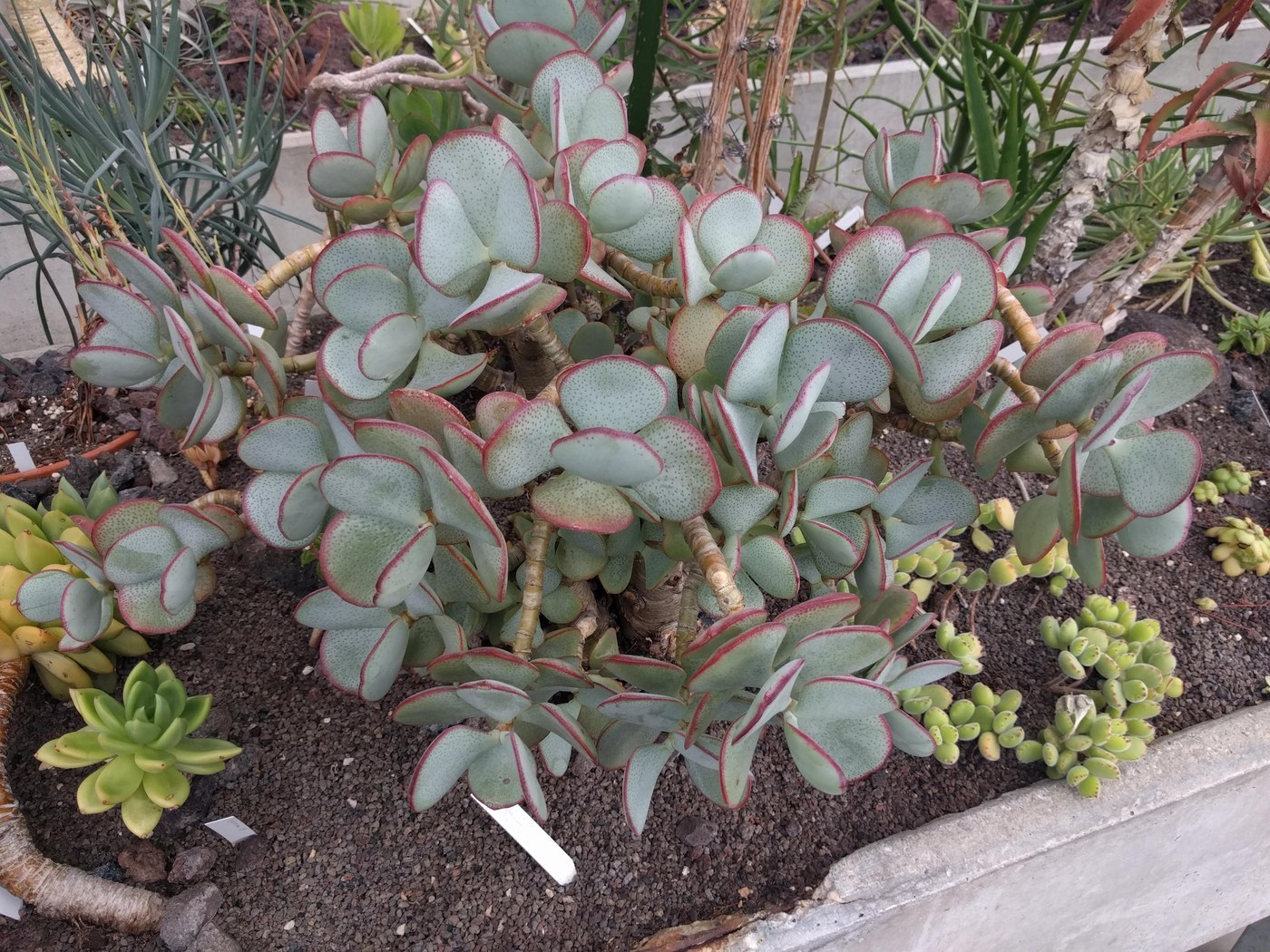
Key Identifying Features
Silver Dollar Plant refers to two very different plants. The most common succulent is Crassula arborescens, the Silver Dollar Jade, with round, silvery-blue coin-shaped leaves. The name is also used for Lunaria annua (Honesty/Money Plant), a flowering biennial famous for its translucent, silvery-papery round seed pods. Identify which you have by checking for fleshy leaves (Crassula) versus papery discs (Lunaria).
- Crassula arborescens: thick, round, silvery gray-green succulent leaves often edged in red, on a stout woody stem
- Lunaria annua: upright herb with toothed heart-shaped leaves, purple flowers, and flat, round, coin-like silvery seed pods
Leaves & Stems
Silver Dollar Jade (Crassula arborescens): Leaves are nearly circular, flat-faced, fleshy, and powdery silver-blue (glaucous), frequently outlined with a reddish-maroon margin and sometimes flecked with darker dots. They grow in opposite pairs on a thick, branching, tree-like (arborescent) woody stem, forming a shrubby succulent up to several feet tall.
Honesty (Lunaria annua): Leaves are broadly heart-shaped with coarsely toothed margins, green and somewhat rough, arranged on an upright branching stem. This is a leafy flowering plant, not a succulent.
Flowers & Fruit
Crassula arborescens bears clusters of small, star-shaped white-to-pink flowers in late autumn to winter on mature plants. Lunaria annua produces sprays of fragrant purple (or white) four-petaled flowers in spring, followed by its signature flat, round, papery seed pods that dry to a translucent silvery membrane — the "silver dollars" used in dried arrangements. The silver pods are unmistakable and the best Lunaria identifier.
How to Tell It Apart from Look-Alikes
- Crassula arborescens vs. Crassula ovata (common Jade): arborescens has rounder, flatter, distinctly silver-blue leaves; ovata has greener, more oval glossy leaves.
- Lunaria vs. other money plants: only Honesty makes the see-through round seed discs; if you see those papery coins, it's Lunaria.
- Pilea peperomioides (Chinese Money Plant): also called a coin/money plant but has round leaves on long petioles attached to the leaf center (peltate), not silvery or succulent.
Where You'll Find It
Crassula arborescens is native to South Africa and grown as a succulent houseplant and warm-climate shrub (zones 9-11). Lunaria annua is a Eurasian biennial widely grown in temperate gardens and naturalized in woodland edges, valued for cut flowers and dried seed pods.
Quick ID Checklist
- Round, fleshy, silvery-blue leaves with red edges → Crassula arborescens (succulent)
- Heart-shaped toothed leaves + purple flowers + papery round pods → Lunaria annua
- Succulent has a thick woody, branching stem
- Lunaria's translucent silver seed discs are diagnostic
- Check sap-free fleshy leaves vs. thin herbaceous foliage
Tip: Decide first whether the leaves are thick and succulent (Jade type) or thin and toothed with papery seed pods (Honesty) — that single check tells the two Silver Dollar Plants apart.
Frequently asked questions
There seem to be two different Silver Dollar Plants — which is which?
Yes. Crassula arborescens (Silver Dollar Jade) is a succulent with round silvery-blue fleshy leaves, while Lunaria annua (Honesty) is a flowering biennial known for flat, translucent, coin-shaped seed pods. Check for fleshy leaves vs. papery pods to tell them apart.
How is Silver Dollar Jade different from regular Jade?
Silver Dollar Jade (Crassula arborescens) has rounder, flatter, powdery silver-blue leaves often edged in red, whereas common Jade (Crassula ovata) has greener, glossier, more oval leaves.
What makes Lunaria's seed pods silver?
After the flowers fade, the round seed pods dry and the outer layers fall away, leaving a thin, translucent, silvery membrane that looks like a silver coin, which is why it's prized for dried arrangements.
Is the Silver Dollar Plant the same as the Chinese Money Plant?
No. The Chinese Money Plant (Pilea peperomioides) has round leaves attached at their centers on long stalks and is neither succulent nor silvery, so it's a separate plant despite the shared 'money' nickname.