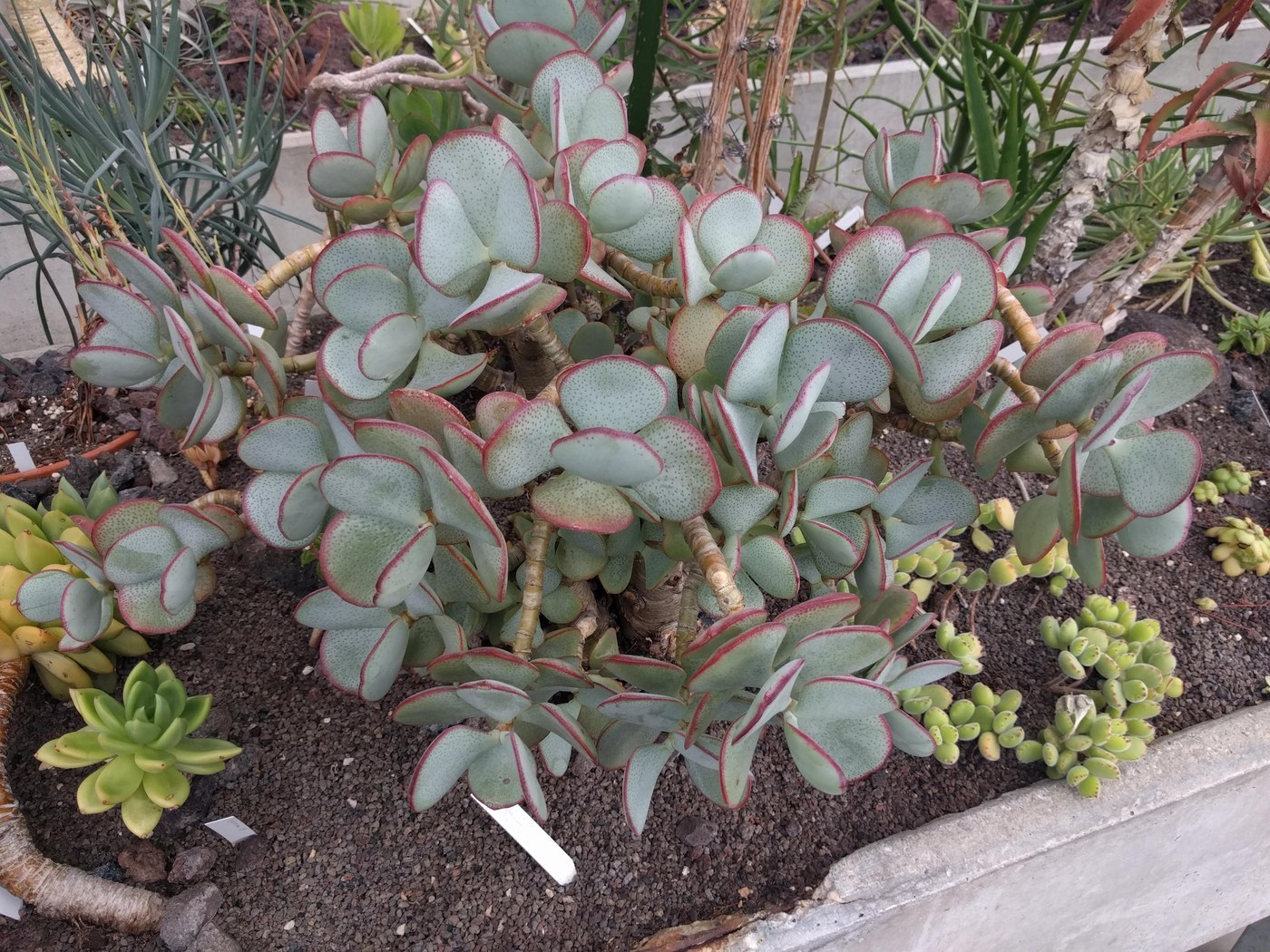
Silver Dollar Plant
Crassula arborescens
A shrubby jade relative with round, silvery blue-gray leaves edged in red, resembling stacked silver coins. An easy, long-lived succulent that can grow into a small bonsai-like tree.
- Light
- Bright light, some direct sun
- Water
- When soil dries; drought tolerant
- Difficulty
- Easy
Got a plant like this?
Identify any plant from a photo, free.
Overview
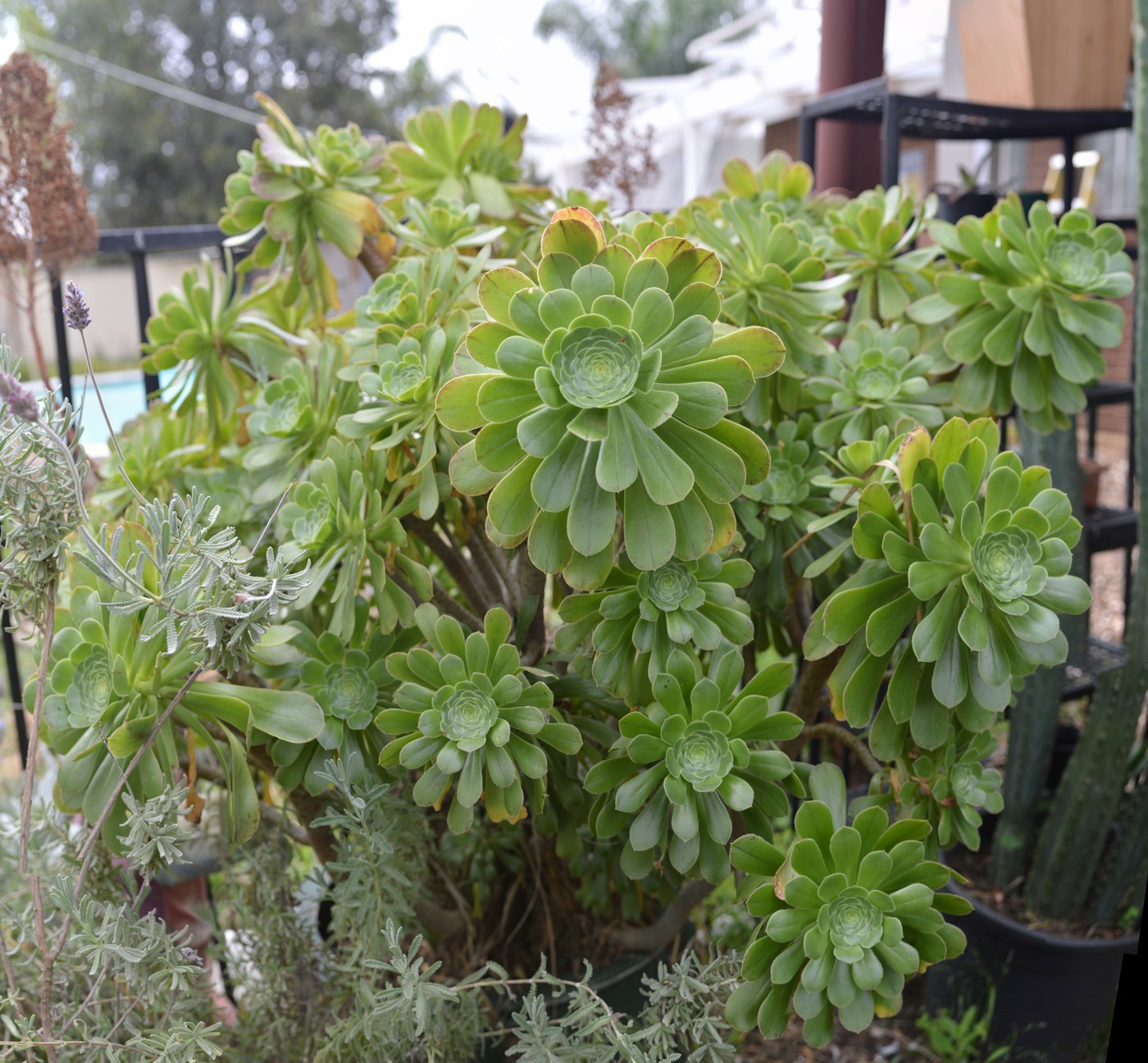
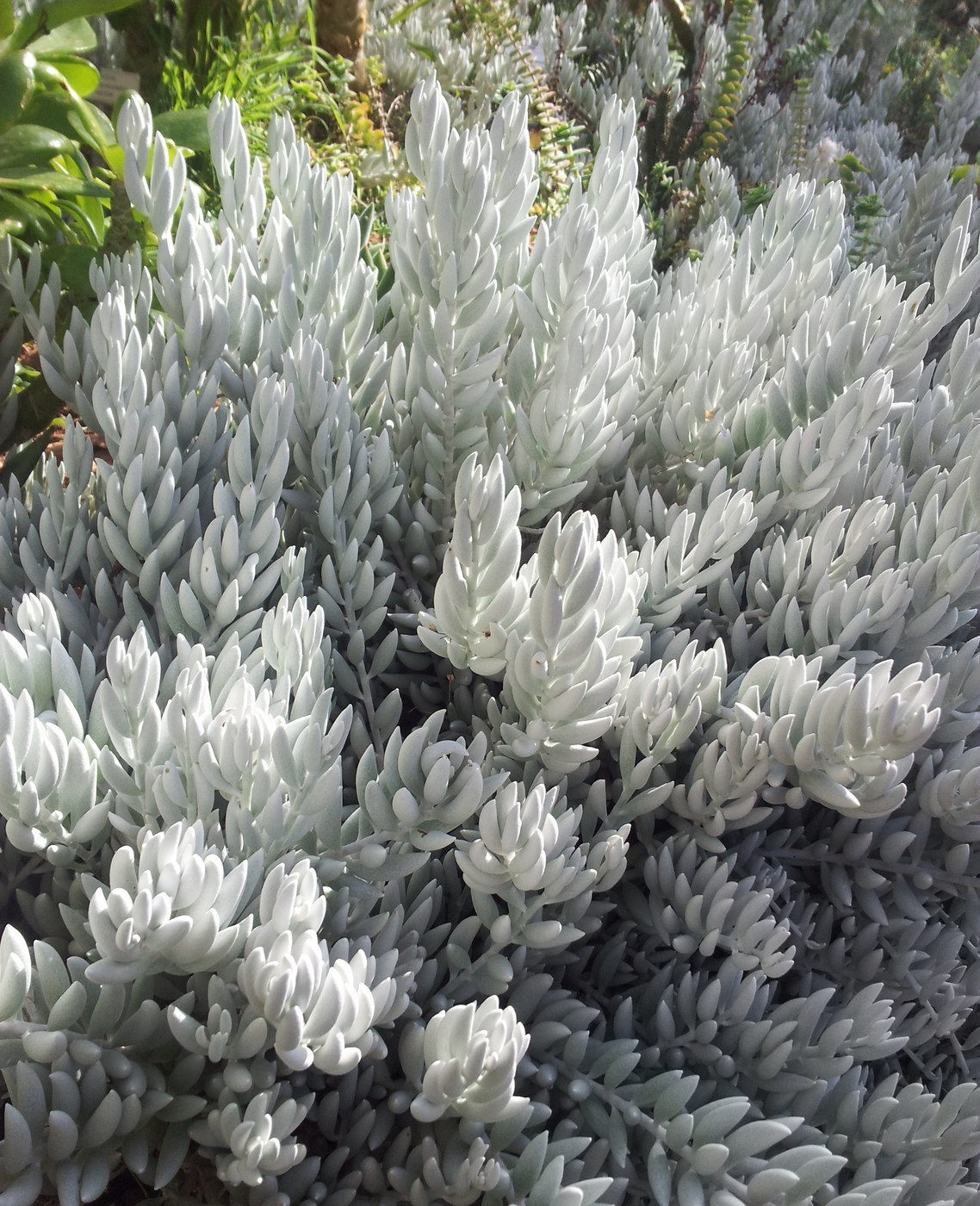
Silver Dollar Plant is a close relative of the common jade, Crassula arborescens, distinguished by its nearly circular, silvery blue-green leaves often rimmed and dotted with maroon. The coin-like leaves inspire its common name.
It is a slow-growing, woody-stemmed succulent shrub that becomes thick and tree-like with age, making it a popular subject for succulent bonsai. Mature plants in good light may produce clusters of small white to pink star-shaped flowers.
Like other jades it is tough, long-lived, and very easy to care for, tolerant of drought and neglect.
Note: it is sometimes confused with the unrelated Lunaria annua (honesty), which is also called silver dollar plant.
How to identify it
- Leaves: Round to oval, flat, silvery blue-gray to gray-green, often with red margins and reddish speckling, in opposite pairs
- Stems: Thick, woody, branching, becoming trunk-like with age
- Flowers: Small, star-shaped, white to pale pink in clusters, on mature plants
- Size: A shrub to 2-4 ft tall over many years; kept smaller in pots
- Habit: Compact, branching, bonsai-like
Care & growing
Light: Bright light with some direct sun keeps it compact and brings out leaf color; low light causes legginess.
Water: Water when the soil is dry, then let it dry again; very drought tolerant and rot-prone if overwatered.
Soil: Well-draining succulent or cactus mix.
Temperature: Average warm room temperatures; protect from frost.
Feeding: Light feeding once or twice in the growing season.
Propagation: Very easy from stem or leaf cuttings; callus, then root in dry mix.
Habitat & origin
Native to the Western Cape of South Africa, where it grows on rocky hillsides and in dry scrub in well-drained, sunny conditions.
It is cultivated worldwide as an easy houseplant and, in frost-free climates, as a garden shrub, and is widely used for succulent bonsai.
Frequently asked questions
How is it different from a regular jade plant?
Its leaves are rounder, flatter, and a distinctive silvery blue-gray (often red-edged), versus the glossy green oval leaves of common jade.
Why is my plant getting leggy?
Too little light makes it stretch; move it to a brighter spot with some direct sun and prune to encourage bushiness.
Can I make a bonsai from it?
Yes, its thick woody trunk and slow growth make it an excellent and popular subject for succulent bonsai.
How do I propagate it?
Very easily from stem or leaf cuttings. Let the cut surface callus over for a day or two, then root in a dry, well-draining mix.
Silver Dollar Plant guides
In-depth guides for identifying, growing, and caring for Silver Dollar Plant.
How to Care for Silver Dollar Plant
Grow the Silver Dollar Plant (Crassula arborescens), an easy jade-relative succulent, with bright light and lean, dry conditions.
Silver Dollar Plant Identification Guide
Identify the Silver Dollar Plant, covering both the succulent Crassula arborescens and the papery-seeded Lunaria annua, by their distinctive round silvery features.