
How to Care for Silver Fir
Grow the majestic Silver Fir (Abies alba) as a stately evergreen conifer in cool climates with moist, well-drained, slightly acidic soil.
Read the full Silver Fir encyclopedia entry →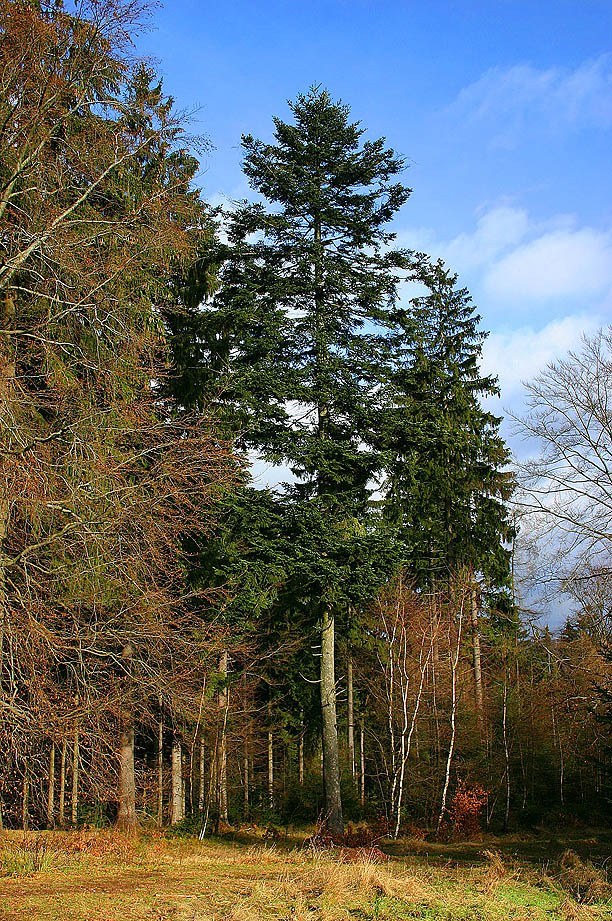
The Silver Fir is a tall, elegant evergreen conifer native to the mountains of central and southern Europe, valued for its symmetrical spire, soft flattened needles with silvery undersides, and stately presence in large landscapes. It is a long-lived tree best suited to spacious, cool sites.
Light
Grow Silver Fir in full sun to partial shade. Young trees are notably shade-tolerant and naturally establish in the dappled light beneath forest canopies, but mature trees develop the fullest, most symmetrical form in open sun. Provide steady light and room to spread without crowding.
Water
Keep the soil moist and well-drained. Silver Fir prefers consistent moisture and does not tolerate prolonged drought, particularly when young. Water deeply during dry spells for the first several years, and mulch over the root zone to hold moisture. Avoid waterlogged ground, which suffocates the roots.
Soil & Potting
Plant in deep, fertile, well-drained soil that stays evenly moist. It favors slightly acidic to neutral conditions and grows best in loamy or humus-rich mountain soils. It dislikes shallow, dry, or heavily compacted ground. A generous organic mulch mimics the leaf-litter conditions of its native forests and keeps roots cool.
Humidity & Temperature
This is a cool-climate mountain conifer, hardy in roughly USDA zones 4 to 7. It thrives in humid, cool summers and cold winters and struggles in hot, dry, or polluted lowland conditions. It appreciates the moist air of upland and coastal-influenced climates and resents extended heat.
Feeding
Silver Fir needs little supplemental feeding in decent soil. If growth is weak, apply a slow-release conifer or acid-loving evergreen fertilizer in early spring. Avoid heavy fertilizing, which can force soft growth prone to damage. Maintaining organic mulch usually supplies enough nutrients over time.
Propagation
Propagate primarily from seed, which benefits from a period of cold, moist stratification to break dormancy before sowing. Germination can be slow and uneven. Selected cultivars are grafted onto seedling rootstock, as fir cuttings are difficult to root reliably.
Repotting / Pruning
Silver Fir generally needs no pruning and looks best left to grow into its natural symmetrical form. Remove only dead, damaged, or diseased branches, ideally in late winter. If grown in a container while young, pot up into progressively larger pots with fresh acidic conifer mix as roots fill the space, then plant out into the ground before it outgrows containment.
Common Problems & Pests
Watch for adelgids (woolly aphid-like insects) that produce white waxy tufts on twigs and needles, as well as bark beetles and various needle blights and rusts. Root rot develops in poorly drained soil, and heat, drought, and air pollution cause needle browning and dieback. Good siting in cool, moist, well-drained ground prevents most trouble.
Seasonal Care Tips
New growth flushes in spring; keep young trees well watered through their first summers. Refresh mulch in spring and autumn. In hot regions, guard against summer heat and drought stress with deep watering and shade for young plants. As an evergreen it holds its needles year-round and needs little winter attention beyond protection of very young trees from harsh, drying winds.
Frequently asked questions
What growing conditions does Silver Fir need?
It needs a cool climate, moist but well-drained slightly acidic soil, and full sun to partial shade. It is a mountain conifer that dislikes heat, drought, and polluted lowland air, performing best in cool, humid regions.
How big does a Silver Fir get?
Silver Fir is a large, long-lived conifer that can reach great heights over many decades in the landscape, so give it plenty of open space to develop its natural symmetrical, spire-like form.
Can I grow Silver Fir in a container?
You can grow a young Silver Fir in a container with an acidic conifer mix, potting up as it grows, but it eventually needs to be planted in the ground since it becomes a large tree unsuited to long-term containment.
Does Silver Fir need pruning?
No, it generally needs no pruning and looks best in its natural form. Remove only dead, damaged, or diseased branches, ideally in late winter.