
Silver Maple Identification Guide
Recognize silver maple by its deeply five-lobed leaves with silvery undersides, large paired samaras, and shaggy flaking bark.
Read the full Silver Maple encyclopedia entry →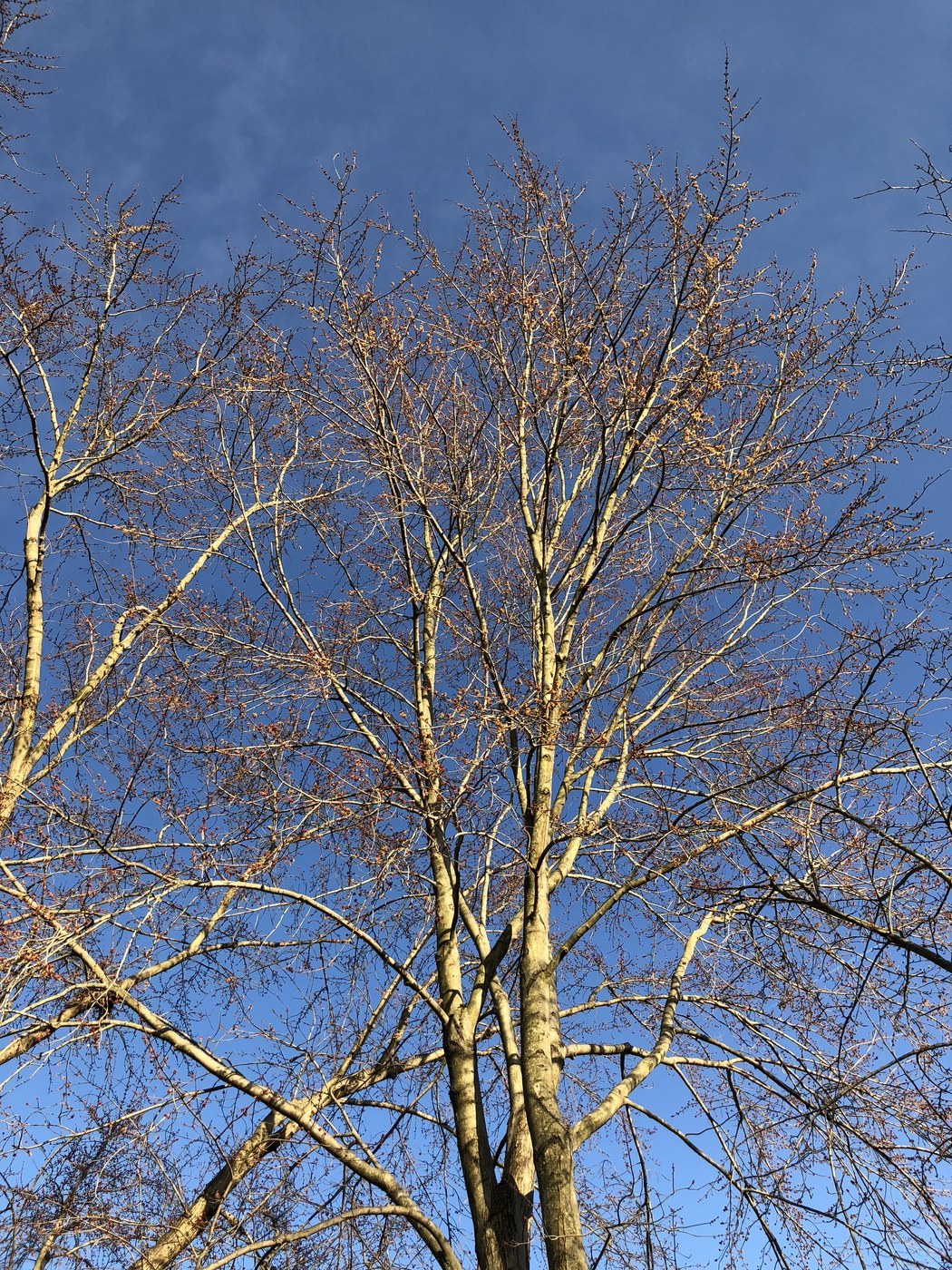
Key Identifying Features
Silver maple (Acer saccharinum) is a fast-growing, often weak-wooded maple of wet bottomlands, named for the silvery-white underside of its leaves that flash in the wind.
- Deeply cut, five-lobed leaves with silvery-white undersides
- Narrow, sharply toothed sinuses giving a lacy, ragged outline
- Large paired samaras (winged seeds), the biggest of any North American maple
- Shaggy, flaking gray bark on older trunks
Leaves & Stems
Leaves are 8-16 cm long, palmately five-lobed, with very deep, narrow sinuses between the lobes and coarse, doubly serrated margins. The upper surface is light green; the underside is conspicuously silvery-white to pale, often slightly fuzzy, so a breeze turns the whole canopy pale. Leaf stalks are long and often reddish. Autumn color is a soft pale yellow, sometimes with a little orange.
Twigs are slender and, when bruised or crushed, give off a rank, slightly unpleasant odor (unlike sugar maple). Bark starts smooth and silvery-gray, becoming shaggy and peeling in long flaky strips with age.
Flowers & Fruit
Silver maple is one of the earliest trees to flower, producing dense clusters of small reddish to greenish-yellow flowers in late winter before the leaves. The fruit is a samara (double-winged "helicopter"), the largest of native maples, with widely spreading wings 4-6 cm long, ripening and dropping in late spring rather than fall.
How to Tell It Apart from Look-Alikes
- Red maple: Leaves are shallower-lobed with whitish but not silvery undersides; samaras are much smaller and red.
- Sugar maple: Leaves have smooth-edged lobes (no fine teeth) and green undersides; samaras ripen in fall.
- Norway maple: Broader leaves with milky sap in the stalk; undersides green.
The deep, narrow sinuses plus brilliant silvery undersides and giant spring samaras are diagnostic.
Where You'll Find It
Native to floodplains, riverbanks, and wet woods of eastern and central North America. It tolerates flooding and poor soils and grows extremely fast, so it is widely (if controversially) planted as a quick shade tree, though its brittle limbs break in storms.
Quick ID Checklist
- Five deeply cut lobes with narrow sinuses, toothed edges
- Silvery-white leaf undersides flashing in the wind
- Very large paired samaras dropping in spring
- Earliest maple to flower (late winter)
- Shaggy, peeling gray bark on mature trunks
Frequently asked questions
Why is it called silver maple?
The undersides of the leaves are silvery-white, so when wind flips the leaves the whole canopy appears to shimmer silver.
How do I distinguish silver maple from red maple?
Silver maple leaves are far more deeply cut with narrow sinuses and truly silvery undersides, and its samaras are much larger and drop in spring.
When do silver maples produce their seeds?
They flower in late winter and drop their large helicopter samaras in late spring, much earlier than most maples which seed in fall.
Is silver maple a good yard tree?
It grows quickly and tolerates wet soil, but the wood is brittle and limbs break easily in storms, so it is best kept away from structures.