
How to Care for Skimmia
Grow skimmia, an easy evergreen shrub for shade with glossy leaves, fragrant spring flowers, and long-lasting winter berries or bud clusters.
Read the full Skimmia encyclopedia entry →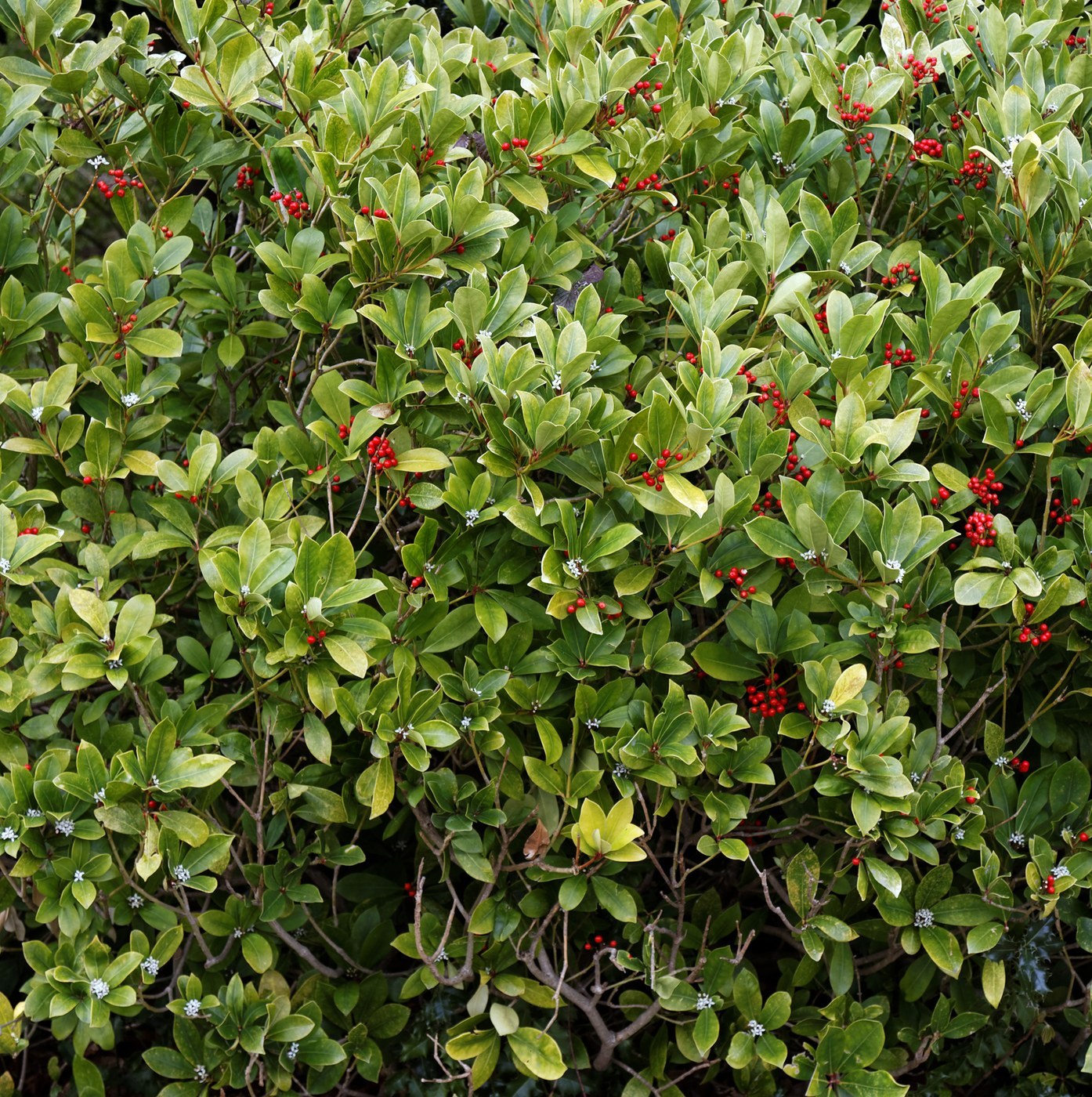
Skimmia (Skimmia japonica) is a compact, slow-growing evergreen shrub valued for glossy dark foliage, clusters of fragrant spring flowers, and showy red winter berries on female plants. It excels in shade and is an easy, low-maintenance choice for beds, containers, and winter interest.
Light
Skimmia thrives in part shade to full shade, making it ideal for the north side of a house or under a tree canopy. It dislikes hot, direct afternoon sun, which yellows and scorches the leaves. Dappled or morning light with afternoon shade gives the richest green foliage and healthiest growth.
Water
Keep the soil evenly moist, providing moderate, regular watering, especially during dry spells and in the first couple of years while establishing. Skimmia has shallow roots and dislikes both drought and waterlogging. Mulch helps retain steady moisture. Container plants dry out faster and need closer attention.
Soil & Potting
Skimmia prefers moist, humus-rich, well-drained acidic to neutral soil. In alkaline soils the leaves often turn yellow (chlorosis), so use ericaceous (acidic) compost in containers and amend garden soil with leaf mold or composted bark. Good drainage combined with steady moisture is the balance to aim for. Mulch annually to enrich the soil and conserve moisture.
Humidity & Temperature
Skimmia is hardy in roughly USDA zones 6 to 9 and handles cold winters well, holding its evergreen leaves and berries through the season. It appreciates the cool, moist air of a shaded site. Shelter it from harsh, drying winter winds and intense sun, which can bronze or scorch the foliage.
Feeding
Feed in spring with a fertilizer formulated for acid-loving (ericaceous) plants to support foliage color and flowering. A second light feed in early summer helps container specimens. If leaves yellow between the veins, a chelated iron or ericaceous feed corrects the chlorosis caused by alkaline conditions. Avoid heavy feeding, which is unnecessary for this modest grower.
Propagation
Skimmia is propagated from semi-ripe cuttings taken in late summer. Take cuttings of the current season's growth, dip in rooting hormone, and root in a moist, gritty mix in a humid, shaded environment; they root slowly. Remember that most skimmias are either male or female, so for berries you need a female plant with a male nearby for pollination.
Repotting / Pruning
Skimmia needs very little pruning thanks to its naturally neat, rounded shape. Trim lightly after flowering only to remove wayward or damaged shoots or to shape. Repot container plants every couple of years in spring using fresh ericaceous compost, moving up a pot size as needed. Refresh mulch each spring.
Common Problems & Pests
The most common issue is leaf yellowing from alkaline soil or waterlogging; correct soil pH and improve drainage. Scorched or bronzed leaves indicate too much sun or wind. Skimmia is relatively pest resistant but can occasionally get spider mites in hot dry spots, scale, or root problems in soggy ground. Ensure a female and male pair if you want the decorative berries.
Seasonal Care Tips
In spring, feed with ericaceous fertilizer and enjoy the fragrant flower clusters. Through summer, keep soil moist and mulched, watering containers regularly. In fall and winter, female plants shine with red berries, while males offer showy red-tinged flower buds; shelter from harsh winter sun and wind. Do any light shaping right after flowering.
Frequently asked questions
Why are my skimmia's leaves turning yellow?
Yellowing usually comes from alkaline soil or waterlogged roots. Grow skimmia in acidic (ericaceous) soil, improve drainage, and feed with an acid-loving plant fertilizer.
Does skimmia need sun or shade?
Shade. Skimmia grows best in part to full shade. Hot, direct sun scorches and bronzes the foliage.
Why doesn't my skimmia have berries?
Most skimmias are single-sex. Only female plants bear the red berries, and they need a male plant nearby for pollination.
Does skimmia need much pruning?
No. It has a naturally tidy, rounded habit and needs only light trimming after flowering to remove damaged or stray shoots.