
Skimmia Identification Guide
Identify skimmia by its rounded clusters of fragrant red flower buds, aromatic glossy leaves, and persistent bright red berries on a shade-loving evergreen.
Read the full Skimmia encyclopedia entry →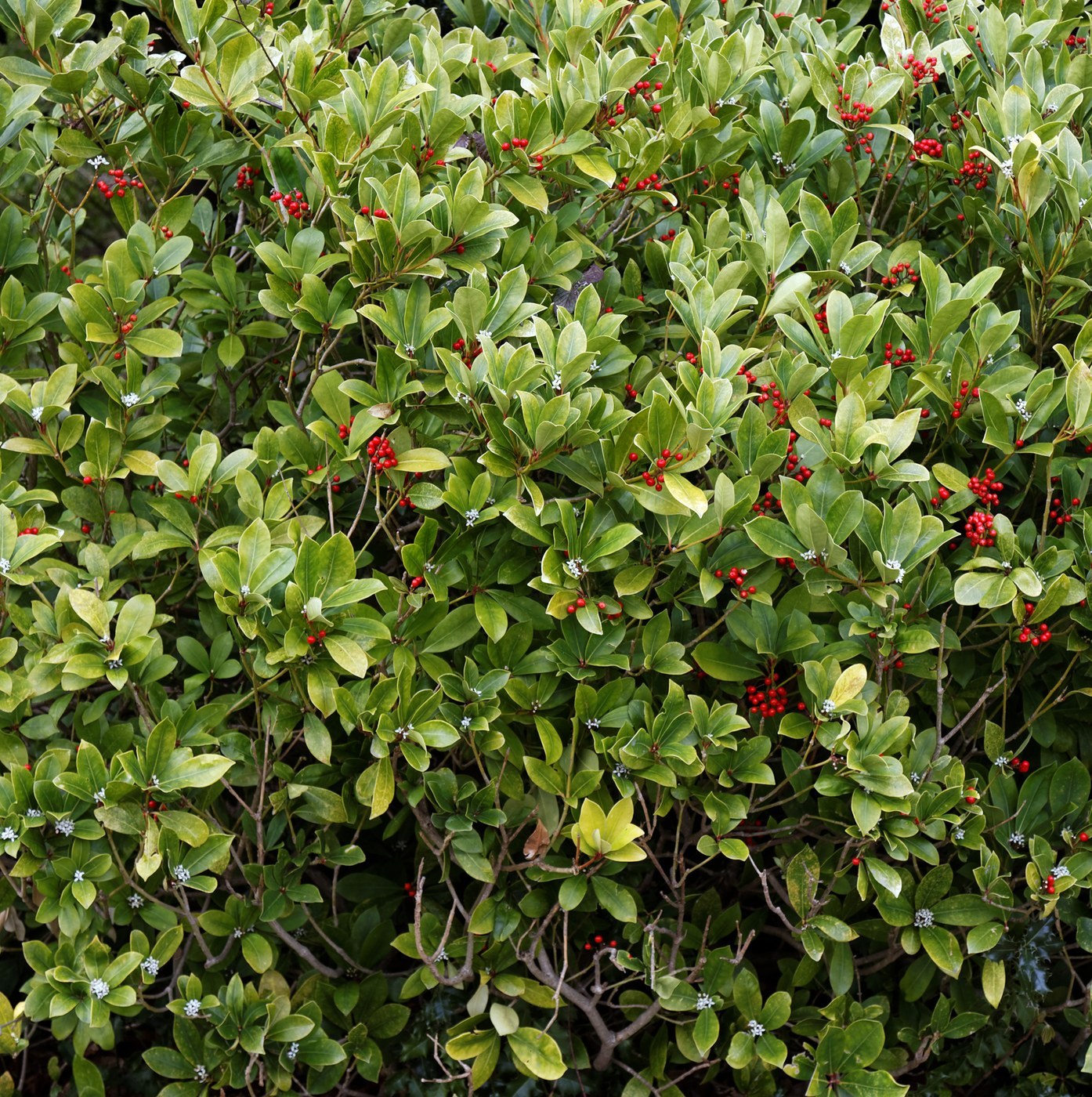
Key Identifying Features
Skimmia (Skimmia japonica) is a compact, shade-loving evergreen shrub valued for its showy domed clusters of flower buds that color up red or pink in autumn, hold all winter, and open to fragrant white flowers in spring. The combination of persistent red buds + aromatic foliage + bright red berries makes it distinctive.
- Neat, rounded, mounding evergreen shrub, 2–4 ft
- Dense conical/domed flower-bud clusters (red, pink, or green)
- Glossy, aromatic, leathery leaves clustered at stem tips
- Bright red berries persisting on female plants
Leaves & Stems
Leaves are alternate but crowded toward the branch tips in rosette-like whorls, simple, oblong to elliptical (2–5 in), glossy, leathery, and smooth-edged, often with a pale midrib. Crushed leaves are aromatic, releasing a spicy, citrus-resinous scent. Foliage is medium to dark green, sometimes yellowing in too much sun or alkaline soil. Stems are stout and the overall habit is dense and dome-shaped.
Flowers & Fruit
The flower buds are the key feature: tight, conical clusters (panicles) of tiny buds that appear in fall and stay colorful — dark red, pink, or green depending on cultivar and sex — right through winter, then open in spring into small, star-shaped, creamy-white, sweetly fragrant flowers. Most skimmias are dioecious: male plants ('Rubella') have showier, more fragrant buds; female plants produce the glossy round red berries (½ in) that last into winter — but only with a male pollinator nearby.
How to Tell It Apart from Look-Alikes
- Daphne: also fragrant clustered flowers, but daphne flowers are tubular and leaves not held in tip rosettes; daphne buds don't form the persistent winter panicle.
- Pieris: red new growth and white urn-shaped flowers in drooping chains, not domed bud clusters.
- Sarcococca (sweet box): aromatic shade evergreen but with tiny tassel flowers and narrower leaves.
- Aucuba: larger gold-speckled coarse-toothed leaves and green stems.
The persistent domed red/pink bud clusters + aromatic glossy tip-clustered leaves + red berries on a low shade shrub combination identifies skimmia.
Where You'll Find It
A favorite for shade, woodland, and winter-interest gardens, and very popular in patio containers and winter pot displays for its colorful buds. Native to Japan and East Asia, it prefers partial to full shade and moist, humus-rich, slightly acidic soil; it suffers leaf-yellowing (chlorosis) in alkaline soil or strong sun.
Quick ID Checklist
- Compact, rounded evergreen shrub, 2–4 ft
- Domed clusters of persistent red/pink/green flower buds
- Buds open to fragrant white star flowers in spring
- Glossy, aromatic, smooth-edged leaves clustered at tips
- Bright red berries on female plants (needs a male nearby)
- Shade and acidic-soil setting
If you find a tidy shade shrub topped with showy red or pink bud clusters all winter and aromatic glossy leaves, it's a skimmia.
Frequently asked questions
Why does skimmia have colorful buds in winter?
Skimmia forms its flower-bud clusters in autumn, and these conical panicles color up red, pink, or green and persist showily all winter before opening into fragrant white flowers in spring. Those long-lasting buds are the plant's main ornamental feature and a key ID cue.
Why doesn't my skimmia produce berries?
Most skimmias are dioecious, so only female plants bear the red berries, and they need a male plant nearby to pollinate them. Popular male cultivars like 'Rubella' never fruit but have the showiest buds, so check whether you have a male, a lone female, or both.
Why are my skimmia's leaves turning yellow?
Yellowing (chlorosis) usually means the soil is too alkaline or the plant is getting too much sun. Skimmia prefers moist, humus-rich, slightly acidic soil in shade; correcting pH and moving it out of harsh sun usually restores green foliage.
Do skimmia leaves have a scent?
Yes. Crushing the glossy leaves releases a spicy, citrus-resinous aroma, and the spring flowers are sweetly fragrant. The aromatic foliage is a helpful confirming trait alongside the persistent bud clusters.