
Skullcap Identification Guide
Field guide to identifying skullcap (Scutellaria) by its square stems, paired flowers, and the helmet-shaped ridge on the calyx that gives the plant its name.
Read the full Skullcap encyclopedia entry →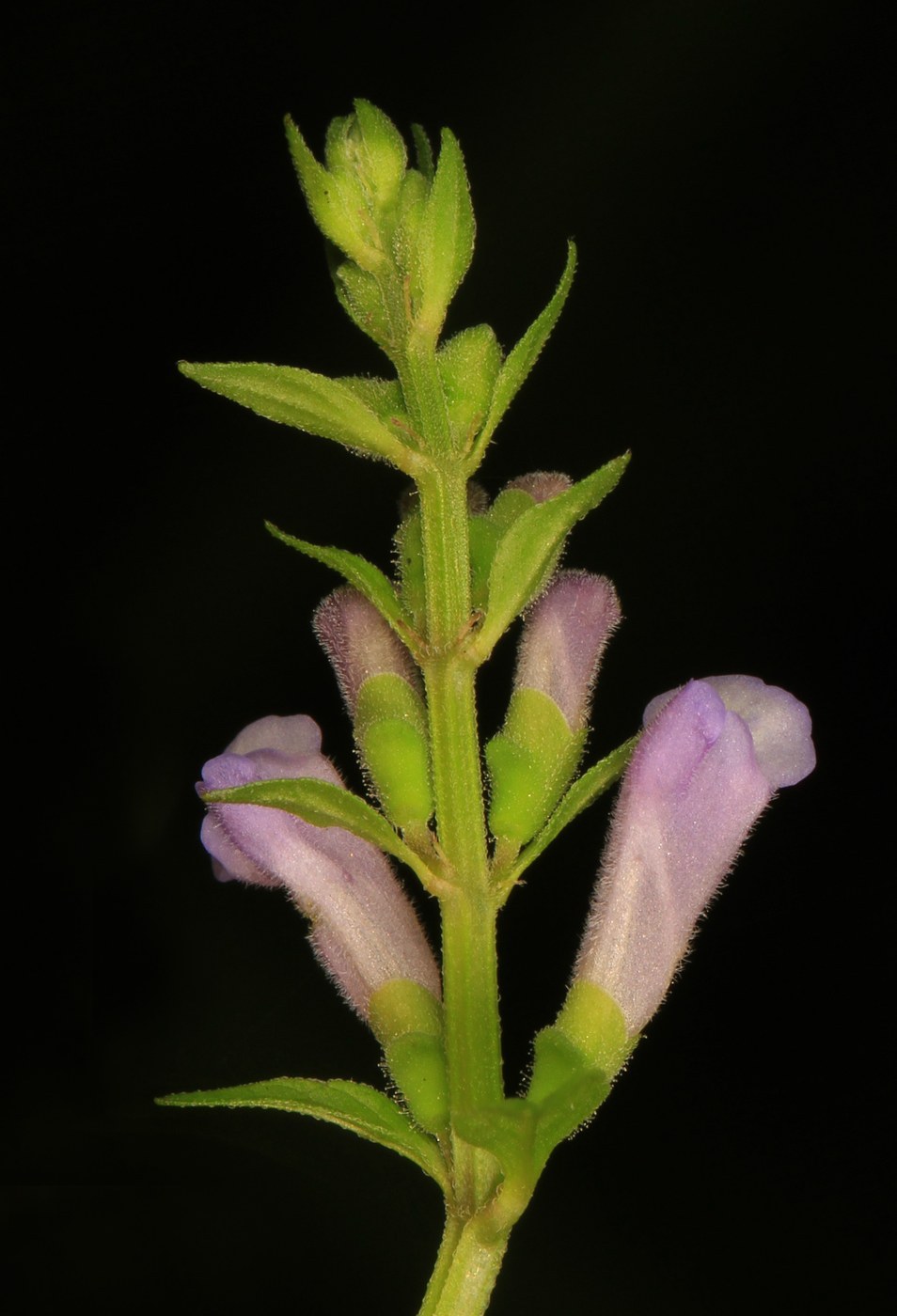
Key Identifying Features
Skullcap is the common name for plants in the genus Scutellaria, members of the mint family (Lamiaceae). The defining clue is the calyx: each flower sits in a small green cup that bears a distinctive raised flap or ridge on its upper side, resembling a helmet or "skullcap." After the flower drops, this structure persists and is unmistakable under a hand lens. Other key signs:
- Square (four-angled) stems, typical of the mint family.
- Opposite leaves in pairs at right angles to the pair above and below.
- Two-lipped tubular flowers, usually blue to violet (sometimes pink or white).
Unlike most mints, skullcaps are not aromatic when crushed, which helps separate them from true mints.
Leaves & Stems
The stems are square in cross-section, slender, and often branched. Leaves are opposite, simple, and range from narrow and lance-shaped (S. lateriflora) to broadly oval with scalloped margins. Many species have toothed edges and a slightly wrinkled surface. Foliage lacks the strong minty smell of catnip or peppermint.
Flowers & Fruit
Flowers are tubular and two-lipped, the lower lip flaring outward as a landing pad for bees. In mad-dog skullcap (S. lateriflora) the small blue flowers line up along one side of the flowering branches, a helpful field mark. The persistent calyx with its helmet ridge holds the developing nutlets; each flower yields 4 small nutlets, standard for the mint family.
How to Tell It Apart from Look-Alikes
- True mints (Mentha) and catnip (Nepeta) also have square stems and paired leaves but smell strongly minty and lack the helmet-shaped calyx ridge.
- Self-heal (Prunella) has a square stem and blue flowers but clusters them in a dense terminal head and has no calyx flap.
- Germander (Teucrium) shares the family traits but its flowers have a single, large drooping lower lip and no upper lip.
If the calyx has a hood-like crest and the plant is odorless, it is a skullcap.
Where You'll Find It
Skullcaps grow worldwide in temperate zones. Many North American species favor moist meadows, streambanks, marsh edges, and damp woodland, while others occupy dry prairies and rocky slopes. Look for them flowering from late spring through summer.
Quick ID Checklist
- Square stem, opposite paired leaves
- No minty aroma when crushed
- Two-lipped blue to violet flowers
- Calyx with a helmet-shaped ridge (persists after flowering)
- Often in moist or wet habitats
Frequently asked questions
Why is it called skullcap?
The name comes from the calyx, the green cup holding each flower. Its upper side has a raised flap or ridge that resembles a medieval helmet or skullcap, and this structure persists even after the petals fall.
Does skullcap smell like mint?
No. Although it belongs to the mint family and has square stems and paired leaves, skullcap is essentially odorless when crushed. A strong minty smell points to a true mint or catnip instead.
How do I tell skullcap from self-heal?
Both are blue-flowered mints, but self-heal packs its flowers into a dense club-like terminal head and lacks the helmet ridge on the calyx. Skullcap flowers are borne in pairs or along one side of the branch and have the distinctive calyx crest.
Where should I look for skullcap?
Most species prefer damp ground: moist meadows, streambanks, marsh margins, and wet woodland edges. Some occupy dry prairies and rocky slopes, so habitat narrows the species once you confirm the genus.