
Smoke Tree Identification Guide
Identify the smoke tree (Cotinus) by its rounded blue-green or purple leaves and its signature hazy, smoke-like plumes of fine flower stalks.
Read the full Smoke Tree encyclopedia entry →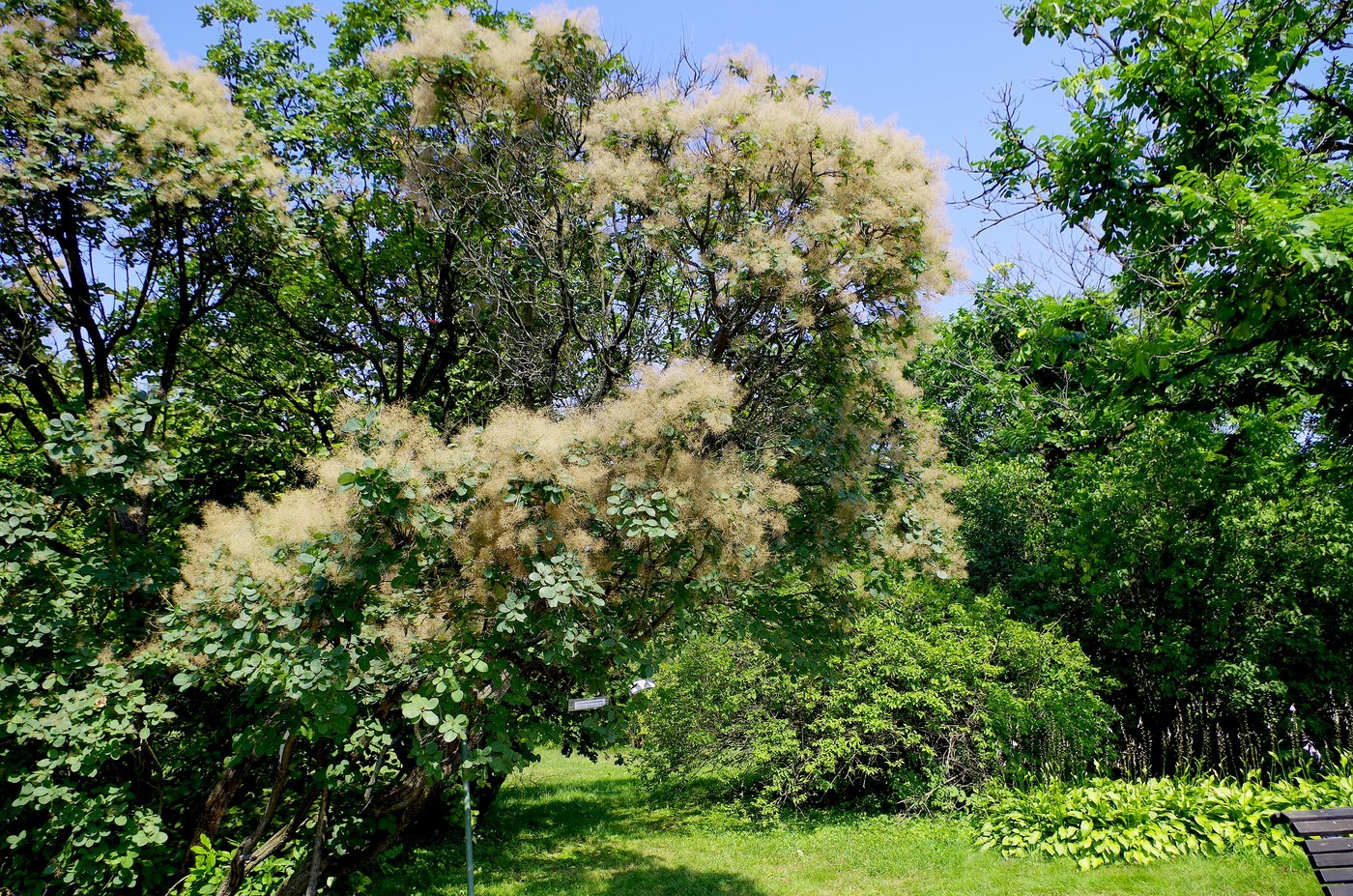
Key Identifying Features
The smoke tree or smoke bush (Cotinus coggygria, and the American Cotinus obovatus) gets its name from the billowing, smoke-like haze it produces in summer. This effect comes not from the tiny flowers but from the elongated, fuzzy stalks of sterile flowers that turn pink, purple, or smoky gray.
- Size & form: Usually a large multi-stemmed shrub or small tree, 10–15 ft (American smoke tree can reach 20–30 ft).
- Habit: Rounded, bushy, often as wide as tall.
- Sap/smell: Crushed stems have a faintly resinous, slightly bitter odor (it's in the cashew/sumac family, Anacardiaceae).
Leaves & Stems
Leaves are simple, alternate, and rounded to oval (obovate), 1.5–3 inches long, with smooth (untoothed) margins and a slightly notched or rounded tip. Veins are prominent. The species and many cultivars are grown for dramatic foliage color: blue-green, golden, or rich purple-maroon ('Royal Purple', 'Grace'), often turning brilliant orange, red, and scarlet in fall. The smooth leaf edge and rounded shape distinguish it from toothed look-alikes.
Flowers & Fruit
- Flowers (early summer): The actual flowers are tiny and yellowish-green, borne in large, loose, branching clusters (panicles).
- The "smoke": Most flowers are sterile; their stalks elongate and become covered in fine hairs, creating airy plumes 6–8 inches long that look like puffs of pink-purple or gray smoke—the defining feature.
- Fruit: Small, dry, kidney-shaped drupes on the few fertile flowers, often hidden in the haze.
How to Tell It Apart from Look-Alikes
- Sumacs (Rhus): Close relatives, but sumacs have pinnately compound leaves and dense upright red fruit clusters—not simple rounded leaves and smoky plumes.
- Purple-leaf shrubs (e.g., purple barberry, purpleleaf sand cherry): Lack the airy smoke plumes; barberry has spines, sand cherry has toothed leaves and cherry-like fruit.
- Redbud (Cercis): Has heart-shaped leaves and pea flowers, no smoke effect.
- Nothing else combines rounded smooth leaves + hazy smoke-like flower plumes.
Where You'll Find It
Cotinus coggygria is native to southern Europe through central China; the American smoke tree grows wild on rocky limestone soils in the southeastern/central U.S. Both are popular ornamentals in gardens and landscapes across temperate zones (USDA 4–8), thriving in full sun and lean, well-drained soil.
Quick ID Checklist
- Multi-stemmed shrub/small tree, rounded form
- Simple, rounded, smooth-edged leaves, often purple or blue-green
- Tiny flowers on big airy panicles
- Smoke-like pink/purple/gray plumes in summer—the giveaway
- Brilliant fall color; full sun, well-drained soil
Frequently asked questions
What causes the smoke tree's smoky appearance?
Most of the flowers are sterile, and their stalks elongate and grow covered in fine hairs after blooming. Massed together, these fuzzy stalks create the airy pink-to-gray haze that looks like puffs of smoke.
Is the smoke tree the same as sumac?
They are closely related (both in the Anacardiaceae family), but sumacs have compound leaves and upright fuzzy red fruit clusters, while smoke trees have simple rounded leaves and smoky flower plumes.
Why doesn't my smoke tree produce many flowers?
Hard pruning (coppicing) for the biggest, most colorful foliage removes the wood that would flower. To get the smoke effect, prune lightly and let the plant mature, since blooms form on older growth.
Are smoke tree leaves always purple?
No. The species has blue-green leaves; the purple coloring comes from cultivars like 'Royal Purple' and 'Grace.' There are also golden-leaved forms. Most turn fiery orange-red in autumn.