
Snakeroot Identification Guide
Identify black snakeroot (Actaea/Cimicifuga) by its tall, bottlebrush spires of white flowers and divided, toothed foliage.
Read the full Snakeroot encyclopedia entry →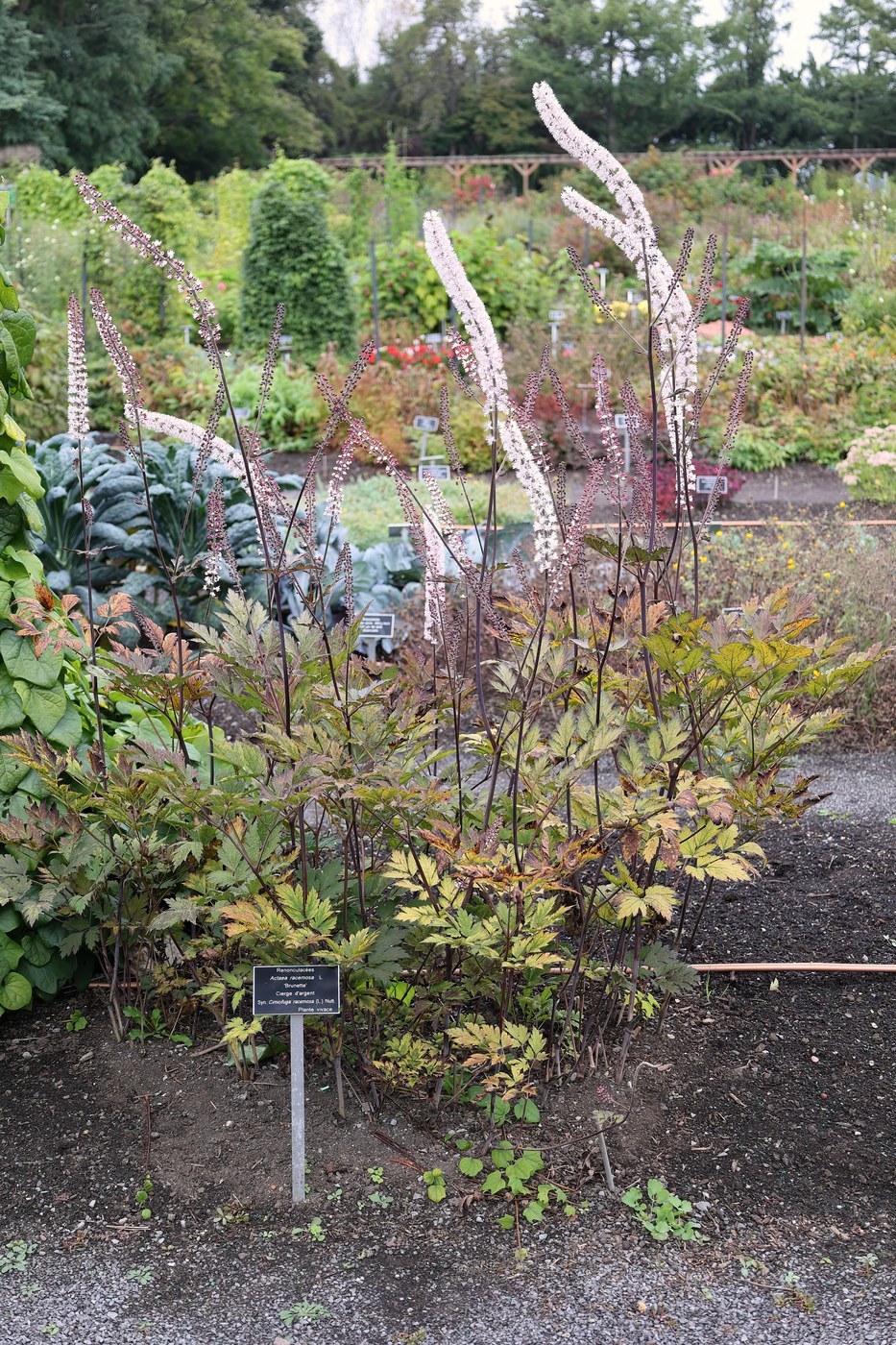
Key Identifying Features
Snakeroot most often refers to black snakeroot or bugbane (Actaea racemosa, syn. Cimicifuga racemosa) and related Actaea species. Note: 'snakeroot' is a name shared by several unrelated plants, so confirm carefully. For black snakeroot, look for:
- Tall, slender, bottlebrush-like spires of fluffy white flowers, often 4-8 ft up
- Large, divided (compound) leaves with sharply toothed leaflets
- A woodland clumping habit
- A distinctive, somewhat unpleasant scent to the flowers (hence 'bugbane')
Leaves & Stems
Leaves are 2-3 times compound (ternately divided), forming large fans of many ovate leaflets with coarse, sharp teeth and pointed tips. Foliage is dark green and forms a substantial basal mound. Flower stems are tall, wiry, and largely leafless above the foliage, shooting up well beyond the leaves. Some ornamental forms (e.g. Actaea simplex 'Atropurpurea') have dark purple-black foliage.
Flowers & Fruit
Blooming mid- to late summer into fall (depending on species), the flowers form long, narrow, wand-like racemes (spikes) 1-2 ft long packed with tiny white flowers that lack petals — the fluffy look comes from dense tufts of white stamens. The spikes sway and arch slightly. Many have a musky, slightly rank odor up close. After bloom, dry follicle/capsule fruits develop; in some Actaea relatives (true baneberries) the fruit is a conspicuous berry, but A. racemosa forms dry capsules.
How to Tell It Apart from Look-Alikes
- Baneberry (Actaea rubra / pachypoda) — close relatives with similar leaves, but they form short, rounded flower clusters and showy red or white berries, not long bottlebrush spires.
- Astilbe — plume-like, but flowers are colored, leaves glossier; astilbe is much shorter.
- Goatsbeard (Aruncus) — branched plumes vs. snakeroot's narrow unbranched wands.
- White snakeroot (Ageratina altissima) — a different plant entirely: flat clusters of fuzzy white flowers and opposite leaves, not tall bottlebrush spires. Don't confuse them.
The tall, narrow, single bottlebrush white spire over toothed compound leaves marks black snakeroot.
Where You'll Find It
Black snakeroot is native to moist, rich deciduous woodlands of eastern North America, growing in part to full shade. It's also a garden favorite for shady borders. Look for its tall white spires lighting up the woodland understory in late summer.
Quick ID Checklist
- Tall (4-8 ft) narrow bottlebrush spikes of fluffy white flowers
- Petalless flowers — fluff comes from stamens
- Large 2-3x compound leaves with sharply toothed leaflets
- Often a musky flower scent
- Moist, shaded woodland habitat
A tall woodland plant topped by a single slim white bottlebrush over ferny toothed leaves is black snakeroot.
Frequently asked questions
Is black snakeroot the same as white snakeroot?
No. Black snakeroot (Actaea racemosa) has tall white bottlebrush spires and divided leaves, while white snakeroot (Ageratina altissima) has flat clusters of fuzzy flowers and opposite leaves. They are unrelated plants.
Why is it also called bugbane?
The flowers have a musky, somewhat unpleasant odor traditionally believed to repel insects, giving it the name bugbane.
Do snakeroot flowers have petals?
No. The fluffy white appearance of the spikes comes from dense tufts of stamens rather than true petals.
Where does black snakeroot grow?
In moist, rich deciduous woodlands of eastern North America, in part to full shade, where its tall white spires bloom in late summer.