How to Care for Snowberry
Grow snowberry, a tough deciduous shrub prized for its round white autumn fruit and easy, adaptable nature in sun or shade.
Read the full Snowberry encyclopedia entry →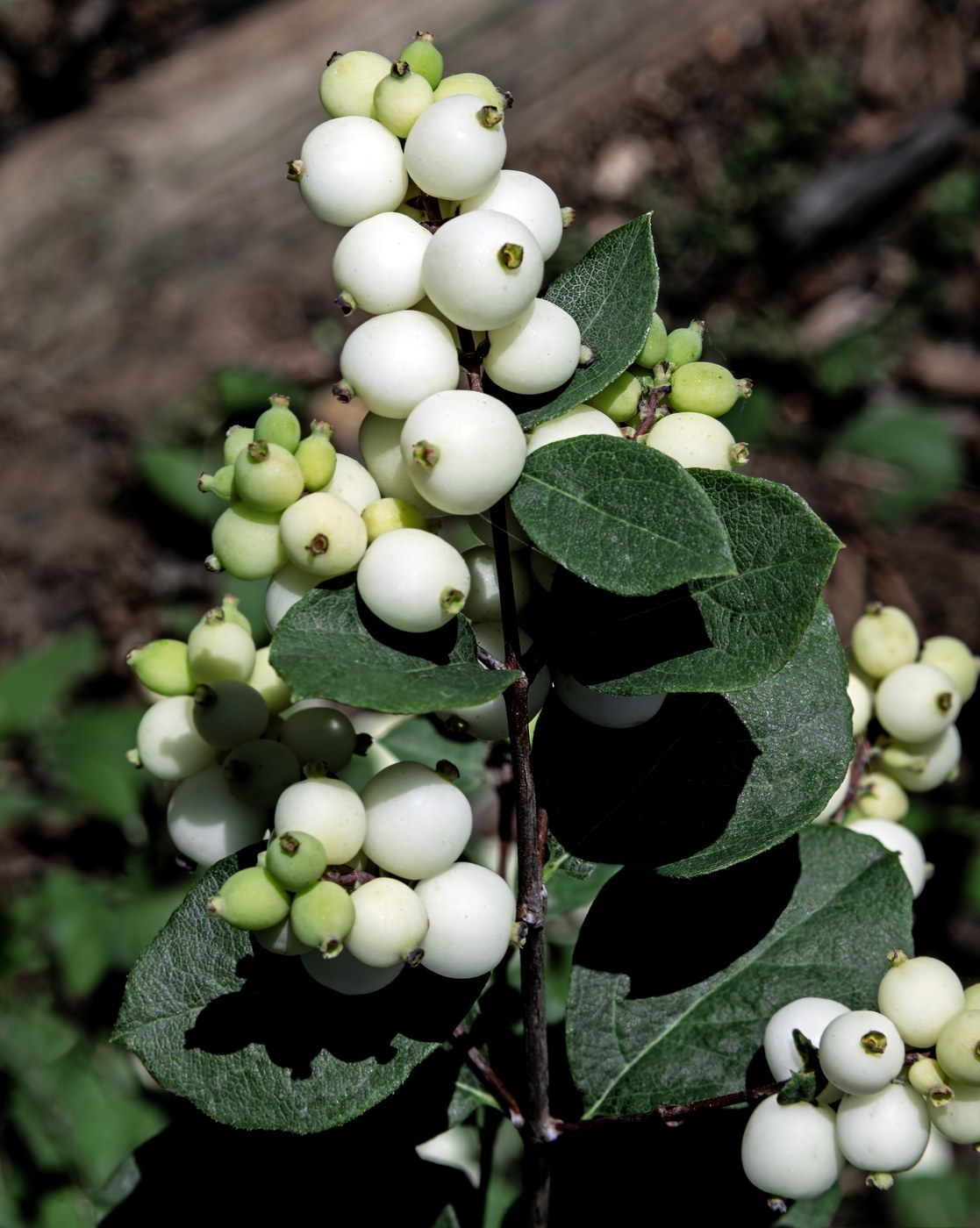
Snowberry (Symphoricarpos albus) is a hardy deciduous shrub grown for its arching stems, small pink summer flowers, and clusters of striking round white ornamental fruit that persist into winter. It is one of the most forgiving landscape shrubs, thriving in a wide range of conditions with little fuss.
Light
Snowberry is remarkably adaptable, growing well in full sun through to fairly deep shade. It flowers and fruits most heavily in full sun to part shade, but its tolerance of shade makes it valuable for woodland edges and north-facing borders where many shrubs struggle. In deep shade, expect a looser, more open habit and reduced fruiting.
Water
Water regularly during the first year or two to establish a strong root system. Once established, snowberry is drought-tolerant and needs only moderate, occasional watering during prolonged dry spells. It also tolerates heavier, wetter soils better than most shrubs, making it useful for tricky sites.
Soil & Potting
This shrub grows in almost any soil, including poor, dry, chalky, or heavy clay ground. It prefers a moist, well-drained loam but adapts readily to less-than-ideal conditions. A neutral to slightly alkaline pH suits it best, though it is not fussy. Mulch around the base with organic matter to conserve moisture and suppress weeds.
Humidity & Temperature
Snowberry is very cold-hardy, tolerating hard frosts and thriving in cool temperate climates. It has no special humidity requirements and shrugs off wind and exposure, making it suitable for hedging and shelterbelts.
Feeding
Feeding is rarely necessary. On poor soils, an annual spring application of a balanced general-purpose fertilizer or a top-dressing of compost supports steady growth. Avoid over-feeding, which encourages excessive leafy growth at the expense of fruit.
Propagation
Snowberry is easily propagated by suckers, which it produces freely at the base and along spreading roots; simply dig up rooted suckers in dormancy and replant. It also grows readily from hardwood cuttings taken in autumn or winter, and from softwood cuttings in summer. Division of established clumps in dormancy is another reliable method.
Repotting / Pruning
Snowberry tolerates hard pruning well. Prune in late winter or early spring before growth begins, removing old, weak, or crowded stems at the base to keep the plant vigorous and open. Because it fruits on the current season's growth, cutting back does not sacrifice the autumn display. Its suckering habit can make it spread; dig out unwanted suckers to keep it contained.
Common Problems & Pests
Snowberry is largely trouble-free. It can occasionally suffer from powdery mildew, especially in dry conditions with poor air circulation; improve airflow by thinning stems. Anthracnose and leaf spots may appear in wet seasons but rarely cause lasting harm. Aphids sometimes cluster on new shoots and can be dislodged with a strong jet of water. Its vigorous suckering is more often the main management concern than any pest.
Seasonal Care Tips
In spring, prune and mulch. Through summer, enjoy the pink flowers and water only in drought. Autumn brings the signature white fruit clusters, which look best against the bare stems after leaf drop. In winter, the fruit persists for weeks of interest; this is also the ideal time to lift and replant suckers or take hardwood cuttings.
Frequently asked questions
Why isn't my snowberry producing many white fruits?
Fruiting is heaviest in full sun to part shade. In deep shade the plant grows looser and fruits sparsely. Move or thin surrounding growth to give it more light, and avoid heavy nitrogen feeding which favors leaves over fruit.
How do I stop snowberry from spreading everywhere?
Snowberry suckers freely from spreading roots. Dig out unwanted suckers while dormant, or install a root barrier. Growing it where its spread is welcome, such as a naturalistic hedge or bank, makes management much easier.
Can snowberry grow in a shady, difficult spot?
Yes. It is one of the best shrubs for shade and poor soil, tolerating dry ground under trees, heavy clay, and exposure. Expect a more open habit and lighter fruiting in deep shade, but it will still grow reliably.
When should I prune snowberry?
Prune in late winter or early spring before new growth starts. Remove old, weak, or crowded stems at the base to keep the shrub vigorous and open. It responds well to hard renovation pruning if it becomes overgrown.
Snowberry identified by the community
Recent Snowberry specimens identified with Plant Identifier.