Snowberry Identification Guide
Identify snowberry (Symphoricarpos) by its clusters of soft white marble-like berries, small oval opposite leaves, and thicket-forming deciduous habit.
Read the full Snowberry encyclopedia entry →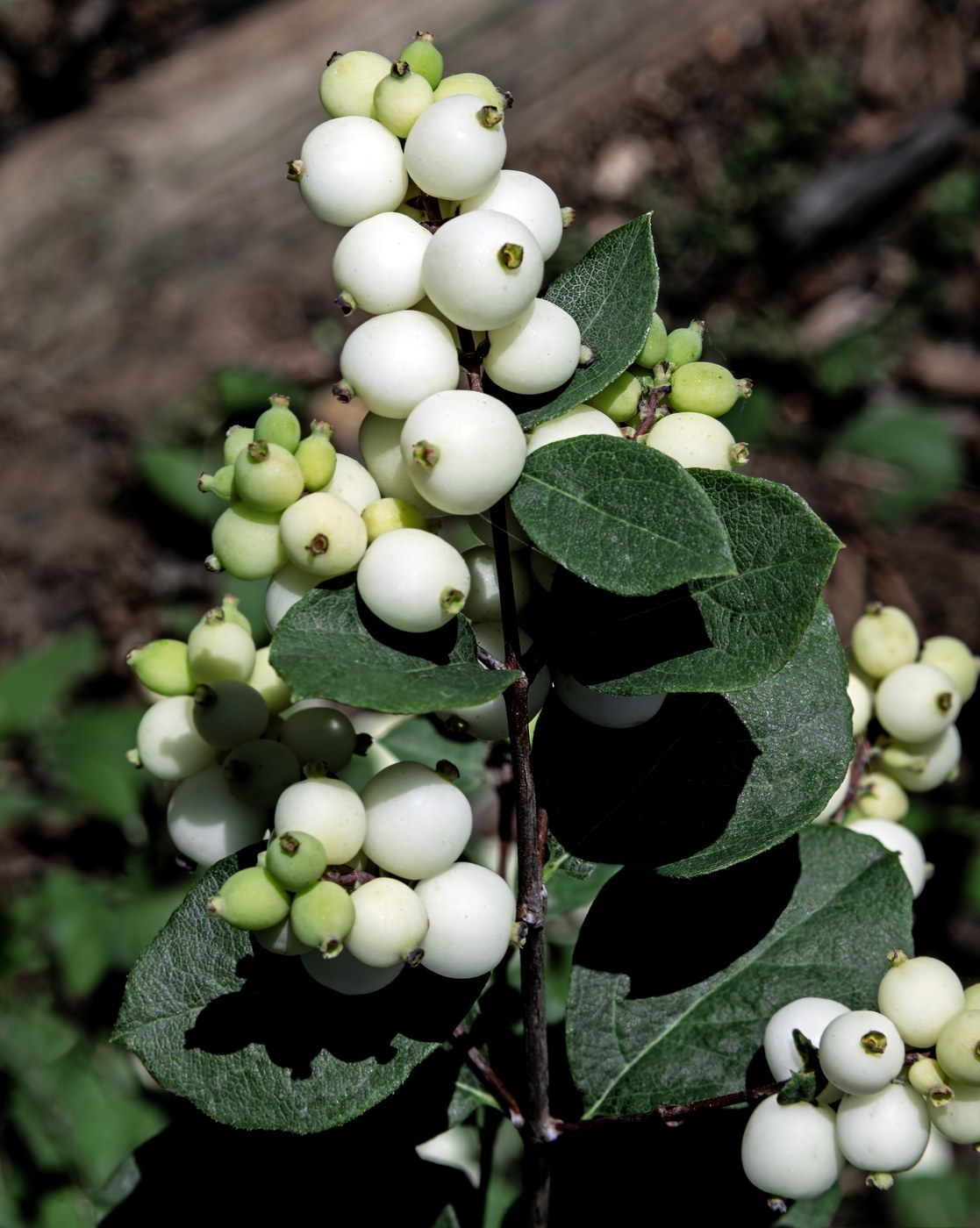
Key Identifying Features
Snowberry (Symphoricarpos albus and relatives) is a deciduous thicket-forming shrub instantly known for its clusters of plump, waxy-white berries that look like little marbles or popcorn and cling to bare stems well into winter. The pure-white fruit is the single most diagnostic trait.
- Twiggy, suckering deciduous shrub, 2–6 ft, forming thickets
- Clusters of round, soft white berries (¼–½ in)
- Small, oval, opposite leaves, often blue-green
- Tiny pink-white bell flowers in summer
Leaves & Stems
Leaves are opposite, simple, small (½–2 in), oval to rounded, with smooth or slightly wavy/lobed margins, and a soft dull blue-green color, paler beneath. On vigorous shoots leaves may show shallow lobes. Stems are slender, arching, and hollow or pithy, with thin brown bark; the plant suckers freely to form dense colonies. There are no thorns.
Flowers & Fruit
Flowers are small, bell- or urn-shaped, pinkish-white (about ¼ in), in small clusters in summer — modest but attractive to bees. They mature into the famous soft, spongy, pure-white berries (drupes) that persist in showy clusters after the leaves drop. Crushed berries reveal a granular, almost snowy white pulp. (Related coralberry/S. orbiculatus has small pinkish-purple/coral berries instead.)
How to Tell It Apart from Look-Alikes
- Dogwood (Cornus): some have whitish berries, but dogwood leaves have distinctive arcing veins and berries are on red stems; snowberry leaves are small and plain.
- Mistletoe: white berries too, but grows as a parasite on tree branches, not as a ground shrub.
- Coralberry: same genus but berries are coral-pink, not white.
- Common snowball/viburnum: white flower balls, not white berries.
The clusters of soft pure-white marble-like berries on a twiggy suckering shrub with small opposite blue-green leaves combination is unmistakable.
Where You'll Find It
Native across North America (and naturalized in Europe), snowberry grows in woodland edges, hedgerows, stream banks, and disturbed ground, and is planted for wildlife, erosion control, and informal hedging. It's tough and adaptable — tolerating shade, poor soil, and cold — and spreads readily by suckers, so it's often found in dense colonies.
Quick ID Checklist
- Twiggy, suckering deciduous shrub forming thickets
- Clusters of soft, waxy, pure-white round berries
- Berries persist on bare stems into winter
- Small oval opposite leaves, dull blue-green
- Tiny pink-white bell flowers in summer
- No thorns; slender pithy stems
If you find a thicket-forming shrub hung with clusters of soft, white marble-like berries on leafless winter stems, it's snowberry.
Frequently asked questions
Why are the berries so white and soft?
Snowberry's fruit is a soft, spongy drupe filled with granular white pulp, giving it the look of a little snowball or marble. This pure-white color is unusual among berries and is the plant's most reliable identification feature, lasting on bare stems into winter.
What is coralberry and how does it relate?
Coralberry (Symphoricarpos orbiculatus) is a close relative in the same genus, but it bears clusters of small coral-pink to purplish berries instead of white ones. If your snowberry-like shrub has pink fruit, it's likely coralberry.
Why does snowberry form dense thickets?
Snowberry spreads aggressively by underground suckers, sending up new stems around the parent plant to form dense colonies. This makes it useful for erosion control and wildlife cover but means it can spread further than expected in a garden.
Snowberry identified by the community
Recent Snowberry specimens identified with Plant Identifier.