
How to Care for Southern Magnolia
Grow the stately Southern Magnolia (Magnolia grandiflora) with sun, moist well-drained soil, and light pruning for glossy evergreen grandeur.
Read the full Southern Magnolia encyclopedia entry →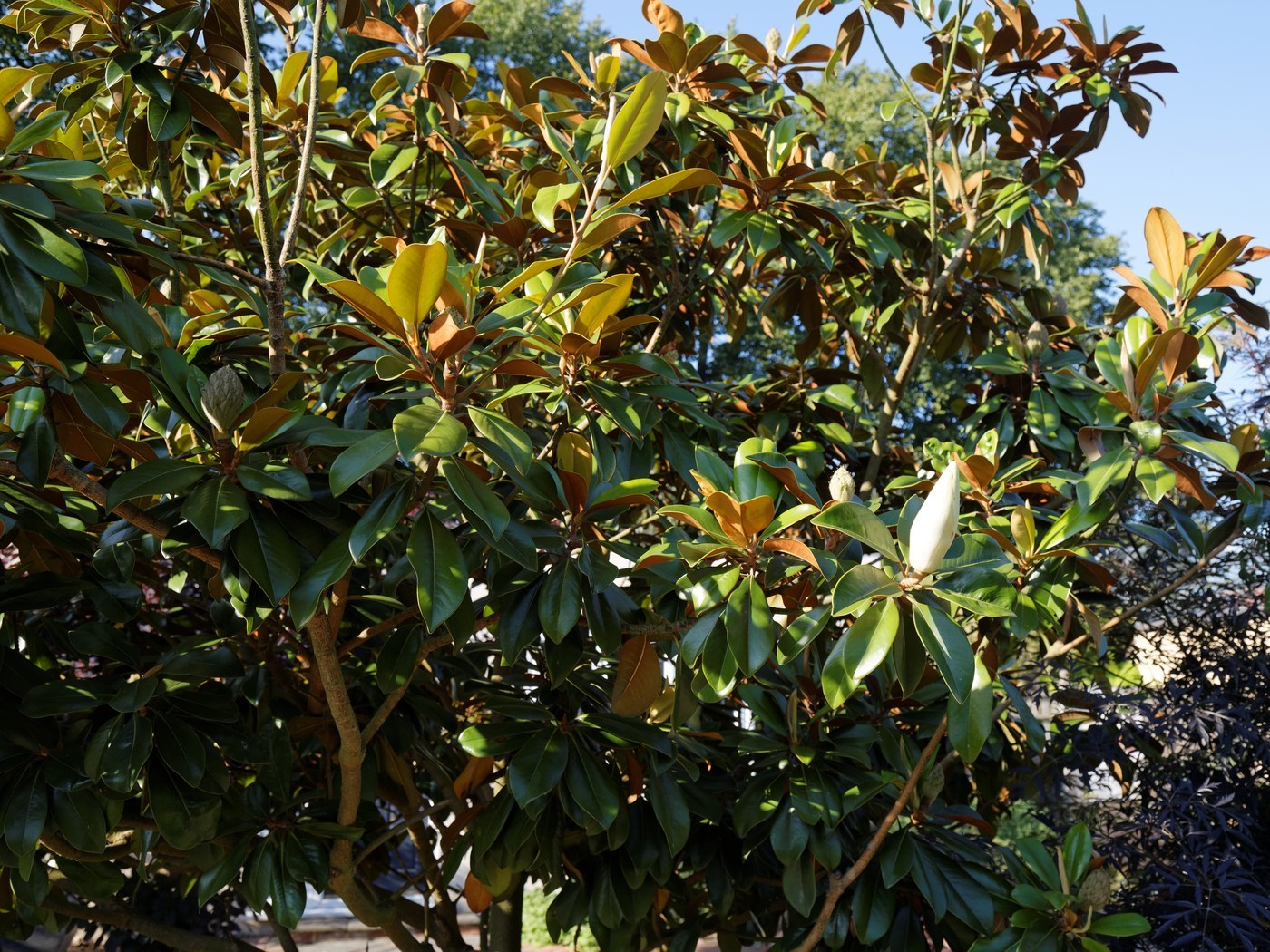
The Southern Magnolia (Magnolia grandiflora) is a magnificent evergreen tree famed for its large, glossy dark-green leaves and enormous, fragrant creamy-white flowers. A long-lived, stately specimen, it makes a spectacular focal point for larger landscapes and, once established, is remarkably easygoing.
Light
Plant Southern Magnolia in full sun to part shade. It flowers most heavily and grows densest in full sun, but tolerates partial shade, especially in hot climates. Young trees establish well with a bit of shelter, while mature specimens want ample light to support their broad, leafy canopy and generous bloom. Choose a site with room for the tree's substantial eventual size.
Water
Provide moderate, regular water to keep the soil moist but well-drained, particularly for the first few years while roots establish. Deep, thorough soakings that reach the whole root zone are far better than frequent shallow watering. Once established, Southern Magnolia becomes fairly drought-tolerant, though it appreciates supplemental water during prolonged dry spells and heat. Avoid waterlogged sites, which stress the roots.
Soil & Potting
This magnolia prefers rich, moist, well-drained soil that is slightly acidic and high in organic matter. It adapts to a range of soils but resents constantly soggy or highly alkaline ground. Amend the planting area with compost, and mulch generously over the root zone to conserve moisture, moderate soil temperature, and suppress competition – keeping mulch a few inches back from the trunk.
Humidity & Temperature
Native to the warm, humid southeastern climate, Southern Magnolia thrives in mild to hot temperatures and tolerates humidity well. It is evergreen and reasonably cold-hardy within its range, though hard freezes can damage foliage at the colder edge of its adaptability. Shelter from harsh, drying winds helps prevent leaf browning and wind damage to the broad evergreen leaves.
Feeding
Southern Magnolia is not a heavy feeder. A yearly application of a balanced or acid-forming slow-release fertilizer in early spring supports steady growth and good flowering, especially on poorer soils. Mulching with organic matter feeds the tree gradually as it breaks down. Avoid heavy late-season feeding, which can push tender growth vulnerable to cold. Established trees in decent soil often need little supplemental feeding.
Propagation
Propagate by seed or cuttings, though patience is required. Fresh seed, cleaned and cold-stratified, can be sown but is slow to germinate and grow. Semi-hardwood cuttings taken in summer can be rooted under humidity with rooting hormone, though success varies. Named cultivars are usually propagated by cuttings or grafting to preserve their characteristics. Seed-grown trees take many years to reach flowering size.
Repotting / Pruning
Southern Magnolia needs little pruning and has a naturally handsome form. Prune lightly after flowering to remove dead, damaged, or crossing branches and to shape young trees; avoid heavy cuts, which the tree responds to slowly. Many gardeners leave the lower branches to sweep the ground for a full, skirted look. Clean up dropped leaves and seed cones if a tidy appearance is desired, as the leathery leaves decompose slowly.
Common Problems & Pests
Southern Magnolia is generally robust and low-maintenance. It can suffer leaf scorch and browning from cold winds, drought, or poor drainage. Chlorosis (yellowing between leaf veins) appears on overly alkaline soils – correct with acidifying amendments. Occasional pests include scale insects, which may lead to sooty mold, and magnolia leaf spots or fungal issues in wet, poorly ventilated conditions. Good siting, drainage, and airflow prevent most problems.
Seasonal Care Tips
In spring, apply mulch and any needed fertilizer, and prune young trees to shape as growth resumes. Through summer, water deeply during dry spells and enjoy the succession of large fragrant blooms. In fall, ease off watering as growth slows and clear fallen leaves and cones. In winter, the tree remains evergreen; protect young or borderline-hardy specimens from hard freezes and drying winds with mulch and shelter.
Frequently asked questions
How big does a Southern Magnolia get?
It is a large, long-lived evergreen tree that can grow quite tall and broad over the years, so give it plenty of room. Choose the planting site with its substantial mature canopy in mind.
Why are my Southern Magnolia leaves turning yellow?
Yellowing between the veins often indicates chlorosis from overly alkaline soil. Southern Magnolia prefers slightly acidic ground, so amend with acidifying material and mulch with organic matter. General yellowing can also follow poor drainage or drought stress.
When should I prune a Southern Magnolia?
Prune lightly just after flowering, removing dead, damaged, or crossing branches and shaping young trees. Avoid heavy cuts, since the tree is slow to respond, and many gardeners leave the lower skirt of branches intact.
Does Southern Magnolia need a lot of water?
Water regularly to keep the soil moist and well-drained while the tree establishes over its first few years. Once mature it becomes fairly drought-tolerant but benefits from deep watering during prolonged dry, hot spells.