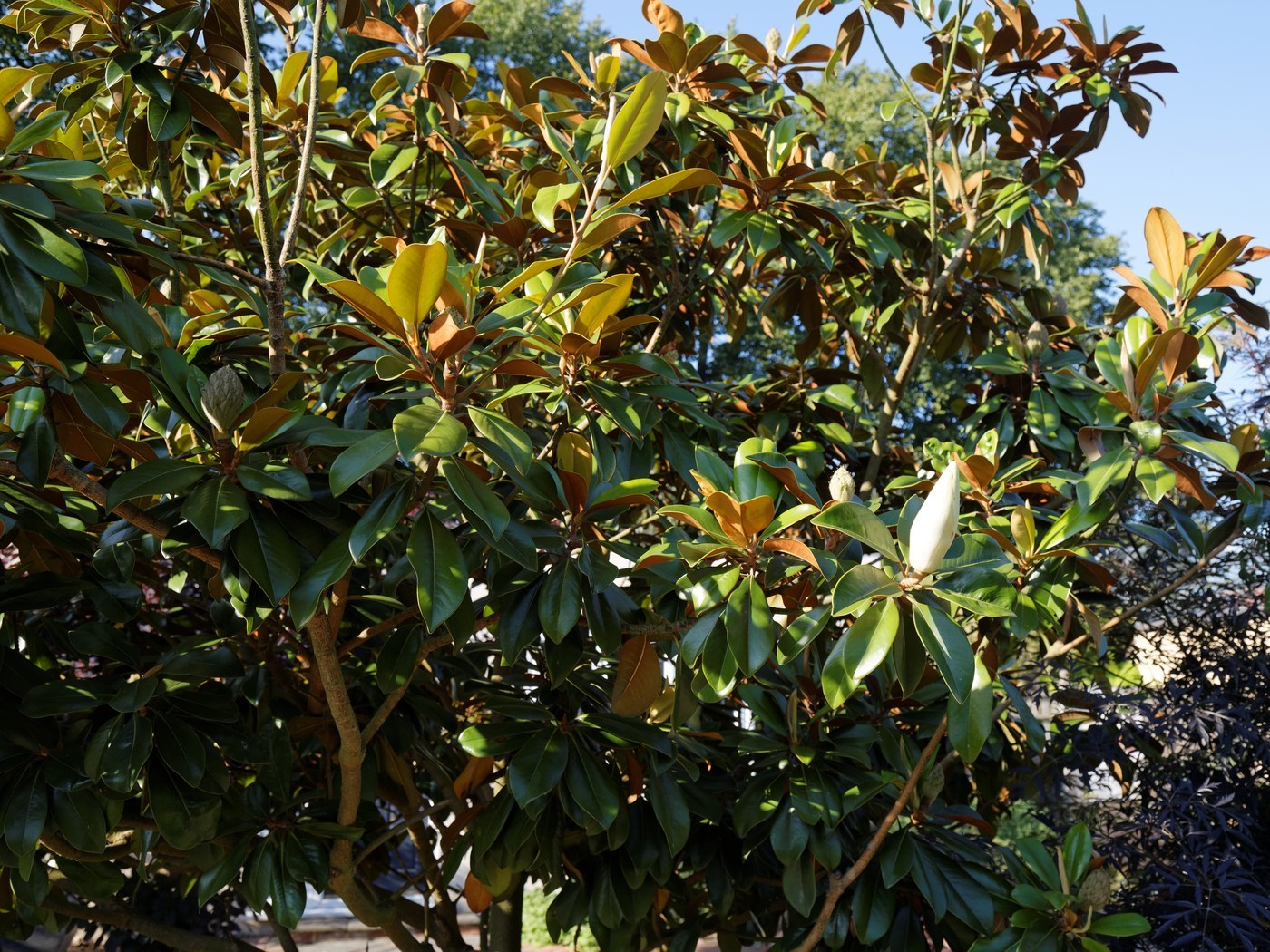
Southern Magnolia
Magnolia grandiflora
An iconic broadleaf evergreen tree of the American South, bearing huge fragrant white flowers and glossy leathery leaves. A symbol of Southern landscapes.
- Light
- Full sun to part shade
- Water
- Moderate; moist well-drained soil
- Difficulty
- Easy
Got a plant like this?
Identify any plant from a photo, free.
Overview
Southern magnolia is a stately broadleaf evergreen tree native to the southeastern United States, instantly recognized by its large, glossy dark-green leaves and enormous, intensely fragrant creamy-white flowers.
The blossoms, up to 12 inches across, appear over a long season in late spring and summer. The dense, pyramidal evergreen canopy provides year-round structure and shade.
It is the state flower of both Mississippi and Louisiana and a defining element of classic Southern garden design.
How to identify it
- Flowers: very large (8-12 in), bowl-shaped, creamy white, lemon-scented, with thick waxy petals
- Leaves: evergreen, leathery, oval, 5-10 in, glossy dark green above and often rusty-fuzzy beneath
- Fruit: cone-like aggregate that splits to reveal bright red seeds
- Bark: smooth gray, becoming lightly furrowed
- Size: 60-80 ft tall with a 30-50 ft spread
- Habit: dense, pyramidal evergreen crown, often branching to the ground
Care & growing
- Light: full sun to partial shade
- Water: regular moisture especially when young; moderately drought tolerant once established
- Soil: prefers rich, moist, well-drained, slightly acidic soil
- Temperature: hardy in USDA zones 6-10 (some cultivars to zone 5)
- Feeding: light feeding in spring if needed
- Propagation: from seed (needs cleaning and stratification), semi-hardwood cuttings, or grafting for cultivars
Habitat & origin
Native to the lowland southeastern United States, from coastal North Carolina south through Florida and west to eastern Texas.
It grows naturally in moist woodlands, along streams and on the edges of swamps. Widely cultivated as an ornamental across the warm-temperate world, including the U.S. South, the Mediterranean and parts of Asia.
Frequently asked questions
Does Southern magnolia lose its leaves?
It is evergreen, keeping its glossy leaves year-round, though it sheds some older leaves gradually, mostly in spring.
When does it bloom?
It produces its large white flowers from late spring through summer, often with scattered blooms continuing into early fall.
Can it grow in colder climates?
The species is best in zones 7-9, but cold-hardy cultivars such as 'Bracken's Brown Beauty' and 'Edith Bogue' extend it into zone 6 and sometimes 5.
Why is it hard to grow grass under a magnolia?
Its dense evergreen shade, shallow roots and constant leaf drop make turf difficult; many gardeners use mulch or let lower branches sweep the ground instead.
Southern Magnolia guides
In-depth guides for identifying, growing, and caring for Southern Magnolia.
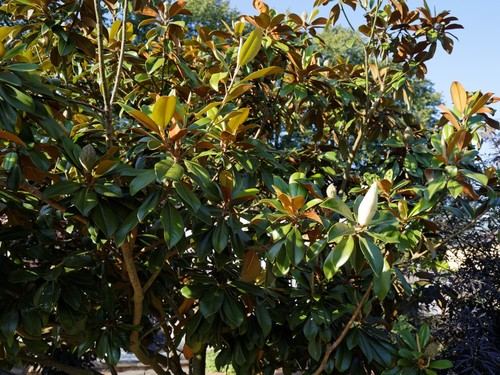
How to Care for Southern Magnolia
Grow the stately Southern Magnolia (Magnolia grandiflora) with sun, moist well-drained soil, and light pruning for glossy evergreen grandeur.
Southern Magnolia Identification Guide
How to identify southern magnolia (Magnolia grandiflora) by its large glossy evergreen leaves and huge fragrant white flowers.