Spider Plant Identification Guide
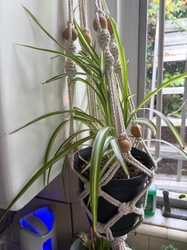
Identify the spider plant (Chlorophytum comosum) by its arching grass-like striped leaves and the baby plantlets dangling on long runners.
Read the full Spider Plant encyclopedia entry →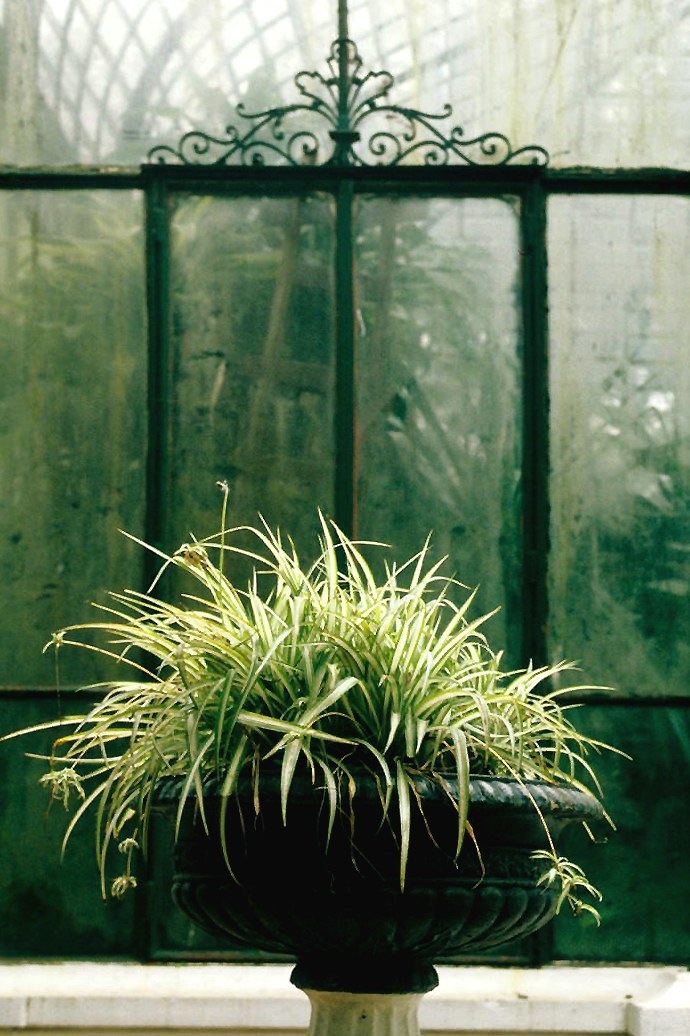
Key Identifying Features
The spider plant (Chlorophytum comosum) is one of the most recognizable houseplants thanks to:
- Long, narrow, arching grass-like leaves in a dense rosette.
- Most forms are variegated with a creamy-white central or marginal stripe.
- Wiry runners (stolons) that dangle and carry baby plantlets ("spiderettes").
The plantlets hanging from arching stems resemble spiders on a web — hence the name.
Leaves & Stems
Leaves are strap-shaped, soft, and gently folded down the midrib, typically 20–45 cm (8–18 in) long and tapering to a point. The most common cultivar, 'Vittatum', has a white center stripe; 'Variegatum' has white margins; all-green and curly ('Bonnie') forms also exist.
The plant grows from thick, white, tuberous roots that store water (a clue when repotting). There's no upright stem — leaves spray out from a central crown. From the crown emerge long, pale-yellow to green stolons that arch outward and downward.
Flowers & Fruit
The stolons bear small, star-shaped, six-petaled white flowers along their length. After (or instead of) flowering, the stolon tips develop clonal plantlets with their own tiny leaf rosettes and aerial roots — ready to root when they touch soil. Fruit is a small capsule. The flowering-then-plantlet runner is the single most diagnostic feature.
How to Tell It Apart from Look-Alikes
- Variegated grasses or sedges: these have flat, stiff blades and never produce dangling plantlets on runners.
- Dracaena (e.g. D. fragrans): striped strap leaves too, but they grow on an upright woody cane, not arching from a crown, and produce no spiderettes.
- Ophiopogon / Liriope (mondo grass): clumping strap leaves but no runners or plantlets.
The unmistakable clincher: arching runners carrying baby plantlets — no common look-alike does this.
Where You'll Find It
Native to coastal southern Africa. Worldwide it's a beginner-friendly houseplant especially suited to hanging baskets, where the spiderettes can cascade. Outdoors it grows as a shade groundcover in frost-free climates (USDA zones 9–11).
Quick ID Checklist
- Arching, grass-like strap leaves in a rosette
- Usually white-striped (center or margin)
- Long runners with baby plantlets dangling
- Small white 6-petaled star flowers on runners
- Thick white tuberous roots below soil
A fountain of striped, arching grassy leaves throwing off dangling baby plantlets is unmistakably a spider plant.
Frequently asked questions
What are the little plants hanging off my spider plant?
Those are plantlets or 'spiderettes', clonal baby plants produced at the tips of the runners. They develop their own roots and can be potted up to grow new spider plants.
Why isn't my spider plant making babies?
Spider plants typically produce runners and plantlets when slightly pot-bound and given bright, indirect light and consistent care. Young plants and those in very low light may grow leaves only for a while.
Are the thick white roots normal?
Yes. Spider plants form fleshy white tuberous roots that store water and reserves. They're a normal identifying feature and help the plant survive missed waterings.
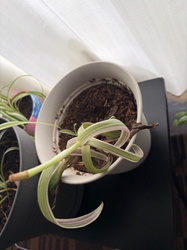
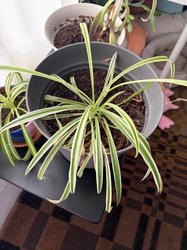
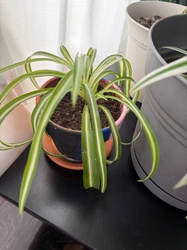
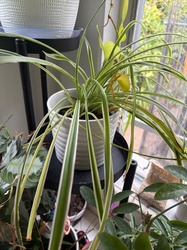
Spider Plant identified by the community
Recent Spider Plant specimens identified with Plant Identifier.