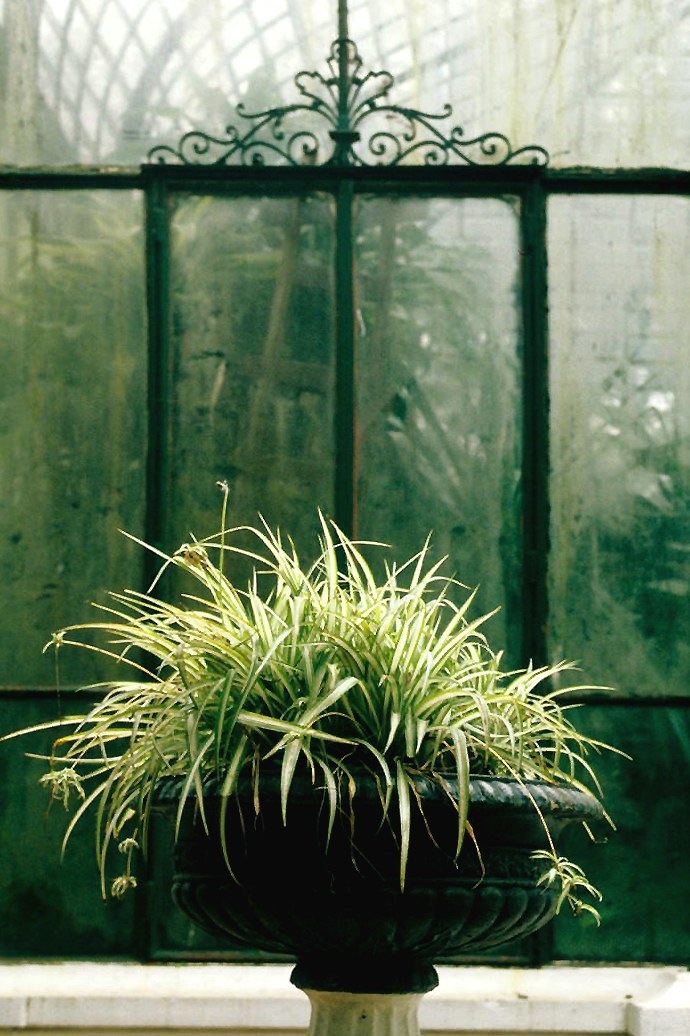
Spider Plant
Chlorophytum comosum
The spider plant is a fast-growing, easy-care houseplant with arching variegated leaves and dangling baby plantlets called 'spiderettes.' It is adaptable and one of the best plants for beginners.
- Light
- Bright to medium indirect light
- Water
- When top inch is dry
- Difficulty
- Easy
Got a plant like this?
Identify any plant from a photo, free.
Overview
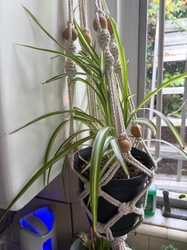
The spider plant (Chlorophytum comosum) is an evergreen perennial native to coastal South Africa. It forms a rosette of long, narrow arching leaves and is famous for the cascade of baby plantlets it produces on long stems.
These plantlets, or 'spiderettes,' dangle like spiders on a web and can be easily rooted to make new plants, which is how the species earned its common name.
Tough and adaptable, the spider plant tolerates a wide range of conditions and is one of the most popular and forgiving houseplants in the world.
How to identify it
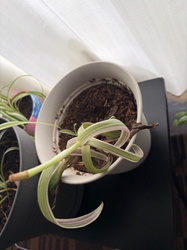
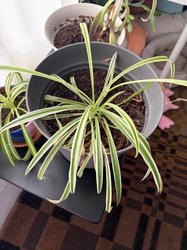
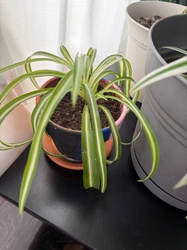
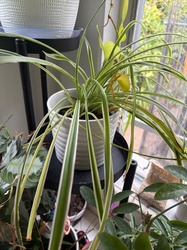
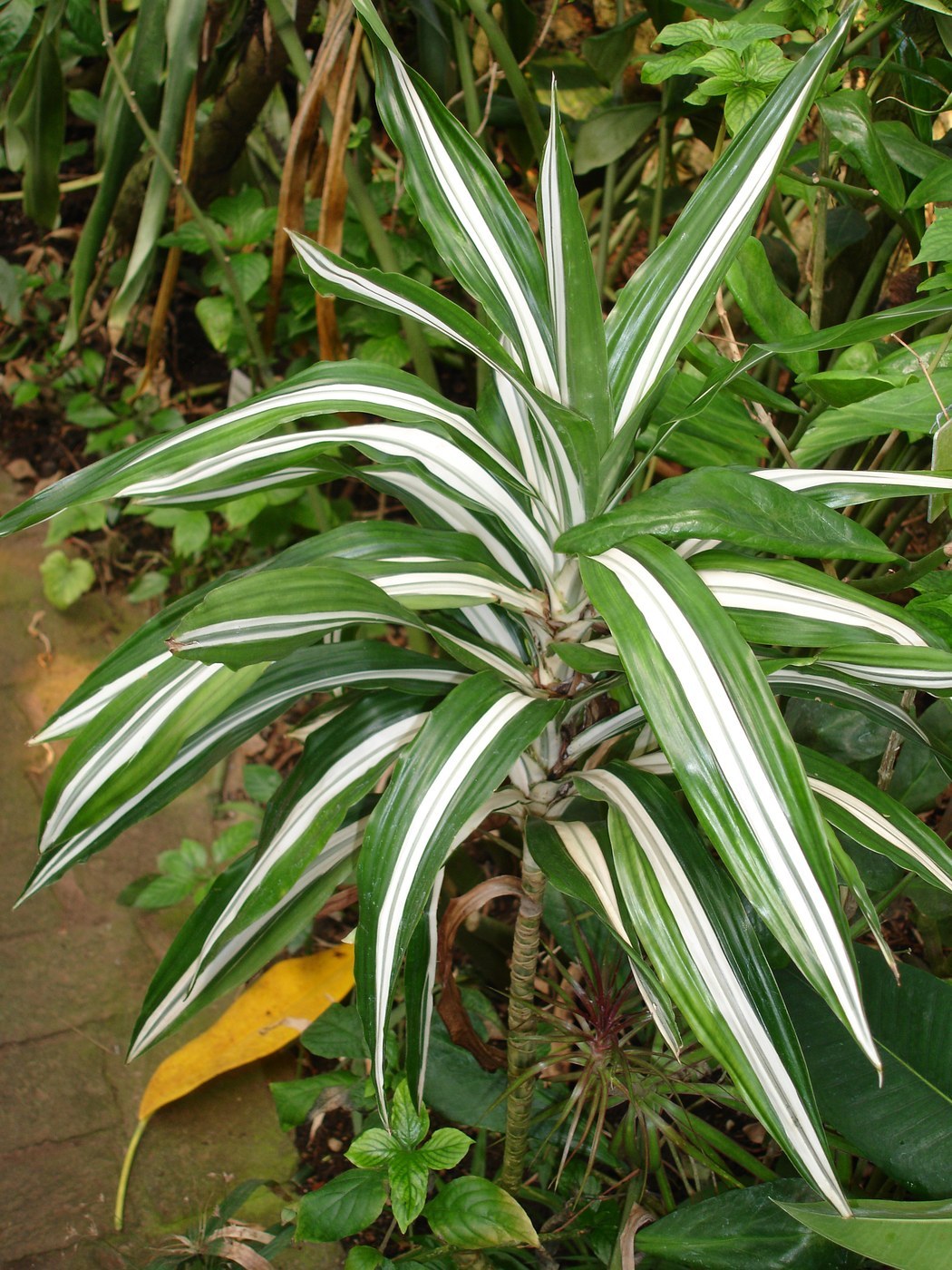
- Leaves: Long, narrow, arching grass-like leaves, often striped with white or cream down the center or edges
- Plantlets: Produces wiry stems (stolons) bearing small white star-shaped flowers and baby plantlets ('spiderettes')
- Habit: Mounding rosette with cascading runners, ideal for hanging baskets
- Roots: Thick, fleshy, tuberous roots that store water
- Size: 1-2 feet tall with runners trailing well beyond
Care & growing
Light: Bright to medium indirect light brings out the best variegation; tolerates lower light. Avoid harsh direct sun.
Water: Water when the top inch of soil dries. They are sensitive to fluoride and chlorine — brown leaf tips often result from tap water minerals, so use filtered or distilled water if needed.
Soil: Standard well-draining potting mix.
Temperature: Comfortable at 60-80°F (15-27°C).
Feeding: Light monthly feeding in spring and summer; over-fertilizing reduces plantlet production.
Propagation: Extremely easy — root the plantlets in water or soil while still attached or after snipping them off.
Habitat & origin
Chlorophytum comosum is native to the coastal regions and forests of South Africa, where it grows as a groundcover in shaded, humid conditions.
It has naturalized in parts of Australia and other warm regions and is grown outdoors as a groundcover in USDA zones 9-11. Worldwide it is one of the most widespread and easily grown houseplants.
Frequently asked questions
Why are my spider plant's leaf tips brown?
Brown tips are usually caused by fluoride or chlorine in tap water, low humidity, or inconsistent watering. Try filtered water and even moisture.
How do I propagate the babies?
Set a plantlet on moist soil while still attached to root, or snip it off and root it in water or soil — both work easily.
Why isn't my spider plant making babies?
Spiderettes form on mature plants, often when slightly pot-bound and given bright light and shorter day length. Be patient and avoid over-fertilizing.
Why does it have white stripes on the leaves?
Most common spider plants are variegated cultivars with cream or white stripes; the variegation is brightest in good indirect light and can fade in deep shade.
Spider Plant guides
In-depth guides for identifying, growing, and caring for Spider Plant.
How to Care for Spider Plant
Spider Plant (Chlorophytum comosum): a forgiving houseplant with arching striped leaves and dangling plantlets, easy in bright indirect light.
Spider Plant Identification Guide
Identify the spider plant (Chlorophytum comosum) by its arching grass-like striped leaves and the baby plantlets dangling on long runners.
Spider Plant identified by the community
Real specimens identified with Plant Identifier.