How to Care for Spiderwort
Spiderwort (Tradescantia virginiana) is a tough, easy perennial with grassy foliage and three-petaled blue-purple flowers all summer.
Read the full Spiderwort encyclopedia entry →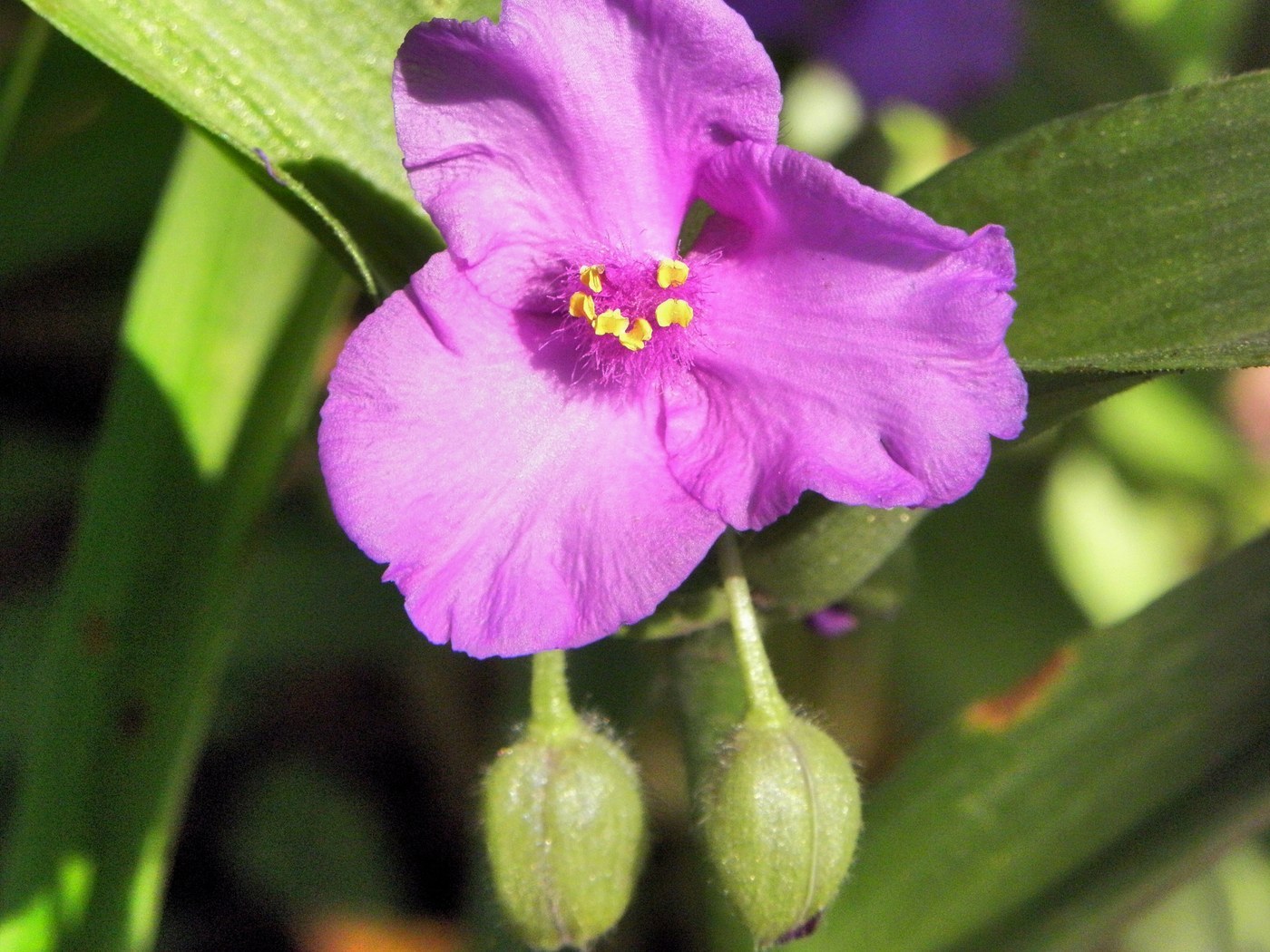
Tradescantia virginiana, common spiderwort, is a clumping herbaceous perennial with arching, grass-like foliage and clusters of three-petaled flowers in shades of blue, purple, pink, and white. Each bloom lasts only a day, but plants produce them in succession for weeks, making this an easy, reliable garden performer.
Light
Spiderwort grows in full sun to part shade. In cooler climates it flowers best in full sun, while in hot regions afternoon shade helps keep foliage fresh and extends bloom. Too much deep shade reduces flowering and produces floppier growth, so aim for at least a half-day of good light.
Water
Keep the soil evenly moist for best performance. Spiderwort naturally grows in damp meadows and along streambanks, so it appreciates consistent moisture and can tolerate wet spots. In dry spells foliage may brown and the plant can go semi-dormant; a good soak and a cutback usually revive it.
Soil & Potting
This adaptable perennial tolerates a wide range of soils but thrives in humus-rich, moisture-retentive ground. Average garden soil is fine as long as it does not dry out completely. In containers, use a moisture-retentive potting mix and water frequently, since pots dry faster than the moist conditions spiderwort prefers.
Humidity & Temperature
Spiderwort is a hardy perennial that withstands cold winters and returns reliably each spring. It enjoys the warmth of summer for flowering but appreciates even moisture and some shade where summers are very hot. Outdoor humidity is not a concern; the priority is keeping the root zone cool and damp.
Feeding
Spiderwort is not a heavy feeder. A spring topdressing of compost or a single light application of balanced fertilizer supports healthy growth and bloom. Avoid over-fertilizing, which encourages lax, floppy foliage at the expense of flowers. In fertile soil, no supplemental feeding is needed.
Propagation
The easiest way to multiply spiderwort is by division. Lift mature clumps in early spring or autumn and split them into sections, each with roots and shoots, then replant. It can also be grown from seed and often self-sows. Stem cuttings root readily in moist soil or water, reflecting its vigorous, easygoing nature.
Repotting / Pruning
Divide crowded clumps every two to three years to keep them vigorous and to control spread. After the first flush of bloom, plants often become leggy and tired-looking; shear the whole clump back by about half to trigger fresh foliage and a possible second flush of flowers. Cut back spent stems in late autumn or leave them for winter interest.
Common Problems & Pests
Spiderwort is largely trouble-free. Its main faults are floppiness and aggressive self-seeding, both managed by cutting back and dividing. Foliage browning in summer heat or drought is common and cosmetic; cut plants back and water to renew them. Occasional aphids or spider mites may appear in dry conditions but are easily managed with a water spray or insecticidal soap.
Seasonal Care Tips
In spring, divide or plant new clumps and apply compost. Through early summer enjoy the peak bloom, keeping soil moist. When plants flop or brown by midsummer, shear them back hard to rejuvenate the foliage and encourage rebloom. In autumn, cut back spent growth or leave it for the season, and mulch lightly in cold climates.
Frequently asked questions
Why do spiderwort flowers only last one day?
Each individual bloom naturally opens and fades within a single day, but the plant produces many buds in succession, so a healthy clump keeps flowering for weeks on end.
My spiderwort looks floppy and ragged in midsummer. What should I do?
This is normal after the first bloom flush. Shear the entire clump back by about half; it will regrow fresh foliage and often produce a second round of flowers.
How often should I divide spiderwort?
Divide clumps every two to three years in early spring or autumn. This keeps plants vigorous, improves flowering, and helps control their spread.
Can spiderwort grow in wet or boggy soil?
Yes. Spiderwort naturally grows in damp meadows and along streambanks, so it tolerates consistently moist and even wet soils better than most perennials.
Spiderwort identified by the community
Recent Spiderwort specimens identified with Plant Identifier.