Spiderwort
Tradescantia virginiana
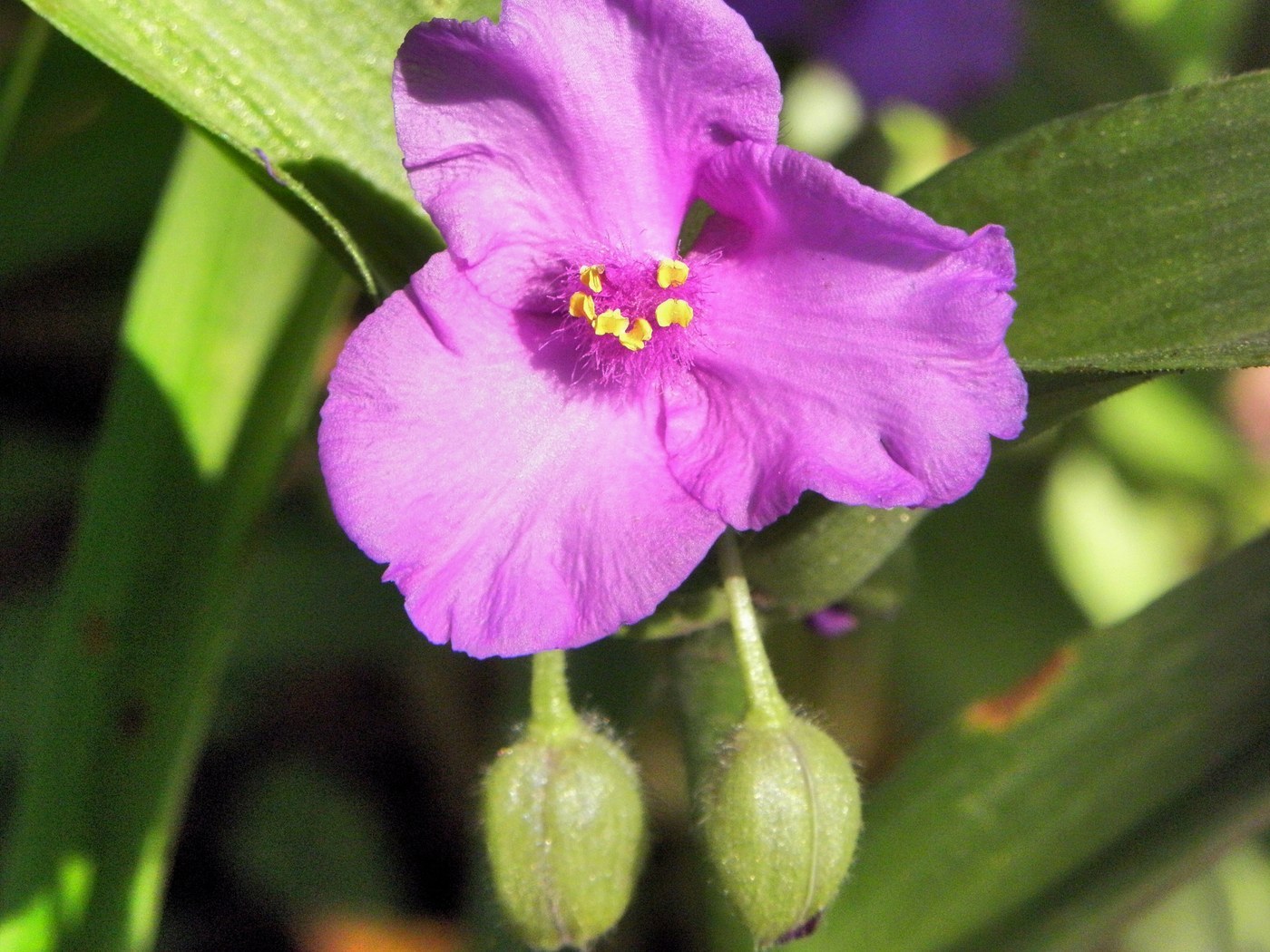
Spiderwort is a clumping native perennial with grassy arching foliage and three-petaled blue, purple, or pink flowers that each last a single day. It blooms reliably from late spring through summer.
- Light
- Full sun to part shade
- Water
- Moderate; evenly moist
- Difficulty
- Easy
Got a plant like this?
Identify any plant from a photo, free.
Overview
Spiderwort (Tradescantia virginiana) is an easygoing North American perennial grown for its clusters of three-petaled flowers in blue, violet, magenta, or white. Each bloom opens in the morning and fades by afternoon, but new buds open daily over many weeks.
Its grassy, arching foliage forms loose mounds, giving it a relaxed look well suited to cottage and woodland-edge gardens. It is tough, adaptable, and quick to establish.
Garden spiderworts are often hybrids (Tradescantia x andersoniana) bred for a wider color range and sturdier habit.
How to identify it
- Flowers: Three rounded petals in blue, purple, rose, or white, with showy yellow stamens; each lasts one day in clusters at the stem tips
- Foliage: Long, narrow, grass-like, arching leaves that fold along the midrib
- Stems: Somewhat fleshy and jointed; exude a mucilaginous sap when cut
- Height: Clumps 1-2 ft tall
- Bloom time: Late spring through summer
Care & growing
- Light: Full sun to part shade; part shade prolongs each day's bloom in hot climates
- Water: Keep evenly moist for best flowering; tolerates a range but flops or browns if too dry
- Soil: Adaptable; thrives in average to moist, fertile soil
- Temperature: Hardy roughly USDA zones 4-9
- Feeding: Light; overly rich soil promotes floppy growth
- Propagation: Very easy by division; cutting foliage back hard after the first flush of bloom encourages fresh leaves and rebloom
Habitat & origin
Spiderwort is native to eastern North America, growing in woodland edges, meadows, prairies, and along roadsides and streambanks.
It is widely grown in temperate gardens for borders, woodland gardens, and naturalized plantings, and tolerates a broad range of conditions including some clay and moisture.
Frequently asked questions
Why do spiderwort flowers only last a day?
Each individual bloom opens and wilts within a single day, often by afternoon, but the plant produces a steady succession of new buds so the clump keeps flowering for weeks.
My spiderwort looks tired and floppy by midsummer. What should I do?
Cut the whole clump back by half to two-thirds after the first bloom flush. It will regrow fresh foliage and often rebloom.
Is spiderwort invasive?
Native spiderwort can self-seed and spread but is generally manageable. Note that some tropical Tradescantia relatives are aggressive groundcovers in warm climates.
How do I recognize spiderwort?
Look for grassy, arching leaves that fold along the midrib and clusters of three-petaled flowers with bright yellow stamens at the stem tips.
Spiderwort guides
In-depth guides for identifying, growing, and caring for Spiderwort.
How to Care for Spiderwort
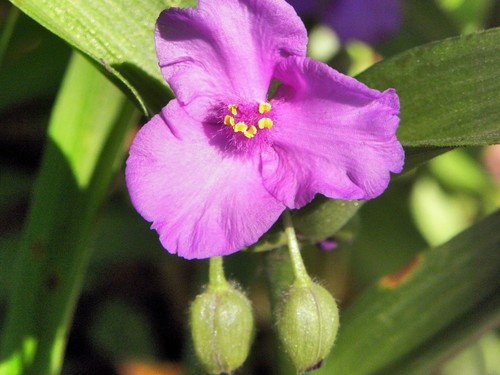
Spiderwort (Tradescantia virginiana) is a tough, easy perennial with grassy foliage and three-petaled blue-purple flowers all summer.
Spiderwort Identification Guide
How to identify Spiderwort (Tradescantia) by its three-petaled blue-purple flowers, grass-like folded leaves, and the jelly-like threads in its broken stems.